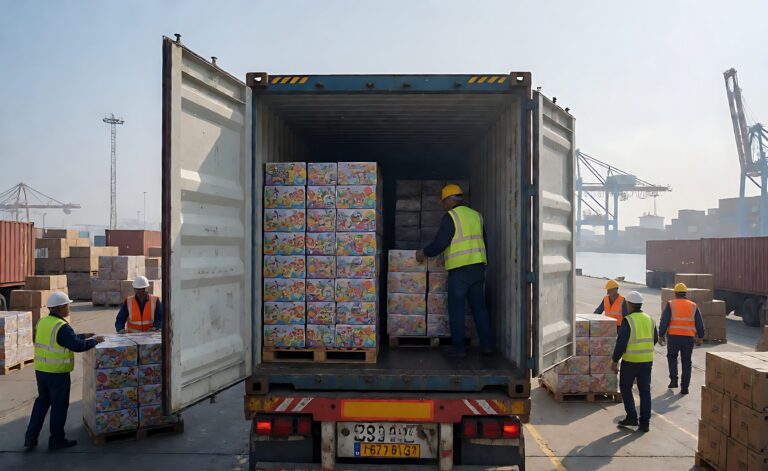
Toy buyers ask about social compliance for two reasons, and only one of them is altruistic. The first is that a retailer programme will demand it before listing a product, and the evidence has to exist in a recognised format. The second is that social compliance failure is operationally indistinguishable from any other supply failure: it stops shipments, and it stops them at the worst possible moment, usually during peak season when no alternative capacity exists.
Key takeaways
Toy buyers ask about social compliance for two reasons, and only one of them is altruistic.
Most recognised social compliance audits examine the same four areas, and buyers should know what evidence each one turns on:
Where a facility also handles wood or paint inputs, check the material side in the wooden toy material grades guide.
What buyers need, therefore, is not a certificate but a working method. A recognised audit framework, a cadence, a corrective action process with closure evidence, and a clear view of what the audit does and does not prove.
What an Audit Actually Covers
Most recognised social compliance audits examine the same four areas, and buyers should know what evidence each one turns on:
Labour standards: freely chosen employment, no forced or bonded labour, no child labour, and no discrimination in hiring or promotion. Evidence is age documentation, contracts and interviews.
Working hours and wages: hours within legal limits and within the standard being audited, one rest day in seven, overtime voluntary and recorded, and wages at or above the legal minimum with overtime paid at the legal premium.
Health and safety: machine guarding, electrical safety, fire exits that are unlocked and unobstructed, extinguishers serviced, chemical storage labelled, and personal protective equipment provided and used.
Management systems: a written policy, a responsible person, a grievance channel workers can actually use, and records that match what interviews say.
The fourth area is where audits are usually won or lost. Documents can be prepared; interviews conducted away from supervisors are much harder to stage, which is why experienced auditors weight worker interviews heavily.
Reading a Report Properly
A report is a snapshot, not a verdict. It describes conditions on the days of the visit, based on the records presented and the people interviewed, and its value depends on three things: whether the visit was announced, how many worker interviews were conducted privately, and whether the audit covered the specific buildings producing your orders. A report for a facility that subcontracts your packing elsewhere tells you very little about your cartons.
Findings are graded, and buyers should learn the grades used by the framework they accept. Minor findings – a missing signature, an unlabelled container – are routine and expected. Major findings such as excessive hours, incomplete wage payment or blocked exits require a dated corrective action plan with a responsible owner. Critical findings, including child labour, forced labour or immediate life-safety risks, should halt the order until verified closure, because continuing production through one converts a supplier problem into your own.
Subcontracting and the Blind Spot
The largest gap in toy supply chains is undeclared subcontracting. A factory audited for cut-and-sew may send printing, painting, hand-finishing or packing to a workshop nobody has visited, and the audit report will say nothing about it. Buyers close that gap contractually and physically: require disclosure of all production sites in the purchase order, require written approval before any site is added, and verify during pre-production visits that the addresses on the packing list match the approved list.
Hand-finishing deserves particular attention in toys, because painting, flocking, assembly of small parts and packing are exactly the operations most often sent out. Where your product uses those processes, ask specifically where they happen.
Technical Background
The exercise itself is a form of social audit, an independent examination of an organisation’s social performance against a stated standard. The wider expectation it serves is corporate social responsibility, under which buyers are judged on supply-chain conditions rather than only on their own sites. The specific hazard that makes toy supply chains sensitive is child labour, which is why age-verification records are examined line by line rather than sampled casually.
Cadence, Cost and Follow-Through
Audit annually at minimum, twice a year where a facility has open major findings or runs heavy overtime seasonally. Semi-announced or unannounced audits are materially more informative than fully scheduled ones, and the modest extra coordination is worth it. Cost is small relative to a stopped programme, and buyers routinely recover it through fewer surprises rather than through price.
Follow-through is the part most programmes skip. Require a corrective action plan with dates, collect evidence of closure – photographs, revised records, training logs – and verify the highest-risk items on the next visit rather than on paper. Track the trend, not the score: a factory that has reduced overtime each year and closes findings on time is a better partner than one with a perfect report and no history.
A recognised, widely accepted framework that your retail customers already accept, so one report serves every programme instead of being repeated per buyer.
How often should audits be repeated?
Annually at minimum, and every six months where major findings are open or overtime is heavy in peak season.
Are announced audits acceptable?
They are better than nothing but weaker. Semi-announced or unannounced visits produce materially more reliable findings.
What is the most common finding?
Working hours and record-keeping gaps, especially overtime that exceeds limits or is recorded inconsistently across two sets of books.
Does a clean audit guarantee conditions?
No. It is a snapshot of the days visited and the records presented, which is why cadence and worker interviews matter.
Who pays for the audit?
Usually the buyer, sometimes shared. The cost is small compared with a shipment stopped weeks before the season.
What should happen after a finding?
A dated corrective action plan with a named owner, evidence of closure, and verification of the highest-risk items at the next visit.
OEM & ODM TOY MANUFACTURING
Ready to Develop Your Custom Toy Line?
10+ years factory experience • EN71, ASTM F963 & CPC compliance support • Flexible MOQ for toy brands, importers, and Amazon sellers.