The prototype quotation came back as two pages with a single total at the bottom, and the finance lead slid it across the table with one question written in the margin: which of these lines will appear again on the second order? Nobody in the room could answer it from the document. The supplier had folded concept sketching, a hand-built model, a steel tool, three coloured samples and a courier charge into one figure, so the buyer could compare that total against another supplier’s total but could not tell whether the lower number meant cheaper work or simply a different list of things being counted. What follows is the way a cost accountant reads that sheet — not as a price to negotiate, but as a ledger to classify, line by line, separating what is paid once from what quietly returns.
Reading a quotation as a ledger rather than a price
A total is a negotiating instrument. A classification is a budgeting instrument. The same number can be assembled from very different mixtures of one-time work, work that repeats every iteration, and work that is deferred into the unit price of a later production order. Two quotes that look competitive on the bottom line can diverge sharply once you ask which supplier will invoice you again when the shape changes, when a colour is added, or when a second production run is booked. The first move is therefore not to argue about the figure but to make every line declare its behaviour.
Four behaviours cover almost everything on a prototype sheet. Some lines are genuinely one-time, settled on the first invoice and never seen again. Some are iteration-driven, returning each time the sample is revised. Some are conditional, triggered only if a specific event occurs, such as a failed test or a requested substitute material. And some are amortised, meaning they are collected not on the prototype invoice at all but spread across the unit price of the eventual order.
The lines that are genuinely paid once
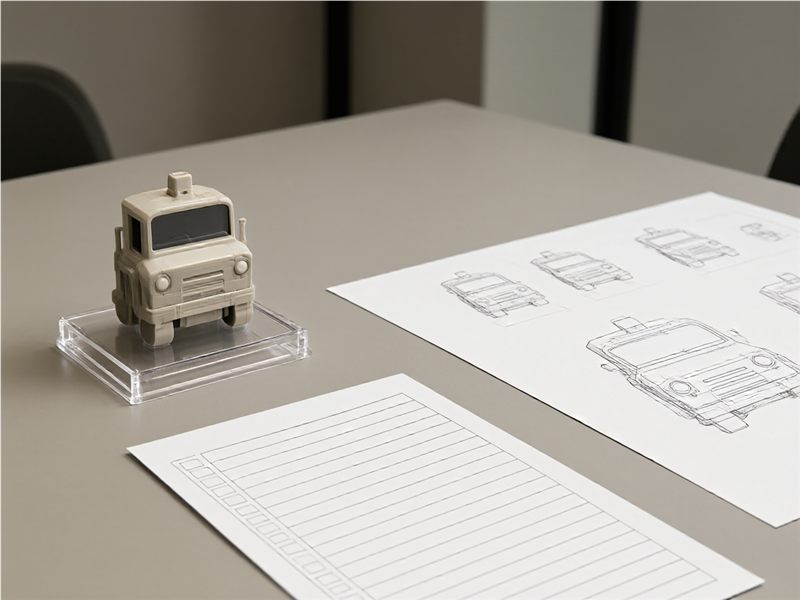
Concept development, initial feasibility study, the first pass of structural drawings and the setup of a master file are the clearest one-time items. They buy thinking and documentation, not physical objects, and once delivered they are not consumed by producing more units. A cost accountant is comfortable capitalising these or expensing them as a project cost precisely because there is no plausible mechanism for them to recur. The risk is not repetition; the risk is ambiguity about what was actually delivered for the fee.
The lines that return on every revision, not every order
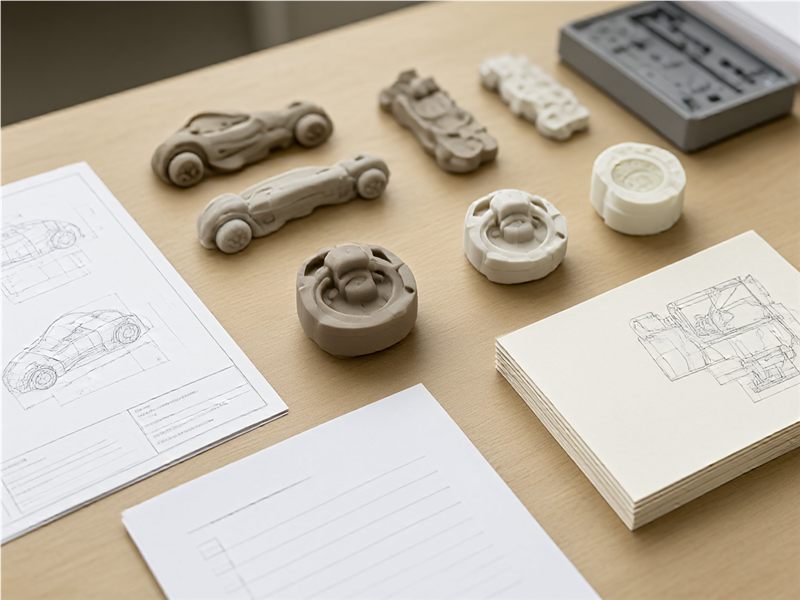
Sample fabrication is the item most often mistaken for a one-time charge. A hand-made prototype, a trial pour, a printed insert or a painted colour chip has to be physically produced again each time the design moves. The charge is not tied to the order; it is tied to the round. A project that goes through four rounds of comment generates four sample charges even though only one product will ever be sold. Treating the first sample line as a single event is how a prototype budget quietly doubles.
Where design work ends and tooling begins
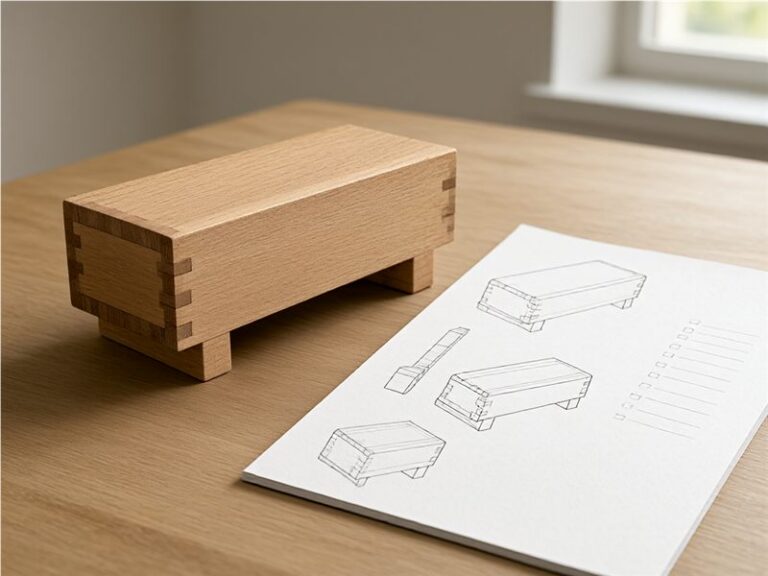
There is a boundary on this sheet that matters more than the arithmetic: the line between intellectual work and physical tooling. Design hours produce drawings, a file, a specification. Tooling produces a steel or aluminium cavity, a cutting die, a mould that will later make production parts. The two are frequently billed adjacently and sometimes blended into a single “development” figure, which is unfortunate because their ownership consequences are completely different. Paying for design does not automatically deliver an editable source file, and paying for a tool does not automatically deliver the right to move it.
A buyer should ask what the design fee yields in hand. Is it a rendered image, a dimensioned drawing, or a transferable three-dimensional file? Who may use it, and for which products? On the tooling side, the parallel question is what physical asset exists, where it is held, and what documentation proves it was built for this project. These questions feel pedantic at the prototype stage, when everyone is looking at a pleasing object on a desk, but they determine whether a later dispute is about a document or about a piece of steel that can be loaded onto a truck.
Sample scope is a count, a configuration and a revision
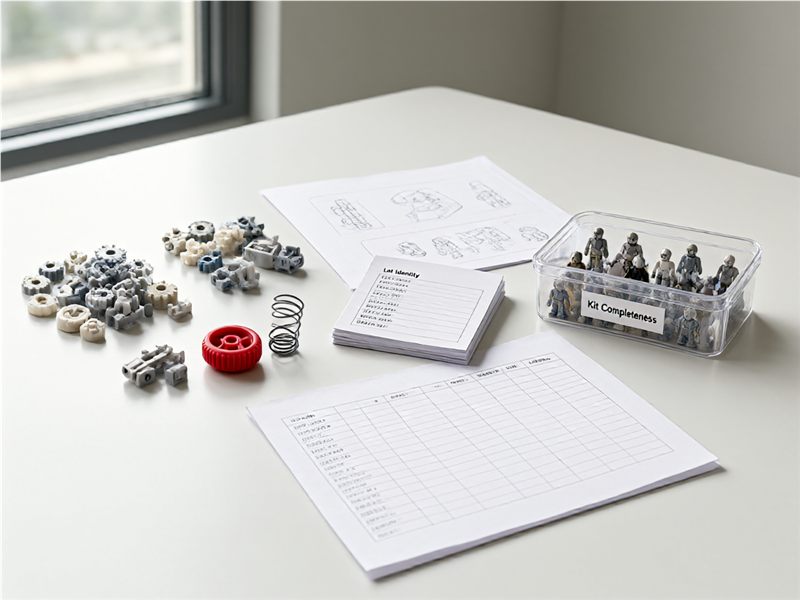
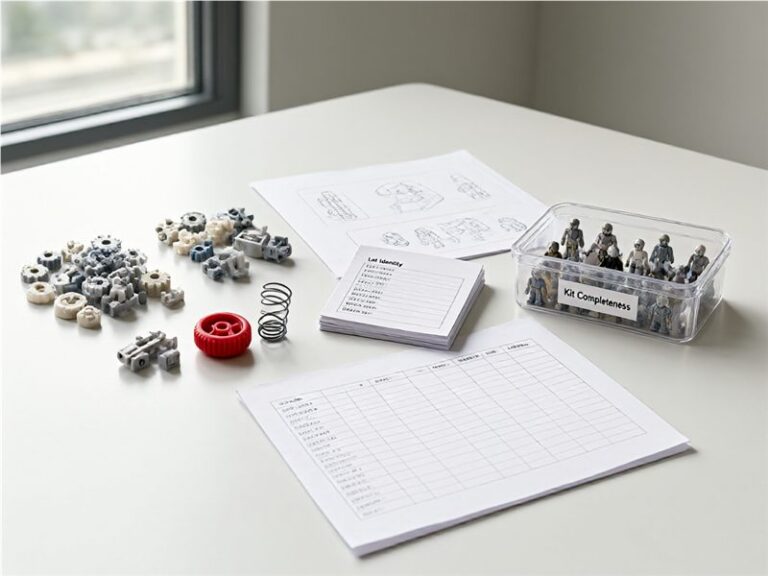
“Samples included” is not a scope. A defensible scope names three things: how many units, in which configuration, and against which revision of the specification. A kit product makes this painfully clear. If the sample is a plain container but the sellable product is a container plus three accessories plus a printed insert, then the approved sample and the shipped product are different objects, and every later argument about colour, fit or completeness will be argued against the wrong reference. The quotation should state the configuration of the sample as explicitly as it states the configuration of the product.
Revision is the third leg and the one most often missing. A sample signed at revision two is not evidence about a unit made at revision four. Tying each physical sample to a dated specification version, and stating that a change in version requires a fresh sample submission, converts an aesthetic disagreement into a document question. For a custom squishy shape or a private-label slime kit with several components, this is the difference between one approved reference and a drawer full of near-identical objects that nobody can rank.
Tooling ownership rewrites the second quotation
The clause that most changes the future is the one saying who owns the tool. If the buyer pays for the tool in full and owns it, the second production order should not carry a fresh tooling charge; the asset already exists. That sounds final until someone asks about the spare cavity, the routine maintenance, the replacement of worn components, and the cost of moving the tool to another factory if the relationship ends. Ownership settles the question of whether the fee repeats, but it does not settle who funds the tool’s ongoing life.
If the factory holds the tool and has absorbed its cost into the unit price, the buyer sees no tooling line at all on either quotation — and also has no asset to relocate. A switch of supplier then means commissioning a new tool and paying for it a second time, which is a commercial lock-in disguised as a low prototype total. Shared or part-funded arrangements are the murkiest: who authorises a modification, who pays for it, and what happens to the tool when the programme ends should be written down before the first invoice, not reconstructed from email. The wider commercial framing is set out in our note on mould and tooling ownership cost for custom shapes, which is worth reading alongside any quotation that bundles a tool into a single development figure.
The per-unit shadow of a one-time line
A one-time cost does not always stay on the prototype invoice. Suppliers frequently recover a tool or a development fee by building it into the piece price of the production order, which is reasonable, but it makes the unit price dependent on the volume the recovery was calculated against. Quote the same tool over a small first run and the recovered amount per unit is visibly larger than over a full container. A buyer who compares only the prototype total and the piece price, without seeing the amortisation base, cannot tell whether a later price change is a material cost move or simply a different quantity assumption.
The fix is to make the recovery explicit. Ask how many units the one-time amount was spread across, whether an unrecovered balance survives into a reorder, and whether the unit price falls once that balance is cleared. This is also why the definition of the order quantity matters so much here: a programme priced by individual SKU recovers a tool across fewer units than one priced across a whole product family sharing the same cavity. Our page on MOQ by SKU versus by product family explains how that grouping changes the arithmetic, and the same logic governs how a prototype fee resurfaces in the piece price.
A line-by-line classification you can audit
Below is the working sheet used to sort a prototype quotation. It deliberately contains no amounts, because the classification is what gets argued about; the figures can be filled in from the supplier’s own document. Each row states what the line buys, how it behaves over time, and what evidence should be attached before the line is approved.
Quotation line
What it actually buys
Charge behaviour
Verify before approval
Ownership consequence
Concept and feasibility
Sketches, structural study, initial specification
One-time, unless the brief is rewritten
Number of included concept rounds, closing sign-off owner
Defines who may use the design output
Source file or drawing pack
Editable or dimensioned documentation
One-time, delivery-based
File format, transferability, permitted product scope
Determines whether the design is portable
Hand-built prototype
One physical model at a stated revision
Iteration-driven, returns each round
Unit count, configuration, revision tag
Reference object, not a production asset
Colour or material trial
Matched chips or trial pours
Iteration-driven
Which standard is matched, substitution approval owner
Ties to the approved sample record
Tooling or cavity
Physical production tool
One-time if owned, amortised if absorbed
Where held, spare and maintenance responsibility, life
Decides whether a second tool fee can be charged
Testing triggered by change
Lab or in-house check after a revision
Conditional on a change event
Which changes trigger a retest, who authorises it
Report belongs to the product file
Courier and sample freight
Physical movement of each submission
Iteration-driven
Included submission count, per-round recharge
No lasting asset
Development recovery in unit price
Spread of one-time cost across volume
Amortised over a stated quantity
Amortisation base, treatment of any unrecovered balance
Affects the piece price of reorders
Where ownership clauses hide cost after the first order
Most of the expense attached to a tool is invisible on the prototype quotation. A production tool needs routine cleaning, occasional repair, and eventually the replacement of worn inserts or a spare cavity for volume work. It may need to be removed from a press, crated, shipped and re-trialled if production moves. None of those events appears on the first sheet, yet each is allocated by the ownership clause. A buyer who owns the tool outright may still be surprised to discover that storage, insurance and maintenance were never priced, while a buyer whose supplier holds the tool may find that a modification request carries a fee set entirely by the holder.
These are worth resolving as a short schedule appended to the quotation: who funds maintenance, who funds damage repair and on what evidence, who decides a tool is at end of life, and what it costs to release it for transfer. Agreeing a method for settling those questions is more useful than agreeing a number now. Our description of the OEM manufacturing service stages shows where tooling, approval and production sit relative to one another, which helps when a launch date is being negotiated against an unfinished ownership discussion.
Asking the supplier to re-issue the quote in three buckets
None of the above requires a confrontation over price. A reasonable request is simply that the quotation be re-issued under three headings: charges settled once on this invoice, charges that recur per sample round, and charges that will be recovered through the production unit price. Each heading should carry a revision date, and each recurring line should state what one additional round costs. The point is comparability, not a stronger bargaining position — a buyer cannot evaluate two offers when one has folded four sample rounds into a lump sum and the other has priced one.
The re-issued sheet also becomes the reference for the purchase order. When the production quotation arrives later, the buyer can place it beside the prototype sheet and see whether a design or tooling amount has been counted twice, whether the amortisation base has moved, and whether a conditional retest has quietly become a standing charge. That reconciliation is a five-minute check against two documents, and it catches the most common way a prototype budget leaks into a production budget without anyone deciding it should.
Reconciling the prototype invoice against the production order
Close the loop with a one-page reconciliation signed by both sides. List every prototype line, mark it as settled on the prototype invoice, recovered in the unit price, or still open, and attach the evidence — the delivered file, the approved sample with its revision tag, the tool location record, the test report reference. Where a development amount was amortised into the piece price, note the quantity it was spread over and whether any balance remains. This is the document a finance team needs when a reorder is priced differently from the first order and someone asks why.
Handled this way, the prototype quotation stops being a single awkward number and becomes the opening entry in a cost record. The second order is then cheaper to approve, not because the supplier conceded anything, but because both parties can point to the same classification and say which lines are finished, which ones are legitimately returning, and which ones were never supposed to be charged twice.
Which prototype quotation lines should never appear again on a second production order?
Genuinely one-time lines — concept and feasibility work, the initial drawing or source-file pack, and a tool the buyer paid for and owns in full — should not be re-invoiced on a reorder. Before relying on that, confirm the tool ownership clause in writing and check whether a development amount was amortised into the unit price, since an unrecovered balance can legitimately carry forward. Ask the supplier to re-issue the prototype quote in three buckets so the classification is explicit rather than inferred from a total.
Why does the prototype sample charge keep reappearing when the design changes?
A physical sample is tied to a round, not to an order. Each revision requires a new hand-built model, trial pour, colour match or printed insert, so the fabrication and courier charges return even though only one product will be sold. Treat “samples included” as an undefined quantity and replace it with a scope: how many submissions, in which configuration, against which specification revision, and the cost of one further round. That converts an open-ended lump sum into a countable budget.
How does tooling ownership change what a supplier can charge later?
If the buyer owns the tool outright, a second tooling fee is not justified, but maintenance, spare cavities, end-of-life replacement and transfer costs still need an agreed allocation. If the factory holds the tool and absorbed its cost, the buyer sees no tooling line yet has no portable asset, so changing supplier means paying for a new tool. Part-funded arrangements need written rules on who authorises and pays for modifications before the first invoice is issued.
What is the quickest way to compare two prototype quotes that look identical in total?
Ignore the bottom line and classify both sheets line by line into one-time, iteration-driven, conditional and amortised charges. A lower total often omits a line that the other supplier has deferred into the production unit price or priced as a per-round recharge. Request each quote be re-issued under three headings — settled once, recurring per sample round, recovered in the piece price — with a stated amortisation quantity, then compare the two sheets row by row.
OEM & ODM TOY MANUFACTURING
Ready to Develop Your Custom Toy Line?
10+ years factory experience • EN71, ASTM F963 & CPC compliance support • Flexible MOQ for toy brands, importers, and Amazon sellers.