



Wooden toys look like the simplest category in the toy business and behave like one of the most technical. The buyer sees a shape, a colour and a finish. The factory sees a species, a moisture content, a glue class, a paint system, a drying schedule and a small-parts risk assessment. When a wooden toy fails a safety test or splits in a customer’s hands, the cause is almost always one of those hidden variables rather than the design.
This guide is written for buyers placing an OEM order: what to put in the specification, which paint and glue decisions actually carry legal weight, what drives the minimum order quantity, and which sample tests tell you the truth before you commit to a container.
Species, Grade and Moisture Content
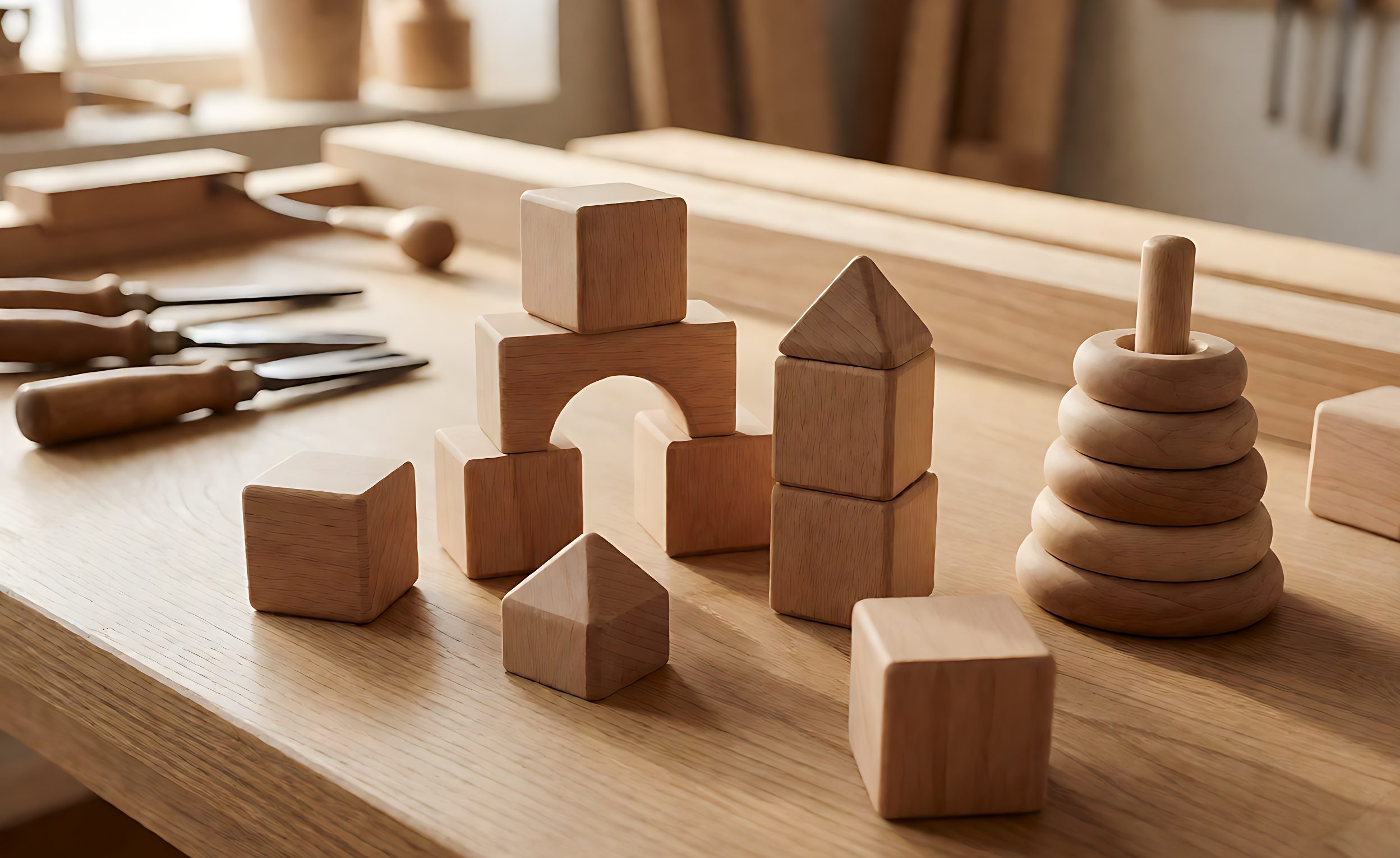
Four woods dominate the category. Beech is dense, holds a fine edge and takes paint evenly, which is why it is the default for blocks, rails and anything that must look premium. Rubberwood is cheaper, widely available in Southeast Asia and perfectly serviceable for painted parts, though it is softer and dents more readily. Pine is light and inexpensive but has a strong grain and knots that interfere with painted surfaces. Plywood and MDF appear in puzzle and board products where flatness matters more than edge durability.
Grade matters as much as species. Clear grade means no visible knots or mineral streaks on the face; paint grade tolerates defects that the finish will hide. If you specify only “beech” you will receive whichever grade the factory has on the floor that week, and the difference shows up as colour variation across a retail shelf.
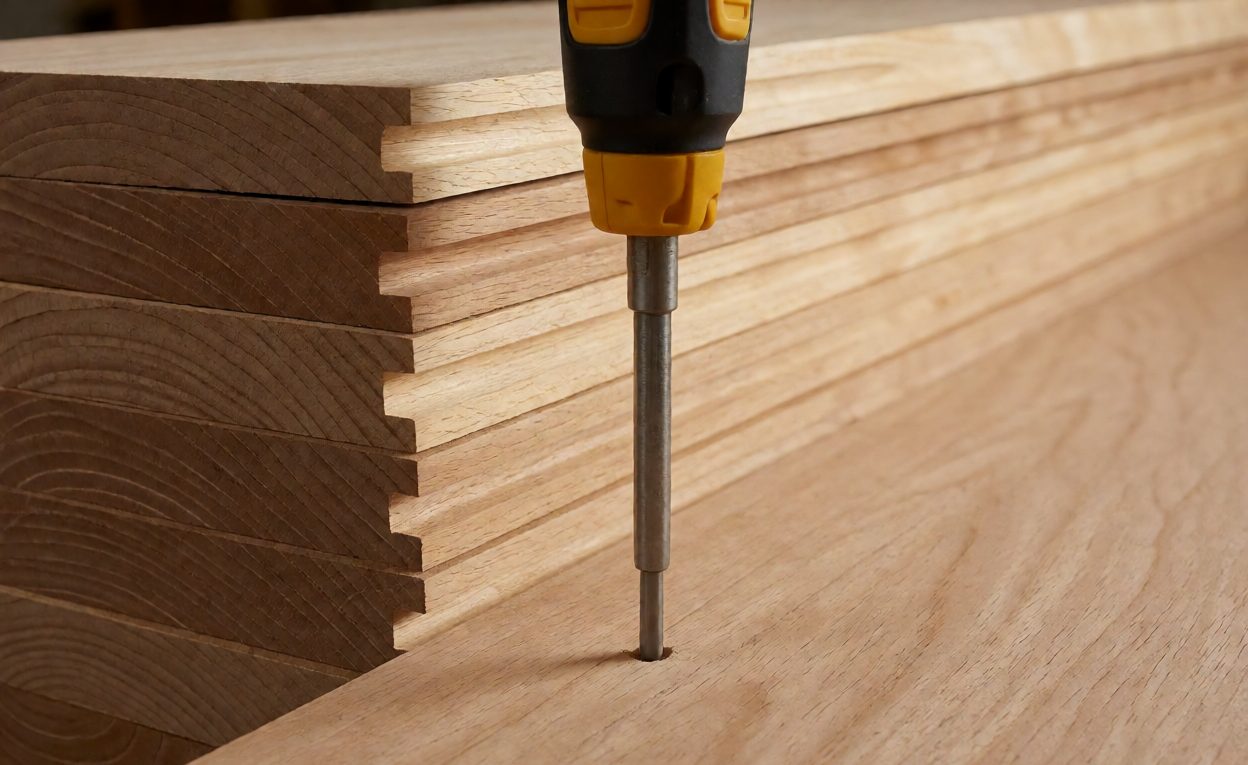
Moisture content is the specification most buyers forget. Timber should be kiln dried to a stable range, typically around 8 to 12 percent depending on the destination climate, and allowed to equalise before machining. Wood shipped too wet will shrink after assembly: joints open, panels cup, and painted surfaces crack along the grain. A moisture meter reading on the incoming boards costs nothing and prevents a whole class of field failures.
- Beech: dense, fine grain, best paint finish, highest cost.
- Rubberwood: good value, softer, needs sharp tooling to avoid fuzzy edges.
- Pine: light, knotty, best used where the grain is part of the design.
- Plywood or MDF: flat and stable, but edges need sealing and screws need pilot holes.
Paint, Ink and Glue: Where the Legal Risk Sits
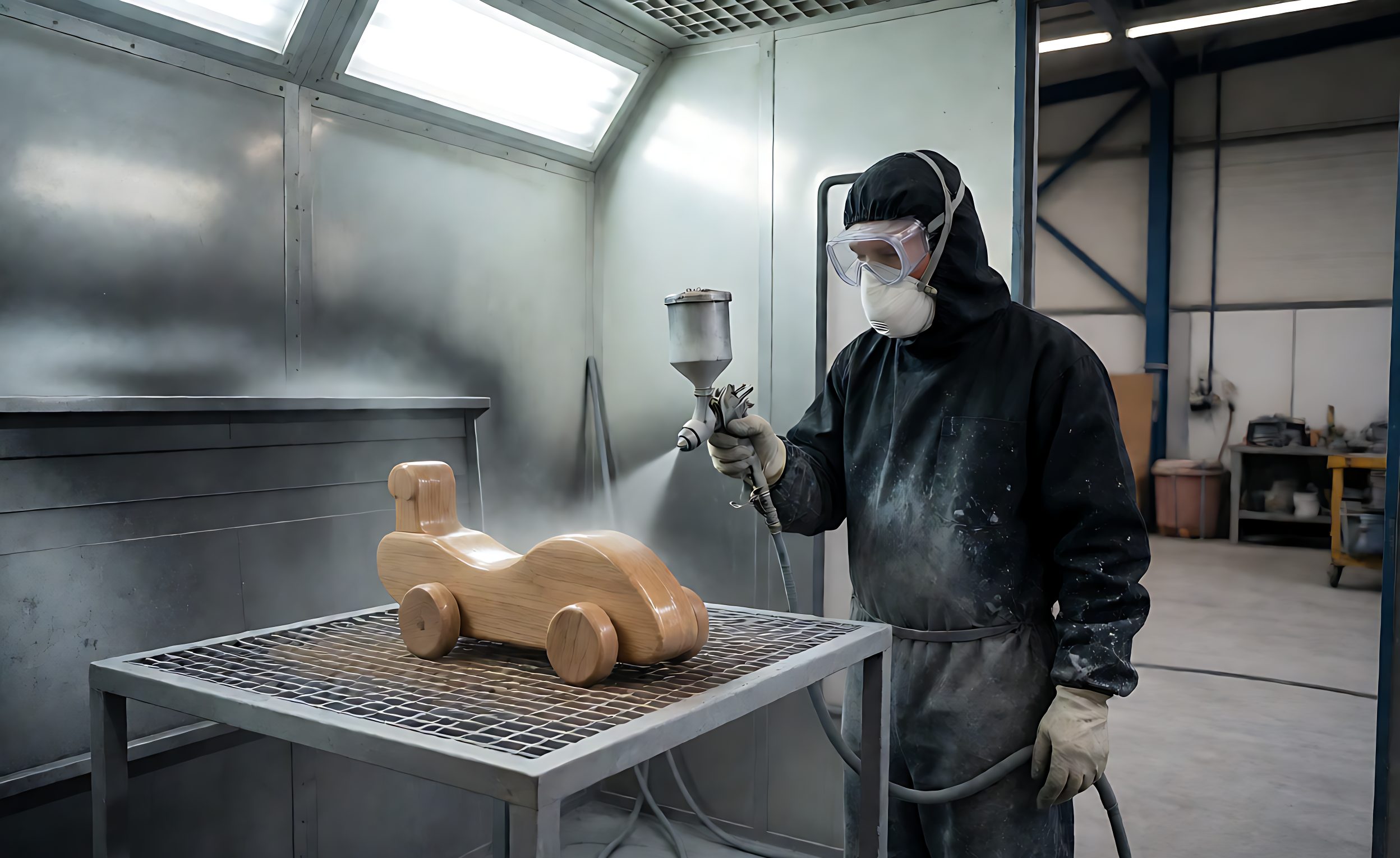
Toy safety rules do not regulate paint by its brand name. They regulate what can migrate out of the finished surface when a child mouths it. EN71-3 sets migration limits for a list of elements including lead, cadmium, chromium, mercury and arsenic, and ASTM F963 contains an equivalent heavy-element section. A paint can be labelled “non-toxic” and still fail migration limits if the pigment or drier is wrong.
The practical answer is water-based acrylic or water-based lacquer systems with a documented test report for the specific colour, not for the paint family. Colour matters because different pigments carry different metal loads: bright reds and yellows are the usual suspects, and a factory that tested only its clear coat has not tested the toy. Ask for a migration test report per colour used in the range, and match the report date to the batch you are buying.
Glue is the second hidden input. Plywood and MDF are bonded with resins that can release formaldehyde, and indoor air quality rules in several markets now constrain the emission class. Specify the formaldehyde emission class in writing, and for anything a child may chew, prefer solid wood joined mechanically over laminated board with exposed edges.
The certification path for toy imports depends on these upstream choices. Certification confirms a design; it does not rescue a material substitution made after the test.

Construction, Hardware and Small Parts
Wooden toys fail mechanically in three places: joints, hardware and edges. Dowel joints need adequate glue area and should not rely on friction alone. Screws into end grain hold poorly; pilot holes and cross-grain orientation fix most of it. Magnets deserve special attention because a magnet that comes loose is both a small part and an ingestion hazard, and magnet strength requirements in toy standards have tightened considerably.
Edges and corners must be radiused and sanded, not just cut. A chamfer that looks fine on a rendering can arrive sharp because the router bit was worn. Specify a minimum radius, and check it on the sample with a radius gauge rather than by eye. Surface finish also affects cleanability: an open-grain surface that traps moisture will swell, and a fully sealed surface will not.
Drop testing is the fastest way to expose weak construction. The standard drop sequence on a hard surface, repeated at several orientations, tells you more about a wooden toy than a visual inspection ever will. Combine it with a torque test on any protruding part and a soak test on painted components to see whether the finish lifts at an edge.
What Actually Drives MOQ
Buyers often assume the MOQ for a wooden toy is set by tooling. Usually it is not. CNC routing and laser cutting need little or no hard tooling, so a new shape is cheap to set up. The real drivers are timber purchasing lots, paint batch minimums, and the cost of stopping a line to change over.
- Timber lot: a mill sells boards by volume, so a small order may mean buying a full lot and storing the remainder.
- Paint batch: custom colours have their own minimum, often a few tens of kilograms, which can exceed what a small order consumes.
- Changeover: each SKU consumes setup time, so factories price small runs with a setup surcharge rather than refusing them.
- Packaging: printed colour boxes carry a separate minimum, frequently higher than the toy itself.
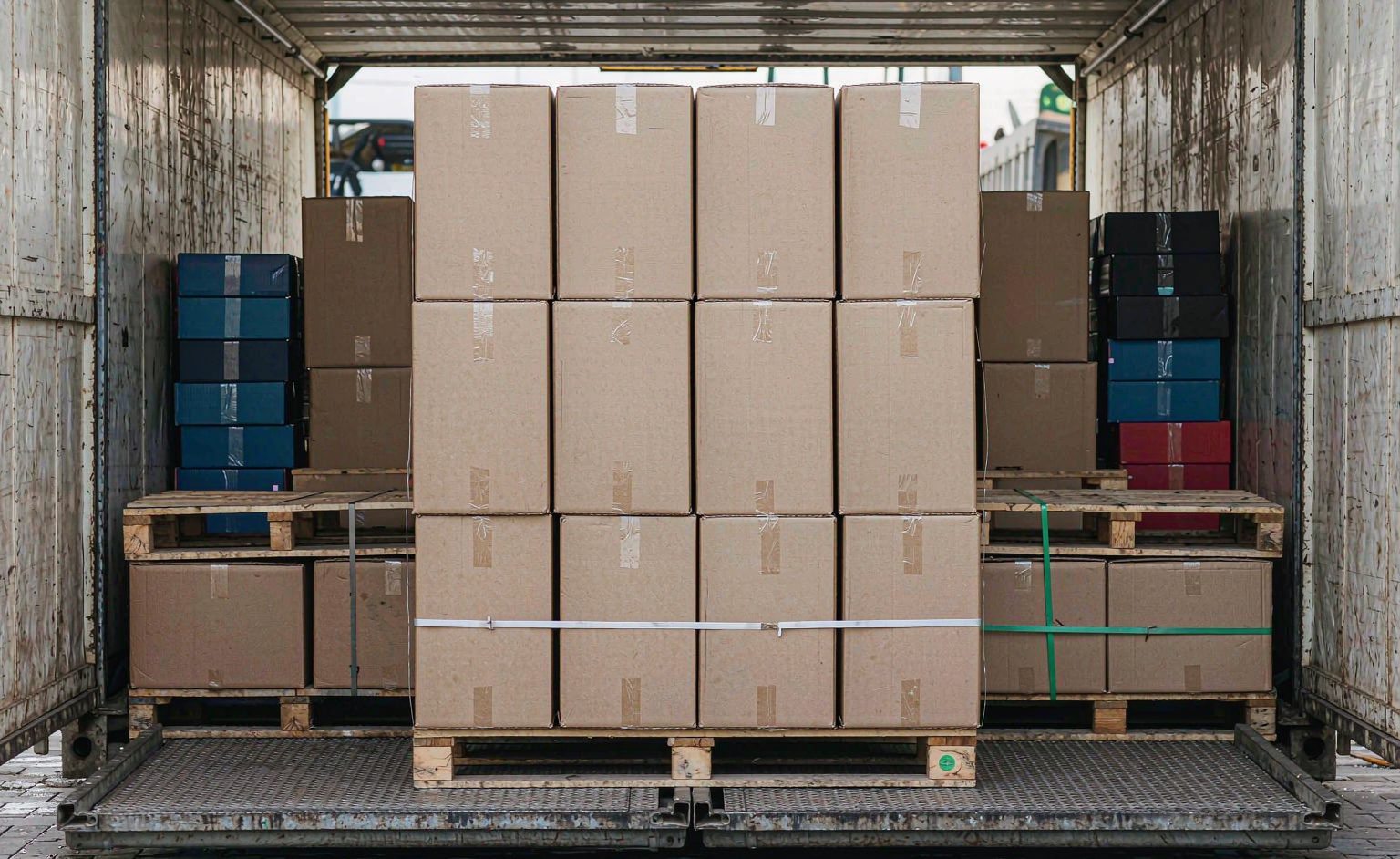
Practical ranges: a stock shape with custom colour and packaging often starts around 500 units per SKU. A fully custom shape with custom paint and printed box usually lands between 1,000 and 3,000 units. Combining categories in a mixed container is the standard way to reach volume without over-committing to one SKU, and it works particularly well for wooden toys because cartons cube out before they weigh out.
What a Sample Should Prove
A wooden toy sample that looks right proves very little. Test it before you approve it.
- Drop it on tile from the standard height at six orientations and inspect every joint.
- Torque and tension test any knob, wheel or magnet against the limits for the target age grade.
- Soak a painted part in water for 24 hours, then press a fingernail into the edge to see whether the film lifts.
- Check moisture content on the raw board and again on the finished part.
- Confirm the paint report names the exact colour code, not a generic family.
- Weigh and measure the packed unit to verify carton cube and dim weight before the container is booked.
A factory audit should confirm that the sample you approved came from the same line, with the same timber grade and the same paint supplier, that will run the bulk order. That single question catches more substitutions than any clause in a purchase order. Private label programmes add one more layer, because the packaging, labelling and age warnings become your responsibility rather than the factory’s.
Technical Background
Wood is an anisotropic material, which is the technical reason so many wooden toy failures look like design errors. Wood shrinks and swells differently along the grain than across it, so a joint that is tight at 12 percent moisture can open at 8 percent. Designing for that behaviour, rather than against it, is what separates a durable toy from a decorative one.
Finishes work by forming a film or by penetrating fibres. Paint systems for toys are constrained less by durability than by what can migrate out of the dried film, which is why water-based acrylics dominate the category despite costing more per litre than solvent systems. The third hidden input is the binder in engineered boards: formaldehyde based resins are inexpensive and effective, and their emission class is now a specified property in most developed markets rather than an afterthought.
A Specification You Can Send to a Factory
The specification that gets quoted accurately is the one that names materials, not intentions. Include species and grade, moisture range, board thickness with tolerance, paint system with colour codes and required test reports, glue class, minimum edge radius, hardware type and pull strength, packaging format and carton cube. Add a photo of an approved reference part.
Then specify the change-control rule: no substitution of timber grade, paint supplier or hardware without written approval and a new sample. Suppliers change inputs for good reasons, usually cost or availability, and a written rule turns an invisible substitution into a conversation.
Which wood is best for painted wooden toys?
Beech gives the smoothest painted surface because of its fine, even grain. Rubberwood is a good value alternative for painted parts when the tooling is sharp. Pine is better left unpainted or lightly finished.
Do wooden toys need EN71 testing?
Yes for the EU market. EN71-1 covers mechanical and physical properties, EN71-2 flammability and EN71-3 migration of elements. The US equivalent route runs through ASTM F963 and CPC documentation.
What moisture content should wooden toy parts have?
Typically 8 to 12 percent, adjusted for the destination climate, and equalised before machining. Parts machined wet will shrink after assembly and open joints or crack the finish.
What is a realistic MOQ for a custom wooden toy?
Around 500 units for a stock shape with custom colour and packaging. A fully custom shape with custom paint and printed box usually lands between 1,000 and 3,000 units per SKU.
Are magnets in wooden toys a compliance risk?
Yes. A loose magnet is both a small part and an ingestion hazard, and magnet requirements in toy standards have tightened. Specify retention strength and test it on the sample.
How do I verify the paint is safe?
Ask for a heavy-element migration report that names the exact colour code used on the part, matching the batch you are buying. A report for the clear coat or for a different colour does not cover the toy.
Why do wooden toys arrive with sharp edges?
Usually worn router tooling or a missing radius specification. Specify a minimum edge radius in the purchase order and verify it on the sample with a radius gauge rather than by eye.
For the manufacturing side of this topic, see custom toy ODM/OEM for development and sampling, and the product catalogue for items already in production.