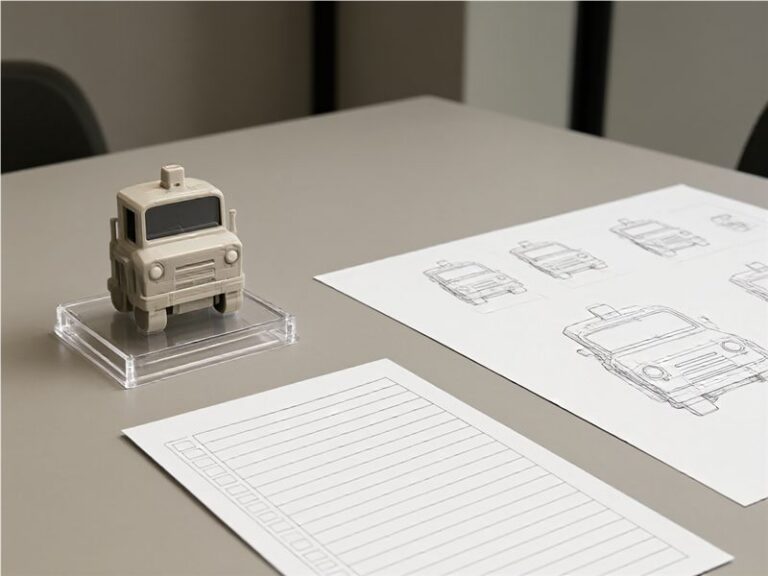
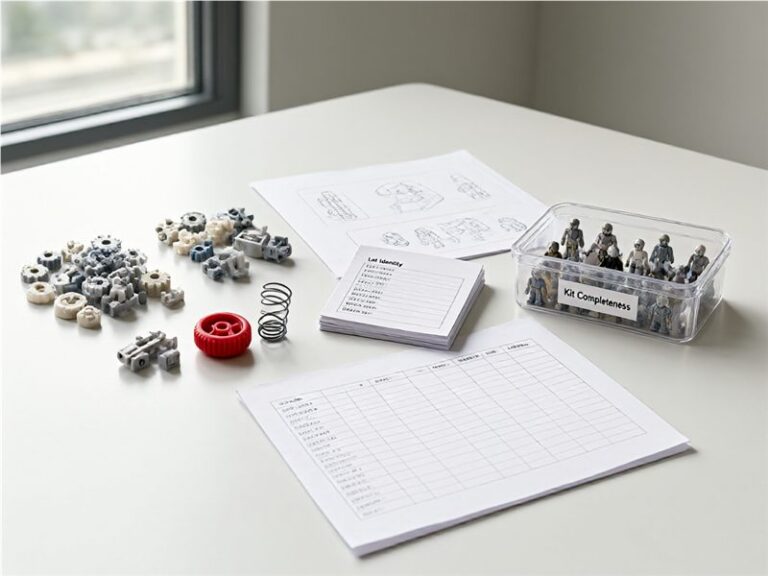
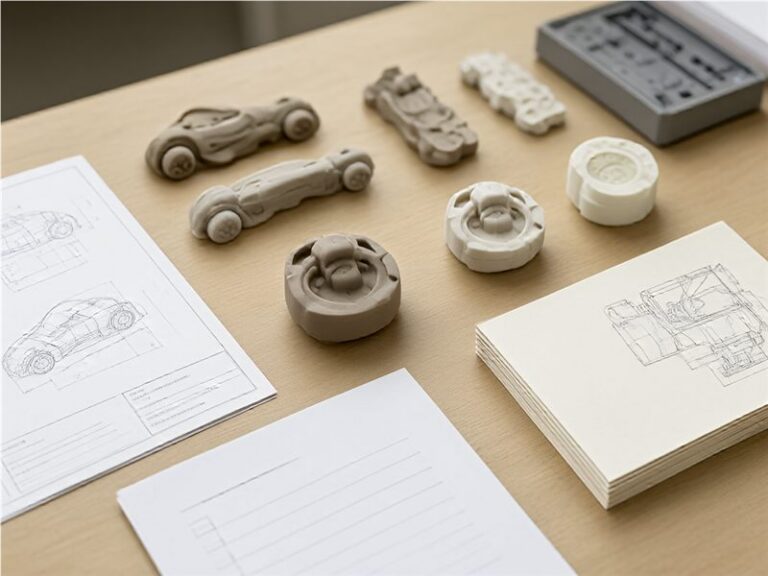
Wooden toys hide their quality in three places: the wood itself, the finish that covers it, and the joints that hold it together. A buyer who specifies only “wooden toy, non-toxic paint” leaves all three to chance — and chance, in wood, shows up as warped panels in one shipment, chipped edges in the next, and a wobbly axle that was fine on the sample. The specification below is the one we ask buyers to review before a wooden PO is placed, and every line of it exists because someone once skipped it.
Wood: species, moisture and what “solid” actually means
“Wooden” covers beech, rubberwood, birch plywood, MDF and a dozen others, and they behave differently in a child’s hands and in a container. Beech is the classic hardwood for shapes and vehicles — dense, tight-grained, takes paint cleanly. Rubberwood is the sustainable workhorse of the industry, stable when properly kiln-dried. Birch plywood gives flat panels without warping. MDF has its place in printed flat-pack pieces but is not a structural material. The specification should name the species, the moisture content at packing (kiln-dried to a range appropriate for the destination climate — wood keeps moving after it ships), and whether each part is solid wood, plywood or engineered.
Moisture is the quiet variable. A toy built at 12% moisture for a dry climate will swell and crack in a humid one; built too dry for a humid destination, joints loosen. The factory controls this at the kiln, and the buyer controls it by naming the destination in the specification — the same toy may legitimately be built to two moisture targets for two markets.
Finish: paint systems, coatings and the test file
The finish on a wooden toy is doing three jobs at once: color, protection and compliance. Water-based paints are the category standard and pair with the EN 71-3 migration limits and ASTM F963 requirements — the coating is part of the test file, so a “safer” paint substituted at the line is an untested product. Beyond compliance, the finish spec should state: number of coats, whether edges get a softened route before painting (sharp edges telegraph through thin paint), and the expected finish under two light sources. A color reference sent with the brief settles what “natural beech with pastel blue” actually means to both sides.
Assembly: joints, axles and the pull-test
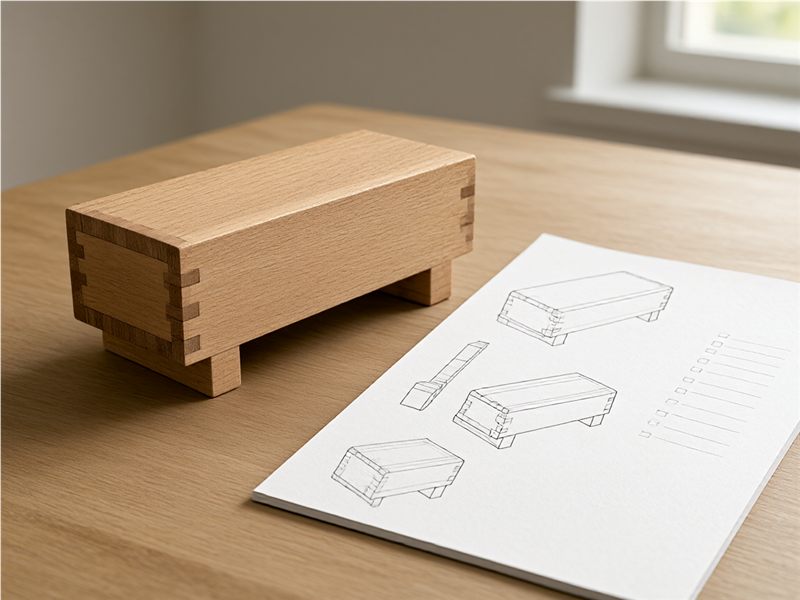
Wooden toys come apart at their joints, and the joint spec is where quality is decided before the first piece is sanded. Dowel joints, mortise-and-tenon, screws with glued threads and axle fits each have their place, and each has a failure mode that a pull-test catches. The specification should name the assembly method per joint, the glue system (and its compliance), and the mechanical requirements — pull force, torque, drop — that the finished toy must survive, which for most markets is codified in EN 71-1 and mirrored in ASTM F963.
Joint / part
Failure mode
Check to specify
Dowel joint
Rotates loose under torque
Glue spec + torque test per batch
Axle and wheel
End-cap pulls off, wheel detaches
Pull-force requirement + cap design
Glued panel
Delamination with humidity swing
Moisture spec + bond quality check
Magnetic insert
Magnet escapes casing
Flux index + housing security test
The finish and joint checks at inspection
At pre-shipment inspection, wooden toys get checked as objects that children abuse on purpose. The paint adhesion tape test on a sanded edge, the pull test on every axle and knob per the AQL sample, the torque check on assembled joints, and a visual pass for splinters, mold marks and color drift across the carton. The inspection report lists what was tested and what failed — and the golden sample set is what “correct” looks like when the argument starts.
What wooden toys cost, structurally
Three decisions drive the price of a wooden toy more than any other: solid wood versus engineered parts (solid is costlier per unit and grades higher in perception), the number of painted surfaces (each color pass is a setup), and the assembly complexity (hand-fitted joints cost labor; well-designed dowel systems cost engineering). A buyer who understands the split can move cost between the lines — a printed plywood panel can carry the color story while solid beech carries the structural parts — without degrading the toy.
Four questions buyers ask about wooden programs
Can the wood be FSC-certified? Yes — certified material runs with chain-of-custody documentation, and the certification is quoted into the material cost. State it in the brief and it follows the PO.
Why did the paint chip on the edges? Almost always a missing route-and-seal step before painting: edges sanded, sealed, then painted hold; raw edges painted over do not. It is a specification line, not a factory mystery.
Is plywood acceptable for a premium line? For flat-panel designs, birch plywood outperforms solid wood on stability; the premium signal comes from the edge treatment and finish, which are specification items.
What is the realistic MOQ? Wooden programs run from 1,000–3,000 pcs for custom shapes on 500 for stock configurations, driven by the setup cost of painting lines and the material batching.
Where wooden programs go wrong
Three specification gaps produce most of the trouble. The unnamed substrate: a buyer approves a birch ply sample and receives MDF panels with the same print, because “wooden” was the whole spec. Name the species per part. The unsealed edge: plywood edges left raw drink up moisture from a wipe-clean wipe and telegraph through the paint. Edges get sealed before painting, in the spec. The assumed joint: a buyer sees a dowel on the sample and assumes screws in production, or vice versa; both are legitimate, and they behave differently under torque. The assembly method is a line in the specification, per joint, with the glue system named.
Each gap is one sentence in a document. Each sentence is cheaper than the container it saves.
Sampling: what each round proves
Wooden programs sample in the same three rounds as the rest of the line, but each round proves something different. The hand sample proves the shape and the size against the brief. The mold or first-article sample proves the species choice and the joint system — it is the first time the toy is built the way production will build it, with production glue and production paint. The golden sample from the pilot run proves the finish: the coats, the color under two lights, the edge softening. Buyers who compare the golden sample to the sales sample, rather than to their memory, catch the drift that a year of reviews would otherwise report.
Packing wooden toys for the container
Wood is heavy and finishes are soft, so the pack-out is a specification item. Individual polybags with corner protection, inner cartons that stop face-to-face rubbing, and a stacking plan that respects the heaviest pieces — these are quoted into the program, not discovered at the warehouse. Destination climate returns as a theme here: a toy built for a dry interior climate ships into a humid port, and the moisture spec set at the kiln is what protects the joints for the second half of the journey.
The compliance file for wooden programs
The wooden toy file pairs EN 71-1 (mechanical and physical), EN 71-2 (flammability — lower risk in wood, but the spec still applies) and EN 71-3 (migration, which is where the finish system lives) with the ASTM F963 track for the US. The paint system and any transfer decals are inside the migration scope, and the glue system is inside the mechanical scope. A wooden toy with a magnetic insert adds the flux-index requirement; one with a sound module adds the acoustic limits. The file is written against the finished toy as sold — which is why the finish and joint specifications belong in the same document as the test plan.
Two questions buyers ask about wooden programs
Can we mix solid wood and plywood in one toy? Yes, and it is the standard engineering pattern — solid where grain and strength matter, ply where flat stability matters. The specification names which parts are which, and the test file covers the assembly as sold.
How does the moisture spec survive a year in storage? It survives because the kiln target was matched to the destination at the start, and because the finish seals the surfaces the kiln cannot protect. Toys stored in their sealed polybags and inner cartons hold their moisture spec for years; toys opened and stored loose take on the local climate.
Age grade on a wooden toy: where the lines land
Wooden toys grade by the same logic as everything else — intended user, play pattern, design features — and wood helps and hurts in predictable ways. Heavy pieces raise the grade (an infant toy must be light enough to drop safely on itself); small turned parts like pegs and beads sit under the small-parts cylinder and push the grade up; wheels and axles bring the detachable-part requirements. A stacker with large rings and a solid post sits comfortably at 12 months plus; a wooden vehicle with magnetic figures lands at 3+ with the small-parts warnings; a marble-run component is 4+ or higher with a marble warning that the label must carry. The grade is written against the released drawing and the released label together, which is why the artwork is in the file.
The finish color story across a range
Wooden ranges live on color consistency: the same pastel blue across a stacker, a vehicle and a puzzle says “one brand” without a word. That consistency is a paint-system decision — the same pigment base, the same coating count, batched to a color standard — and it survives reorder after reorder only when the color standard is written into the specification with a physical reference. Buyers who send one physical color card with the brief get ranges that match across seasons; buyers who approve each color from a screen get a range that matches only on the screen it was approved on.
The spec sheet, as a template
Everything above condenses into one page the buyer reviews before the PO — and the same page the factory works from during production. The lines that matter: species and part type per component (solid, ply, engineered); moisture target at packing, matched to destination; finish system with coat count and color references per surface; assembly method and glue system per joint; mechanical requirements per the destination standard (pull, torque, drop); packing format with corner protection and inner carton spec; and the compliance file references paired to the finished toy. One page, seven lines, and the container arrives looking like the sample.
Why wooden toys reward the careful buyer
The category pays back specification discipline more visibly than any other line in the catalog. A wooden toy built to a real specification — species, moisture, finish, joints — survives years of abuse, keeps its color across seasons, and builds the kind of review history that makes the second program easier to launch. The same toy bought on “wooden, non-toxic” alone can be a perfectly good product too; the difference is that one of them is a repeatable result and the other is a lucky one. Programs are built on repeatable.