



Private label and OEM are how most toy brands launch without owning a factory — but the model concentrates risk in three places: intellectual property, certification and quality control. A brand that skips any one of them can lose a launch to a copycat, a customs hold, or a defect recall. This guide covers the OEM/ODM split, the prototype-to-production path, certification realities, and the QC gates that protect a launch.
Key Takeaways
- OEM = you provide the design; ODM = the factory’s design, lightly customized. Know which you are buying.
- IP protection (contractual + territorial) is the first risk, not an afterthought.
- Certification (EN71/ASTM/CPSIA) must match the destination market before tooling.
- QC gates: pre-production sample, in-process, and pre-shipment AQL inspection.
- Start with a locked prototype and a signed spec; never tool from a verbal description.
OEM vs ODM: Know What You Are Buying
OEM means you bring the design and the factory makes it; ODM means the factory’s existing design, customized with your color, logo and minor changes. The distinction decides who owns the tooling and the IP, and how much you can differentiate. The squishy/stress-ball category shows the pattern in our squishy OEM/ODM guide, and material choice (air-dry vs polymer clay) is in our clay comparison.
| Model | Design owner | Differentiation | Tooling |
|---|---|---|---|
| OEM | You | High | You / shared |
| ODM | Factory | Low–medium | Factory |
| Private label | Factory (generic) | Branding only | Factory |
Prototype to Production
The path is: locked prototype → signed spec sheet → tooling → pre-production sample → production → inspection. The fatal mistake is tooling from a verbal description or a photo; without a signed spec, “not as expected” has no reference. Sensory lines that often start as ODM are in our sensory sand guide.
Certification and IP
Certification must match the destination before tooling — EN71 for the EU, ASTM F963 and CPSIA for the US — because a non-compliant product cannot be sold and may be destroyed at customs. IP protection (contractual assignment plus territorial scope) is the first risk: without it, the factory can sell “your” design to competitors. Water-safe lines add a layer, covered in our water-play guide.
QC Gates That Protect the Launch
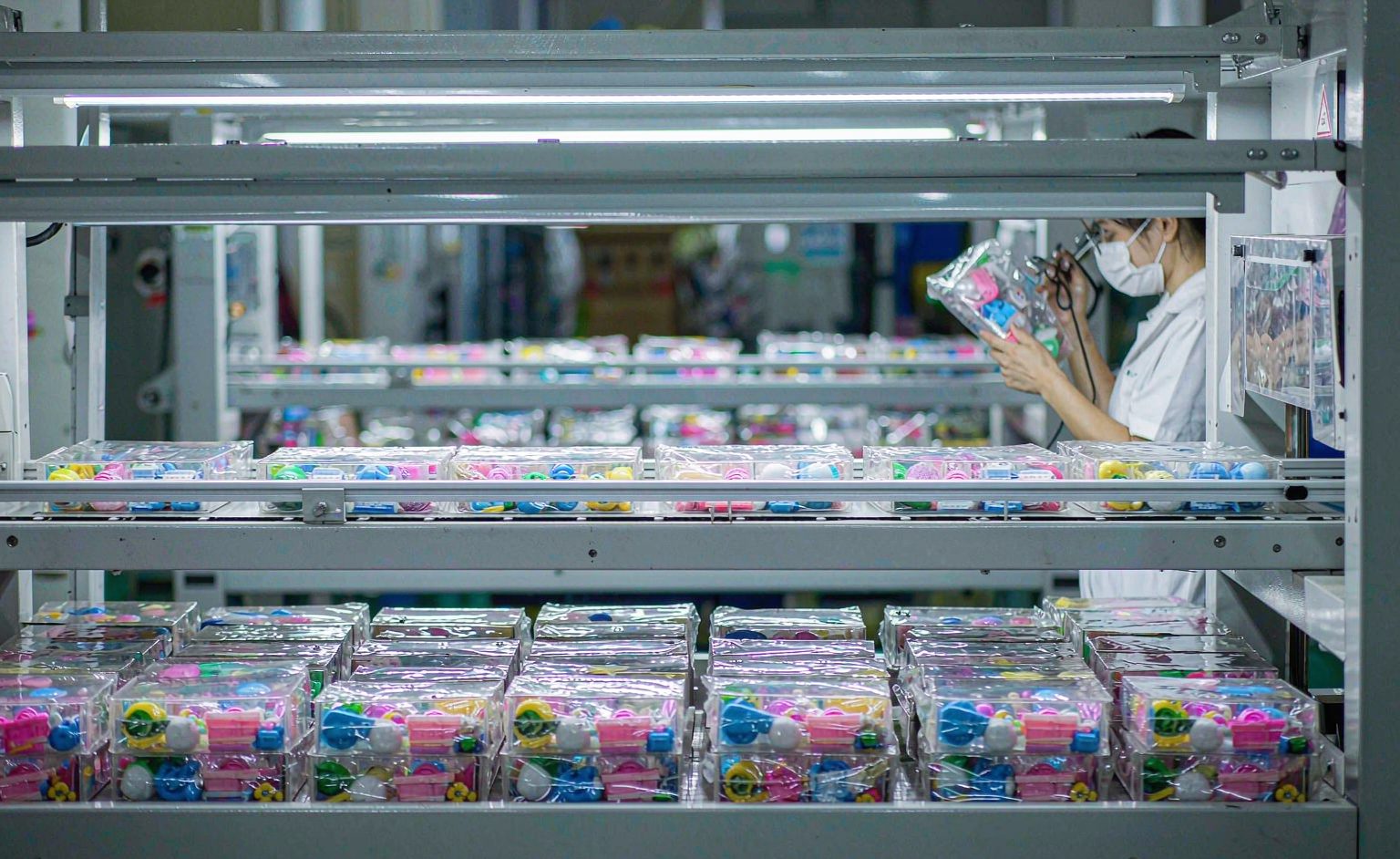
Three gates: a pre-production sample you approve and archive, in-process checks during the first runs, and a pre-shipment AQL inspection against the signed spec. Skipping the pre-shipment gate is how a bad batch reaches customers and a launch becomes a recall. These are the same disciplines any serious private-label program runs.
Frequently Asked Questions
What is the difference between OEM and ODM?
OEM = you provide the design; ODM = the factory’s design, lightly customized. It decides IP ownership and differentiation.
When should I protect IP?
Before tooling — via contractual assignment and territorial scope; otherwise the factory can resell your design.
Which certifications do I need?
EN71 (EU), ASTM F963 and CPSIA (US) as applicable — matched to the destination before tooling.
What are the key QC gates?
Pre-production sample approval, in-process checks, and pre-shipment AQL inspection against the signed spec.
Should I tool from a photo?
Never — lock a prototype and sign a spec sheet first, or “not as expected” has no reference.
Is private label lower risk than OEM?
It is faster but offers the least differentiation and the most copycat exposure; the trade-off is speed vs uniqueness.
Technical background: OEM/ODM, toy safety and private label cover the context.