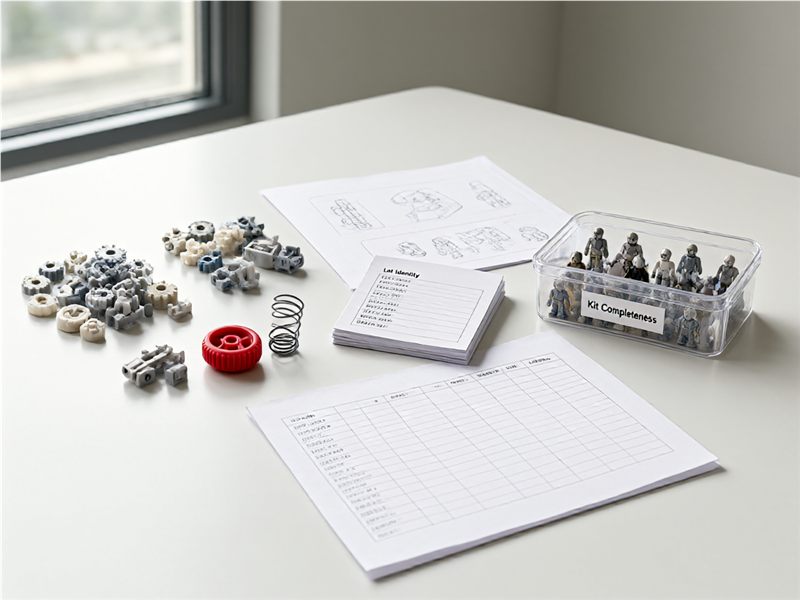
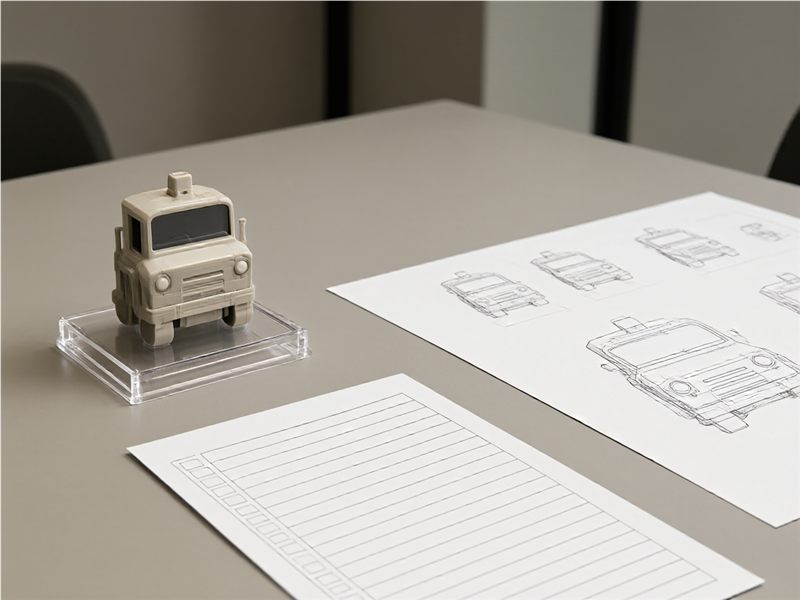
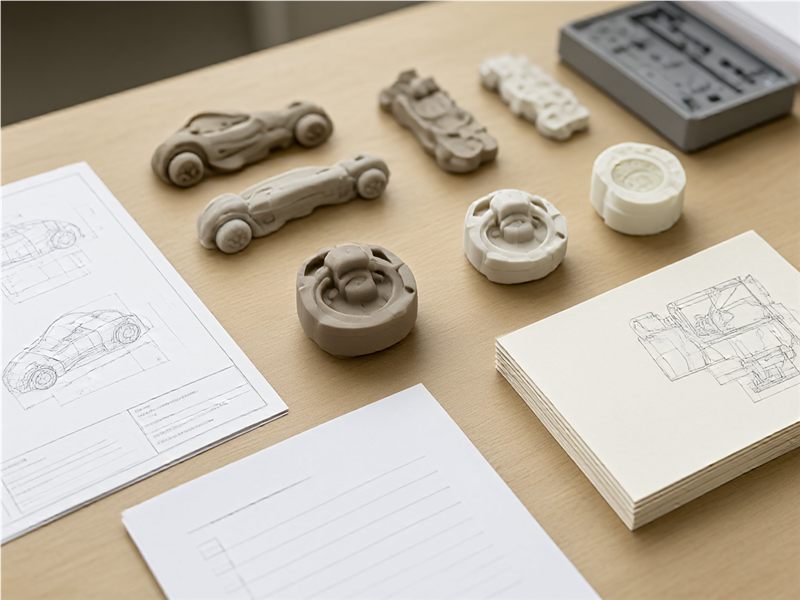
Three near-identical units sat in a row on the meeting-room table, and the argument was about which one counted. The buyer’s quality lead pointed at the first, a squishy piece with a signed tag dated two months earlier, and said the arriving lot had drifted warmer and a little firmer. The factory’s representative pointed at the second, an unopened unit from the sample cabinet, and said the shipment matched it exactly. The third had been pulled at random from the delivered cartons, and it was the object actually in dispute. Nobody denied that all three had, at some point, been called “the approved sample”. What they could not agree on was which of them the purchase order had been written against. This is the record of that review: what each object could prove, what it could not, and how the two sides finally ranked them.
Three objects, three different jobs
The signed unit, the retention unit and the lot unit are not three copies of the same thing. They are three different instruments made at three different moments for three different purposes. The signed unit is a record of agreement. The retention unit is a factory-side reference held for comparison during production. The lot unit is a specimen of what was actually shipped. Confusing them is easy because they look alike, and it is the root of most sample disputes: a comparison that should have been made against one object gets made against another, and both parties can be sincere while reaching opposite conclusions.
What each side meant by “the same sample”
The buyer used “approved sample” to mean the unit their representative had signed at the approval meeting. Anything shipped later was measured against that physical object, and a visible difference was a deviation from an agreed reference. The factory used the same phrase to mean the working standard the line had been building to — the retained unit pulled from the cabinet at the start of each run, checked by operators, and kept away from light. From that perspective the shipment was consistent, because consistency had been judged against the cabinet unit every day.
Both readings are internally coherent. The conflict is not about honesty; it is about a term that was never tied to a specific object in the order documents. A purchase order that says “as per approved sample” without naming which physical unit, held by whom, under which reference number, has effectively delegated the definition to whoever is holding the nicer-looking piece on the day of the argument. The first correction in any such dispute is lexical: replace the phrase with an identifier.
The signing ceremony is a record, not a ritual
Approval meetings tend to be remembered as a handshake and a signed tag, but the evidentiary value lies in the surrounding paperwork. A usable ceremony leaves behind: who was present and in what capacity, the exact unit signed, the specification revision it was signed against, the list of attached references such as colour chips or printed artwork, the date, and a note on what the approval does and does not cover. Without those, a signature is a photograph of a moment rather than a definition of a product.
The tag itself deserves scrutiny. A signature on a hangtag proves that a particular object was seen on a particular day; it does not, by itself, state the configuration of that object. Was the signed squishy bare or in its printed bag? Did the approved slime kit include the instruction card and the stirrer, or just the tub? If the tag says “approved” and nothing else, the review has to reconstruct the configuration from memory, which is exactly what the two sides were doing here. Our note on the golden sample approval workflow for bulk orders describes how to attach a configuration and a revision to the signed object so the ceremony produces a document rather than a souvenir.
What a signature actually certifies
A signed sample certifies a narrow proposition: this object, in this state, on this date, was acceptable to the person who signed it. It does not certify that every later SKU in the range is covered, that a change in material six weeks later is pre-approved, or that the approval survives indefinitely. Buyers often treat a signature as a standing licence and factories often treat it as a starting point to be interpreted; both stretch the same sentence in opposite directions.
The practical consequence is that approval has an expiry condition, even when no one wrote one down. A change to the formulation, the pigment system, the mould, the surface finish or the packaging should send the parties back to the table. If the order documents do not say so, a factory can reasonably argue that the signed unit still governs a revised product, and a buyer can reasonably argue that it does not. Writing the re-approval trigger into the approval record removes an argument that otherwise gets settled by whoever is more insistent.
Custody decides whether the retention copy can be trusted
The cabinet unit is only as good as the chain of custody behind it. Who sealed it, when, in what packaging, where it has been stored since, and who has had access to it are questions that determine whether it can be used as a reference at all. A retained sample kept near a window, handled by operators during every shift, or quietly replaced after a complaint is not a stable standard; it is a piece of stock with a label on it. The factory in this review had a sealed unit, which helped, but no log of when it was opened for comparison.
Custody is not an accusation; it is a documentation standard. A simple register stating the seal date, the storage location, the person responsible, and each occasion the unit was removed for viewing turns the retention copy into evidence rather than an assertion. Both parties should hold a sealed unit from the same approved lot where the programme allows it, so that a dispute can be judged against two independently stored references. When only one side holds a reference, the other side is being asked to accept an object it cannot inspect between meetings.
Production-lot units show performance, not agreement
The unit pulled from the delivered cartons answers a different question entirely. It shows what the run produced; it does not show what the parties agreed the run should produce. That distinction matters because a lot unit is often treated as if it were a verdict. A buyer holds it up and says “this is wrong”, but wrong is a comparison, and the comparison still needs a reference.
How the lot unit was selected also governs what it can prove. A single piece couriered in advance of the shipment is a promise; a piece drawn at random from sealed cartons at receipt is a sample of the lot. For a dispute, the drawing method should be recorded — which cartons, which positions, how many units — because a hand-picked unit cannot support a claim about the run. Once a representative sample is established, the discussion moves from “is this one different” to “is the lot within the agreed tolerance”, which is a question with an answer. Our page on inspection defect classification explains how a found difference is then graded before anyone decides whether the shipment is acceptable.
Ranking the evidence by the question being asked
There is no single permanent hierarchy among the three objects, and pretending there is causes bad decisions. The ranking depends on what is being decided. For “what did we agree to”, the signed unit governs, provided its configuration and revision are documented. For “was the line consistent with its own working standard”, the retention unit is the right comparator. For “did the shipment conform”, the lot units are the evidence, measured against the signed unit. Each question has a different leading document, and a review that mixes them reaches a muddled finding.
Where the version trail breaks
Most sample disputes are not about a single bad unit; they are about a change that was never reflected in the approval record. A pigment is substituted, a mould is re-cut, a printed logo is moved, an accessory is added to a kit, and production continues under the old signed reference. The paperwork still says revision one while the line is building revision three. When a complaint arrives, both sides reach for a document that describes a product neither of them is holding any more.
The trail is repairable if change notes are tied to sample versions. Every approved substitution or artwork change should carry a reference to the sample it supersedes and state whether a new signing is required. Where a printed component is involved, the logo position and the label copy are version-controlled items in their own right, not decoration; our guidance on private-label logo placement rules treats them as approval items for exactly this reason. In the review, the warmer tone turned out to follow a pigment change that had been authorised commercially but had never been attached to a re-signed sample.
A comparison sheet for the review file
The table below was used to stop the three objects being discussed as if they were interchangeable. Each row states what the object can and cannot establish, and the condition under which it stops being usable at all.
Object
Origin and custody
What it can prove
What it cannot prove
When it ceases to govern
Signed unit
Signed at approval meeting, held by buyer, tag dated
The reference both parties accepted on a stated date
That later changes are pre-approved, or that other SKUs are covered
When a material, colour, tooling or artwork change triggers re-approval
Retention unit
Sealed from the approved lot, held in factory cabinet
Whether the line stayed consistent with its working standard
What the buyer originally agreed to, or the state of the shipped lot
When the seal log is missing, storage is uncontrolled, or the lot changes
Lot unit
Drawn at random from received cartons, position recorded
The state of the production run at receipt
What the parties agreed the run should be
When the drawing method is undocumented or cartons were already opened
Colour chip or artwork sheet
Attached to the approval record, revision dated
The named standard a colour or print was matched to
Hand feel, firmness, assembly or any unlisted attribute
When a substitute is approved and the attachment is not reissued
Change note
Issued after approval, signed by an authorised owner
That a specific deviation was accepted, and from which lot
That all other terms of the original approval still hold unexamined
When it is superseded or lacks a link to the sample version it changes
Judging a colour or hand-feel dispute against a physical reference
Colour and firmness are the attributes that start these arguments, because both are judged by a person rather than by a gauge. That makes the viewing condition part of the evidence. Two units compared under different light, at different temperatures, or after one has been handled for weeks will not read the same even when nothing changed in production. Agree the light source, the background, the distance and the resting state before anyone says “warmer” or “firmer”.
Photographs are the weak link and should be excluded from the finding. A product image is useful for discussion and useless for adjudication: white balance, screen calibration and compression all move a pastel tone, and no photograph conveys how a squishy piece recovers after a squeeze. The physical signed unit, or a physical approved chip held by both parties, is the only reference that can settle the question. Where the agreed tolerance is verbal, the honest outcome is often a documented concession rather than a verdict, because there is no scale on which to place the difference.
The finding, and the questions it left open
The review concluded that the shipped lot had drifted from the signed reference, that the drift followed a pigment change authorised in a change note but never carried into a re-signed sample, and that the factory’s retention unit was consistent with the run but could not, on its own, define the buyer’s agreement. It did not conclude that the goods were unusable. Conformity and commercial acceptability are separate decisions; the first is a comparison, the second is a negotiation about whether the difference matters for the intended market.
Three things were deliberately left open and recorded as such: whether the firmness difference fell inside an agreed tolerance, because no tolerance had been written; whether the retention unit’s seal log could be reconstructed, because the register was incomplete; and whether other SKUs sharing the pigment were affected, because their approval records had not been checked. Naming the open questions is what keeps a partial finding honest.
How the next signing should be run
The corrective actions were ordinary and procedural. Three units from the same approved lot would be signed and sealed together — one for the buyer, one for the factory cabinet, one as a spare — each carrying the same reference number, the specification revision, the configuration list and the date. A short attachment sheet would name the colour chips, artwork and any included accessories. A custody register would record every opening. And the approval record would state, in one sentence, which changes require a fresh signature.
None of that makes a product better. The point of a signing ceremony is not the signature; it is that six weeks later, when a warmer tone or a firmer squeeze is disputed, there is one identified physical object that both parties already agreed was the reference, and a document explaining exactly what that agreement covered.
Which sample governs when the signed unit and the factory retention unit disagree?
For the question “what did we agree to”, the signed unit governs, provided its configuration, specification revision and attachment list are documented. The retention unit answers a different question — whether the line stayed consistent with its own working standard — and cannot redefine the buyer’s agreement. Rank the evidence by the question being asked, and record the viewing condition before comparing colour or firmness.
What does a signature on a golden sample actually certify?
It certifies a narrow proposition: this object, in this state, on this date, was acceptable to the person who signed. It does not certify other SKUs, a later material or pigment change, or indefinite validity. State the covered configuration on the tag, list the attached references, and write a re-approval trigger so a substitution cannot be argued as already approved.
Why should a production-lot sample not be treated as proof the shipment is wrong?
A drawn lot unit shows what the run produced; it does not show what the parties agreed the run should produce. “Wrong” is a comparison and still needs the signed reference. Record the drawing method — which cartons, which positions, how many units — because a hand-picked piece cannot support a claim about the whole lot, then grade any difference before deciding acceptability.
How should a colour or hand-feel dispute be documented when no tolerance was written?
Compare the physical signed unit with drawn lot units under an agreed light source, background, distance and resting state, and exclude photographs from the finding. If no numeric or chip-based tolerance exists, record that openly and treat the outcome as a documented concession or a re-signing rather than a verdict, since there is no scale on which to place the difference.
OEM & ODM TOY MANUFACTURING
Ready to Develop Your Custom Toy Line?
10+ years factory experience • EN71, ASTM F963 & CPC compliance support • Flexible MOQ for toy brands, importers, and Amazon sellers.