Every toy range carries products whose time is over: designs that lost momentum, tooling that reached the end of its economical life, lines that cannibalise a newer launch, or SKUs whose compliance file is no longer worth refreshing. How those products leave the range matters as much as how new ones arrive, because an abrupt cut damages channels, strands inventory and burns goodwill that took seasons to build.
Key takeaways
An unplanned discontinuation creates four problems at once.
Packaging, manuals and labels already bought for the dead SKU become scrap.
Together they turn a routine portfolio decision into a quarter of unpaid admin and a channel that learned to double-check every future promise.
A planned transition treats discontinuation as a project with a sequence, a sell-down path and a replacement decision – not as a line quietly deleted from the next price list.
Why Endings Need Planning
An unplanned discontinuation creates four problems at once. Customers and channels holding the product discover the gap only when they reorder and find nothing. Run-out inventory sits in the warehouse, consuming space and cash while someone decides what to do with it. Packaging, manuals and labels already bought for the dead SKU become scrap. And the tooling – paid for, owned by one side or the other – drifts into limbo, with storage fees accruing and nobody recording whether it should be kept for a future run or retired.
None of these is catastrophic alone. Together they turn a routine portfolio decision into a quarter of unpaid admin and a channel that learned to double-check every future promise.
The Discontinuation Sequence
A clean retirement follows the same steps almost every time:
Set a last-order date and announce it to every channel with enough runway to place a final order – typically one full production and transit cycle ahead.
Name a successor, even loosely: which SKU carries the shelf slot, and what tells a customer who reordered it that this is the natural next product.
Sell down the tail through a deliberate path rather than a silent markdown.
Retire the assets: tooling disposition agreed and recorded, packaging stock consumed or written off on a date, artwork archived with ownership noted.
Clean the data: catalogues, listings and barcodes updated so the discontinued SKU cannot be ordered by accident.
The announcement step is the one buyers skip, and it is the cheapest. Channels accept endings when they are told early and given a path; they accept them badly when the replacement arrives unexplained.
Run-Out Inventory: Sell Down Deliberately
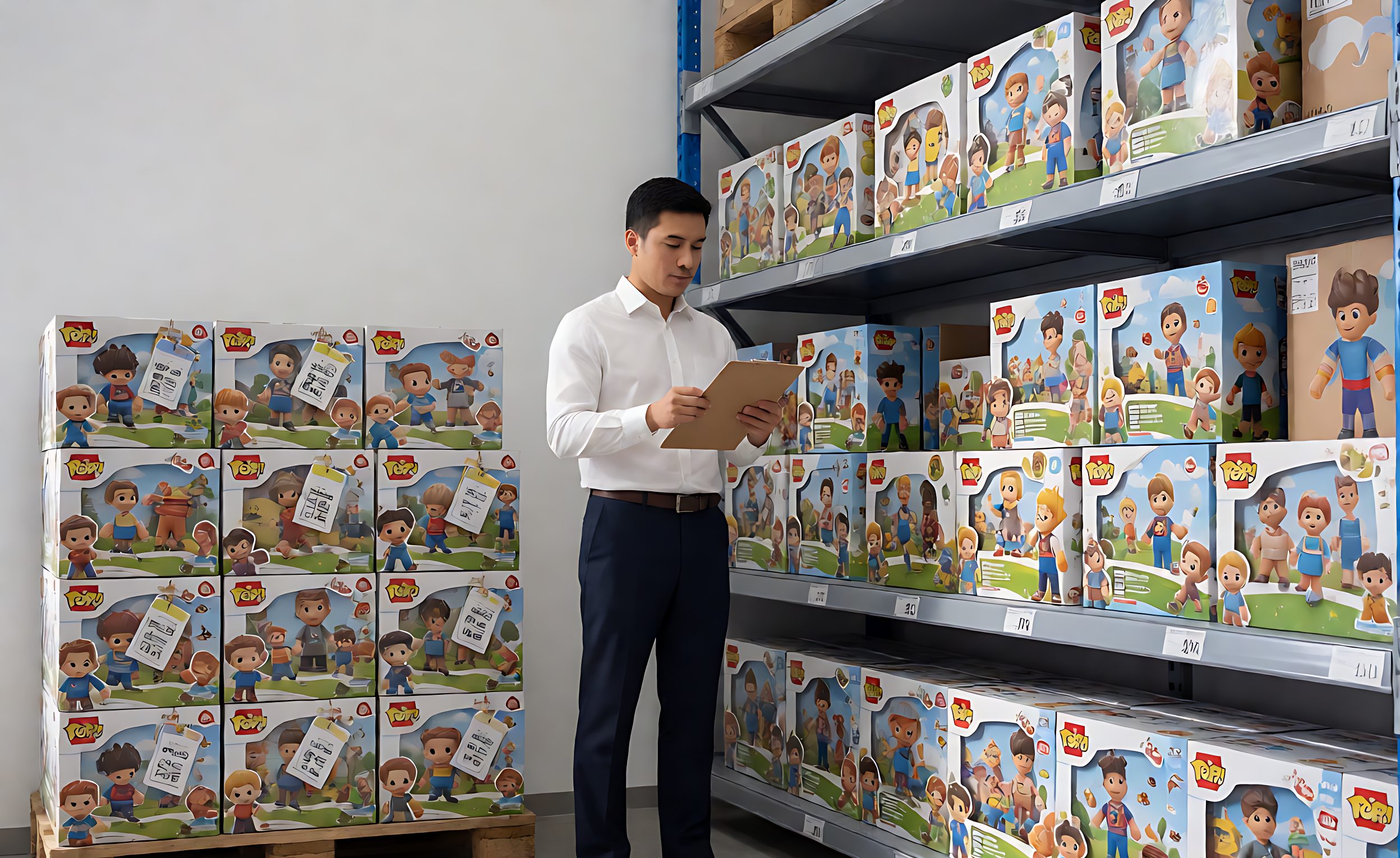
Two mistakes dominate run-out handling. Discounting too early teaches every channel to wait for the markdown, and slow, passive sell-down ties warehouse space and cash for quarters. The working approach is a ladder: a clearance window to secondary channels or bundle deals at a set date, a firm cut-off, and whatever remains is disposed of in bulk rather than nursed. A decisive loss on the last ten percent of units usually costs less than a year of carrying the whole tail.
Material categories add a deadline of their own. Clay and slime families have shelf-life and formulation limits, so aged run-out does not merely lose value – it can lose sellability, which makes early clearance the financially safer route for those lines specifically.
The Line Review: What Stays and What Goes
A line review is the scheduled counterpart to ad-hoc decisions, and a simple one held every six months beats an elaborate one held never. Score every SKU on a handful of criteria: sell-through velocity against its slot, margin after returns, contribution to the container – a slow line that fills cube efficiently earns credit – trend alignment, and how much administrative and compliance weight it carries relative to its volume.
The review should end with explicit decisions, not observations: continue, replace, or retire, with dates. Ranges drift when every SKU survives by default; a range that must periodically justify each slot stays lean without drama. The replacement decision deserves the same discipline as the retirement: promote from the tail where something proved itself, or commission a purpose-built successor where nothing did.
Technical Background
The arc a product travels from launch to retirement is the product lifecycle, and the transition period itself is largely an exercise in managing inventory through its least profitable phase. The accounting unit that carries all of these decisions is the stock keeping unit, which is why the review is run at SKU level even when the conclusions are drawn at line level.
Replacing the Slot Well
A retirement is only half finished until the slot has a successor. Where the successor needs new tooling, the ownership and cost questions are set out in mould and tooling ownership costs, and the approval workflow that keeps the new SKU’s bulk run honest follows the golden sample workflow. Where the outgoing line is clay or slime based, shelf-life considerations for the transition window are covered in the shelf-life and preservative specification guide, and bespoke successor development under a brand programme follows the same logic as the private label OEM guide.
Frequently Asked Questions
How much notice should channels get before a SKU is discontinued?
At least one full production and transit cycle, so a final order remains possible before the last-order date passes.
Should discontinued stock be discounted immediately?
No. Early markdowns teach channels to wait. Use a dated clearance ladder with a firm cut-off and bulk disposal for what remains.
What happens to tooling after a line ends?
Its disposition should be agreed and recorded at retirement: kept in storage under a stated fee, transferred, or scrapped, with ownership documented.
How often should a line review run?
Every six months for most wholesalers. A simple review held on schedule beats a detailed one held rarely.
What criteria decide which SKUs to retire?
Velocity against its slot, margin after returns, container contribution, trend alignment and the compliance weight it carries relative to volume.
Must a retired SKU have a direct replacement?
The slot does. Whether the successor is a promoted tail SKU or a newly developed line, the shelf position should not be left to drift.
Do clay and slime run-outs need special handling?
Yes, because shelf-life limits mean aged stock can lose sellability, not just value, so early clearance is usually the safer financial route.
OEM & ODM TOY MANUFACTURING
Ready to Develop Your Custom Toy Line?
10+ years factory experience • EN71, ASTM F963 & CPC compliance support • Flexible MOQ for toy brands, importers, and Amazon sellers.