


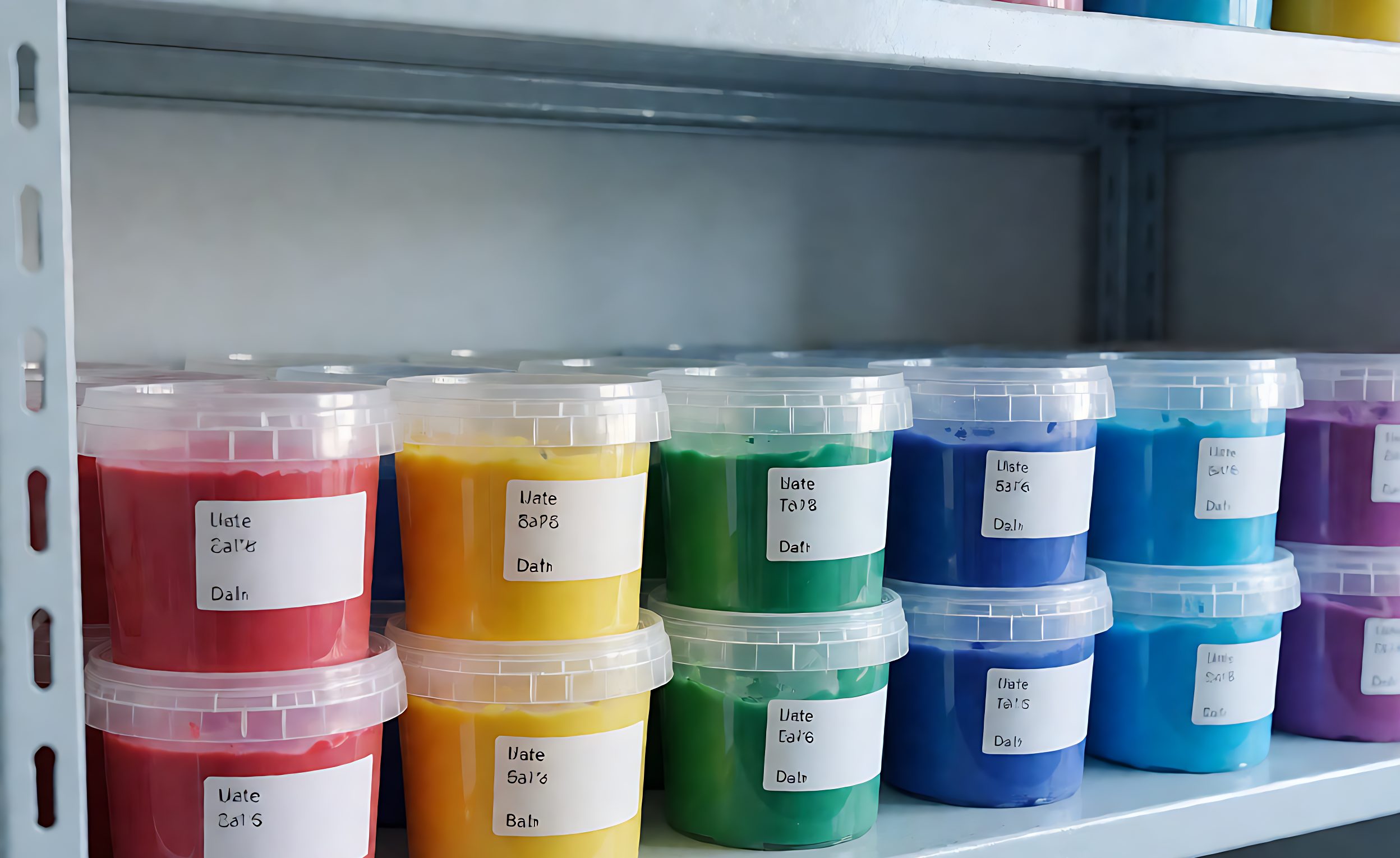

Clay, slime and similar compounds are water-based systems, and anything containing water is a medium something can grow in. That single fact determines most of what a wholesale buyer needs to specify: preservation, packaging integrity, storage conditions and date coding. Get these right and shelf life is a manageable attribute; treat them as details and the failure appears at the worst point – on a retail shelf, in a customer’s hands, as a complaint.
Shelf life is also an inventory question. A product with an eighteen-month life sold through a channel that holds stock for a year has far less margin for error than the same product sold through a fast-turning channel.
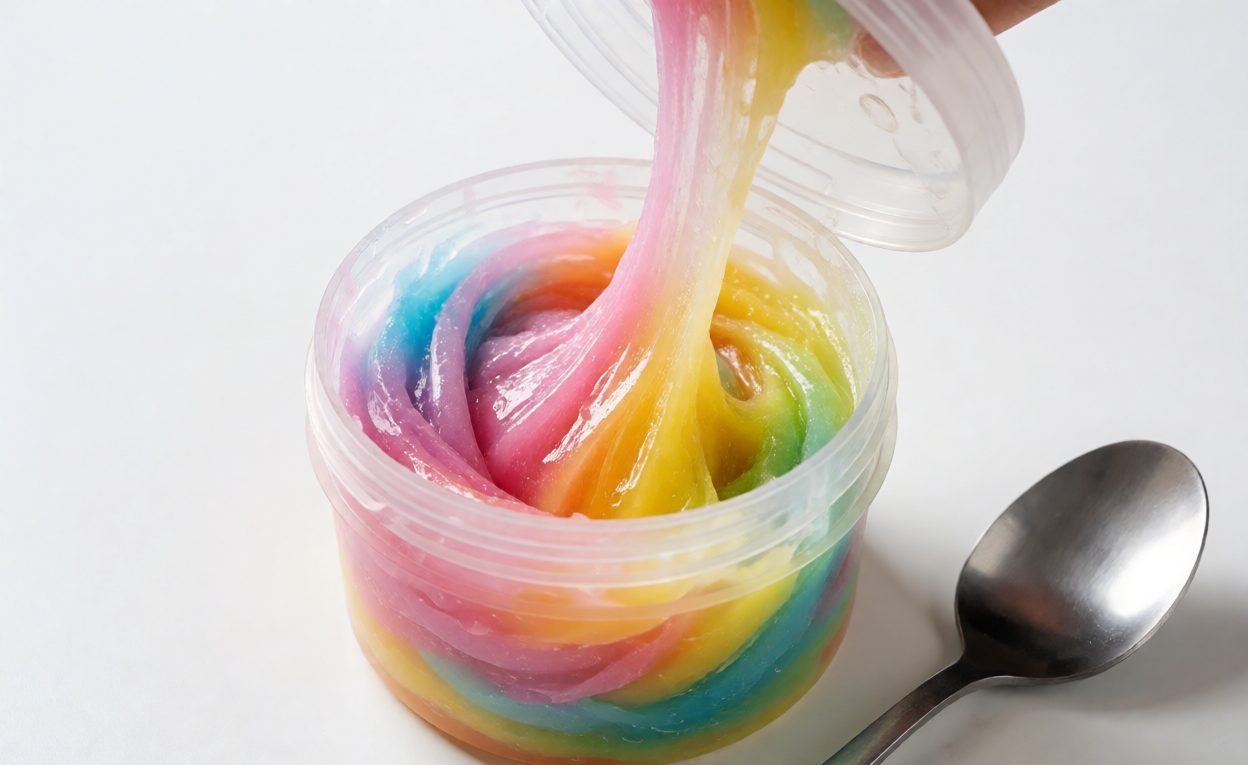
What Actually Limits the Life
Four mechanisms, roughly in order of frequency:
- Microbial growth, where the preservation system is inadequate for the formulation or has been diluted by a change in water quality or raw material.
- Moisture loss, which dries a compound out and changes its texture permanently once the pack has been opened, and slowly even when sealed.
- Separation or syneresis, where water migrates out of the matrix and the product weeps or becomes grainy.
- Colour or odour change from pigment instability or preservative breakdown.
Only the first is a safety issue, but all four produce returns. Buyers should specify acceptable limits for each, not merely a shelf-life number, because a tub can be safe and still unsellable.

Preservation: What to Ask For
Preservation is a system, not an ingredient. It has to be effective against the organisms likely to be introduced, compatible with the rest of the formulation, and stable across the temperature range the product will see. Three questions put to the supplier cover it:
- What is the preservation system and at what level, and is it permitted in the destination market at that level?
- What challenge testing supports it, meaning the product was deliberately inoculated and shown to resist growth rather than merely assumed safe.
- What happens if a raw material or water source changes, since preservation efficacy depends on the whole formulation.
Efficacy is also affected by the pack. A wide-mouthed tub used by many hands is a harsher environment than a sealed sachet, so preservation adequacy should be assessed for the product as sold, including the way it will be used.
Packaging Integrity and Storage
A good formulation in a poorly sealed pack fails early. The specification should cover closure torque or seal strength, the barrier properties of the tub or sachet, and a seal-integrity check on the line. For bulk buyers, the outer carton matters too: cartons stored in a damp container arrive weakened, and the units inside are exposed to conditions the formulation was not designed for.
Storage conditions should be stated on the order and respected in the warehouse: a cool, dry range, away from direct sun, with stock rotated by date code. These are ordinary warehouse disciplines, and they are the difference between realising the specified life and losing months of it.

Technical Background
The commercial concept is shelf life, the period a product remains acceptable under defined storage. Preservative systems are the standard control in water-based formulations, described under preservative, and the failure mode they prevent is growth of mould, which is visible, odorous and the usual trigger for consumer complaints.
What to Put on the Order
Specify the claimed shelf life from the date of manufacture, the storage conditions that claim depends on, the date coding format and its location on both unit and carton, the preservation system and its permitted status in the destination, and the stability or challenge-test evidence held. Then verify on arrival: check date codes against the production date, inspect seals, and hold retained samples under warehouse conditions so any complaint can be compared against stock stored the same way.
Retained samples are the cheapest diagnostic available. When a complaint arrives months later, a retained unit stored under known conditions answers whether the problem was the product, the storage or the batch. Keep them from every shipment, label them with the batch code and the date received, and store them in the same warehouse rather than in an office, so their conditions match the stock they represent.
Transit deserves a line in the specification as well. A container crossing a tropical route can sit at high humidity and temperature for weeks, which is a harsher trial than a shelf-life test performed at ambient conditions. Where the lane is known to be hot, ask whether the stability evidence covers that exposure, and consider desiccant or barrier packaging for the carton.
Shelf-life specification connects to material selection in the sensory materials comparison and to formulation supplier selection in choosing an air-dry clay manufacturer. Bulk specification practice is covered in the bulk buyer’s guide, and complaint handling links to recall readiness.
FAQ
What limits shelf life in water-based compounds?
Microbial growth, moisture loss, separation and colour or odour change, in roughly that order of frequency.
Is shelf life only a safety issue?
No. A product can be safe and still unsellable if texture, colour or odour has changed, so specify limits for each.
What is challenge testing?
Deliberately inoculating a formulation with organisms to demonstrate the preservation system works, rather than assuming it does.
Does packaging affect shelf life?
Yes. Seal integrity and barrier properties decide whether the formulation is protected, and poor outer cartons expose units in transit.
How should stock be rotated?
By production date code, under the cool dry conditions the shelf-life claim assumes.
Why keep retained samples?
They are the cheapest diagnostic when a complaint arrives, because they show whether the cause was product, storage or batch.
Can preservation be changed without notice?
It should not be. Efficacy depends on the whole formulation, so require the factory to declare changes and re-verify.