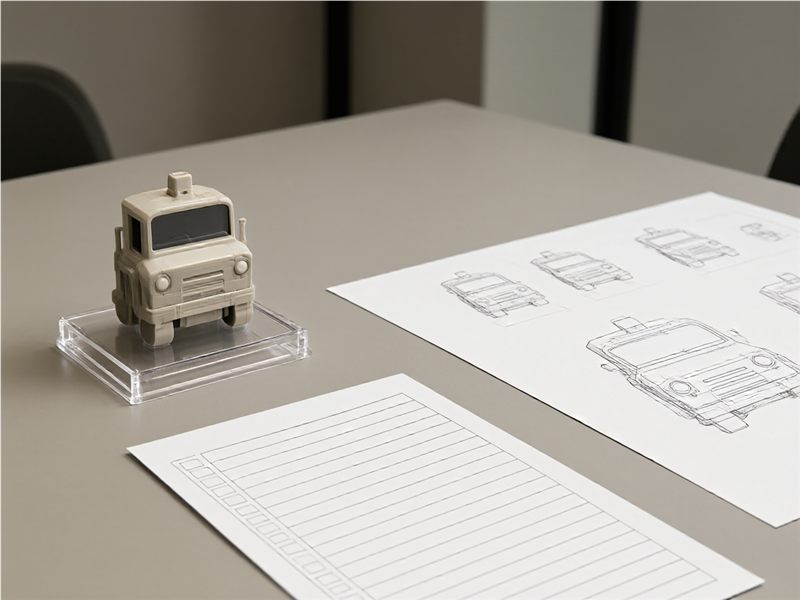
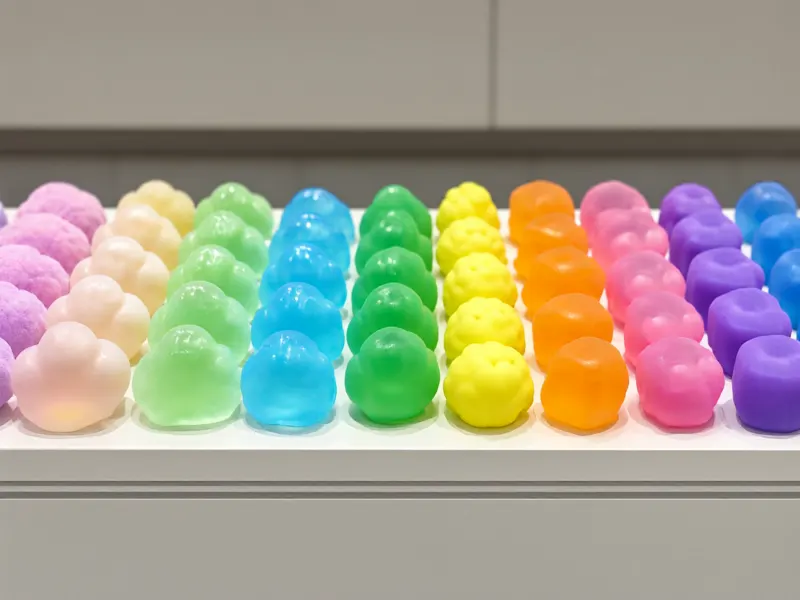
The quarterly category review began the way most of ours do, with the squishy range from the previous season tipped out across the long meeting-room table. Forty-odd samples, half still in their printed polybags, and a stack of last season’s sell-through sheets beside them. About ten minutes in, the merchandising lead lined up three of them: a round slow-rise cat, a round slow-rise bear, and a round slow-rise frog. Different faces, different colors, different names on the bags. Identical weight in the hand, identical compression and recovery, identical seam down the back. One mold, three line items, three shelf facings, three minimum order quantities.
That was the moment the range stopped reading as assortment and started reading as duplication with extra paperwork. For a wholesale squishy buyer this is the ordinary failure mode, not an exception. Catalogs are long, and a supplier can show twenty “new” items that trace back to six tools. On a purchase order they look like variety; on the shelf they compete for the same shopper with the same handfeel at roughly the same price. The point of the review was to rebuild the range around what each item does, then write down a rule to stop it happening again.
The method below assigns a job to every SKU before it assigns shelf space, catches hidden duplicates before the purchase order is raised, and sets replenishment and display rules by role rather than by supplier. Nothing here needs a larger budget. It needs a sharper answer to one question: what is this item for?
Give Every SKU a Job Before You Give It a Facing
Most overlap starts because a range is built bottom-up. A sales rep sends a catalog, the buyer ticks what looks appealing, and the assortment becomes a list of things that were available rather than things that work together. Nowhere in that process is a statement about what any one item is supposed to accomplish. At review time nobody can say why three near-identical round squishies all earned a place.
Reverse the order. Before looking at a sample, name the jobs the category must do for retailer and shopper. In a squishy toys wholesale program those jobs almost always include drawing attention to the fixture, delivering dependable volume at a predictable margin, and carrying the higher-margin novelty end. Each job has different economics and a different ideal shelf position. Once the jobs are named, a sample either fills a gap or it does not.
This changes what counts as a good SKU. A slow seller at the entry price may be pulling shoppers to the display; a fast seller in the mid band may be quietly cannibalizing it. Judging either on units alone misses the point. The question moves from “does this item sell?” to “does it sell at the job we hired it for?”
The Three Roles a Wholesale Squishy Range Needs
Our review settled on three roles, and keeping the number small was deliberate: with too many, the labels stop guiding decisions and become a filing exercise.
The traffic role is the front door — recognizable, easy-to-grasp shapes at the lowest price step. Shoppers pick them up on impulse, and their job is to make the fixture look approachable and busy. They are not expected to carry margin; they must turn a passing glance into a hand on the product.
The core role is the engine: mid-band, reliable, reorderable shapes and textures that make up repeat business. Consistency matters more than novelty here. A core SKU that changes handfeel between batches does more harm than a plain one that never surprises anyone.
The margin role sits at the top — larger formats, layered or multi-texture builds, slow-rise or scented pieces, licensed-looking characters. Volumes are lower and less predictable, so these are bought in small trial quantities and judged on contribution, not velocity. Their job is to lift the perceived ceiling of the range.
A Role-Gradient Table for the Range
We rebuilt the table that started the argument. Instead of listing products, it lists roles and the attributes that must differ between them. No specific prices appear: the bands are relative positions within the buyer’s own range, because the right absolute numbers depend on market and channel.
Role
Signature handfeel / build
Price band (relative)
Display position
Replenishment trigger
Traffic / entry
Simple round or block shapes; standard slow-rise foam; uniform density
Lowest step; impulse price point
Front edge of fixture, low bins, high facings
Fast velocity; reorder on weeks of supply
Core / volume
Character shapes, medium size, consistent compression and recovery; unscented
Middle band; the range’s reference price
Eye-level shelf facing the main walkway
Steady repeat rate; reorder at a par level
Margin / premium
Larger format, layered or multi-texture, slow-rise or scented variants
Upper tier; priced above the reference
Endcap or feature bay, side-lit, fewer facings
Contribution per facing; small trial reorders
The columns are chosen so no two roles match across the whole row. If a buyer cannot point to a difference in handfeel, price band, or shelf position between two items, they compete for the same job and one is redundant. Notice that theme is absent: “cat,” “bear,” and “frog” are not roles, they are surface treatments. Building a ladder on theme is exactly how those three samples ended up side by side.
How a Single Mold Hides Behind Three Colorways
Suppliers rarely mislead on purpose. A factory has invested in a tool and wants to run it across as many colorways and printed faces as possible; that is how tooling pays for itself. The items are genuinely different to the eye and identical underneath. If the buyer’s list is built from photos and product names, duplication survives all the way to the shelf.
It survives because the differences a shopper notices — color, expression, packaging — are the same ones a catalog emphasizes. The differences that reveal duplication — weight, dimensions, compression curve, seam placement — never reach the product page. Catching overlap means looking at the sample, not the photograph, and comparing it with the rest of the range.
We keep a category page open during review to see how a supplier groups items: squishy toys by shape family. Grouping by family rather than finished SKU is a useful hint. Eight “styles” under one shape family with a shared size usually mean one tool and eight finishes. That is not a reason to reject them; it is a reason to buy the right number.
The Check We Run at the Sample Table
The physical check takes minutes and needs no laboratory. Weigh each candidate against others in the same size class; near-identical weights across “different” shapes point to a shared tool and the same foam density. Measure length, width, and height with a caliper — a two-millimeter difference is often the only real distinction between supposedly separate items.
Then compress each one the same way and time the recovery. Foam from one tool and one formulation recovers on a consistent curve; samples that recover in the same time with the same resistance are almost certainly the same construction. Look at the seam and gate mark on the underside. A seam in the same place across several colors is a strong signal of one mold.
None of this proves tool ownership, and that is fine. The goal is not to interrogate the supplier but to decide whether two items do different jobs. If weight, size, recovery, and seam all match, treat them as one role and buy only as many as that role needs.
Handfeel Is a Spec, Not a Sensation
“Squishy” covers a wide spread of physical behavior, and treating it as one sensation is what lets duplicates through. Foam density, skin thickness, the ratio of filling to shell, and recovery time all change how a piece feels and how long it lasts. Two items can share a mold yet take different roles if the filling and recovery genuinely differ — but then that difference must be specified, not assumed.
We write handfeel as a short, repeatable description per role: soft and quick-recovering for entry, medium resistance with a steady rise for core, slow and dense with delayed recovery for premium. A sample is placed by how it behaves against those descriptions, not by how appealing it feels that afternoon — a written description can be checked by the next buyer.
This also protects replenishment. If a factory quietly changes the foam between batches, a core SKU can drift toward the entry feel and start competing with the traffic line at a lower price. A written spec agreed before the order gives the buyer grounds to question a batch that no longer matches its role.
Price Bands That Ladder Instead of Colliding
Price is the cleanest way to separate roles, provided the bands do not touch. If the top of the traffic band overlaps the bottom of the core band, shoppers comparison-shop within the display and the higher-margin item loses. The ladder should read as a clear step up in size, build, or finish at each increase.
Set bands relative to the range’s reference point — the core line the account plans around — then check each step is justified by something a shopper can see or feel. A premium tier that costs more but looks and feels like the core tier will not hold its position, whatever the price sheet says. Three clean roles beat four tiers that argue with each other.
SKU Count Is Not Assortment Depth
A long SKU list reads as depth in a spreadsheet and very often is not. Depth means a shopper can choose meaningfully within a role; breadth means adding roles. Confusing them is how a range grows without getting better. The three samples on the review table were breadth mislabeled as depth.
Before adding any SKU, ask which role it deepens and what choice it offers that the role lacks. “Another color of something we already carry” is depth only if color is a real choice and the item keeps a distinct place on the shelf. Otherwise it is a new line item consuming a facing, a minimum, and a range slot. A fuller treatment of the distinction, including how to count depth without inflating the list, is in our note on SKU count versus assortment depth.
Write the No-Overlap Rule Into the Purchase Spec
The rule from the review is blunt: no two SKUs may share a mold family, a handfeel description, and a price band at once. One or two may overlap; all three together mean the range pays twice for one job. The rule goes into the purchase specification so it is checked before the order, not discovered at the next review.
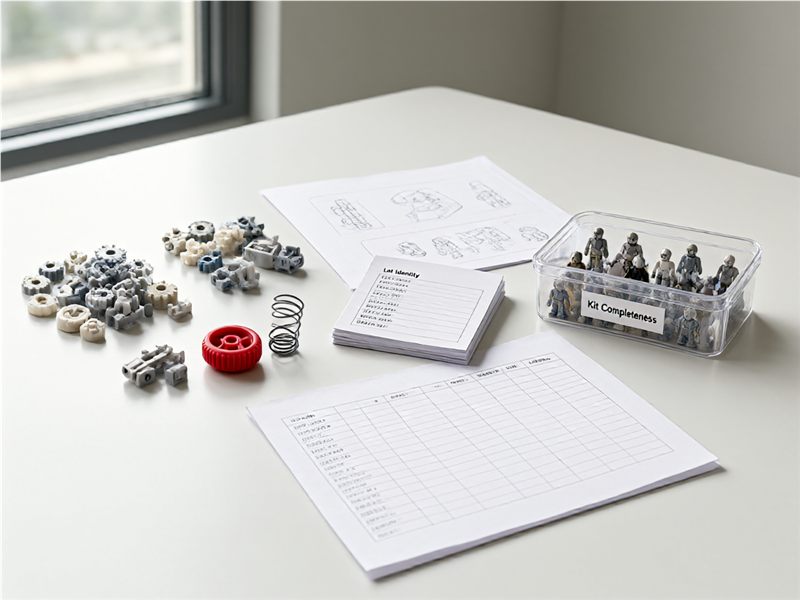
Supporting it is a product data sheet per SKU recording dimensions, weight, handfeel description, pack format, and role. When variants sit in one place, overlap shows on paper: three lines with the same weight and recovery description are impossible to miss. Recording this at the source is far cheaper than reconstructing it later from old emails. The format we follow is at our product data sheet format — a working record, not a compliance document.
The cost of a redundant line never appears on its price sheet: a facing, a minimum order quantity, a carton in the freight calculation, and a warehouse entry. Family-based minimums can make a second colorway look free, but it is free only in unit price — it still takes a facing and a slot, the scarce resources. We now buy premium candidates in small trial quantities and judge them for a full selling period before committing.
Replenishment Signals Differ by Role
One reorder rule across the range will favor one role and starve another. Traffic lines are watched for velocity: they earn their place by turning quickly, and a slowdown signals an investigation of the fixture rather than an immediate cut. Core lines are managed to a par level, because their value lies in dependable availability and repeat purchase.
Premium lines need a different lens. Low velocity is expected, so turnover alone would remove the tier that lifts the range. Track contribution per facing and how trial quantities sell through; a premium item that holds margin and sells steadily in small numbers is doing its job. Make cuts within a role, not across roles — a weak traffic SKU is replaced by a better traffic SKU, not by a premium one that caught the buyer’s eye. That discipline stops the range drifting back into overlap.
Display Adjacency: Block by Role, Not by Supplier
Suppliers ship families, and a buyer naturally thinks in them. Shoppers do not. They read a fixture as choices arranged from accessible to aspirational, moving along price and size, not supplier names.
Put the traffic tier where it can be picked up without hesitation — the front edge or bin nearest the aisle. Let the core tier take the eye-level run with the most facings, since it carries repeat business. Reserve the endcap or feature bay for premium, with fewer facings and space around each piece. A traffic item placed directly beside a premium one, with no core between them, makes the price jump look arbitrary. A clean entry-to-core-to-premium progression lets the shopper read the ladder without a sign.
Record role, handfeel, price band, and position before the order goes out and the next review gets cheaper — a colleague can see that a proposed fourth round slow-rise shape has no distinct role to fill. Applied across squishy toys wholesale orders, this keeps a long catalog from becoming the same item in three colors.
Frequently Asked Questions
How can I tell whether two squishy SKUs share the same mold?
Line the samples up together and compare four things: weight, outer dimensions, compression-and-recovery time, and seam or gate-mark placement. Near-identical results across all four, even with different colors or printed faces, almost always mean one tool. Check the supplier’s category grouping too — items listed under a single shape family with a shared size are usually colorways of one mold. Record the comparison so the finding survives the next review.
The same sampling discipline applies on the factory side, where fill weights, compression recovery and tooling options are decided before a sample is ever cut. That production side is described on our squishy manufacturer page.
What minimum difference should I require between two SKUs in the same role?
Require a visible difference a shopper can act on: a distinct shape or finish, and a distinct position on the fixture. Within one role, two colorways are acceptable only if both earn a facing and the size class genuinely offers a choice. If the only difference is the printed face while weight, handfeel, and price match, treat them as one SKU and buy one. Depth should mean more choice, not more line items in the catalog.
How often should I reassess role assignments in a squishy range?
Run a full role review once per season, before purchase orders are raised, and keep a lighter check at each replenishment point. At replenishment, look only for drift: a core item whose handfeel has shifted, a price band that now overlaps another, or a premium line selling far above its trial rate. Escalate a change only when the evidence shows the item is competing with a different role, not merely selling more or less than expected that month.
What records should I keep to justify cutting a SKU?
Keep the product data sheet with dimensions, weight, handfeel description and role, the role-gradient table showing the intended price band and shelf position, and the sell-through and contribution figures for the selling period. Together these show what the item was hired to do and whether it did it. A cut supported by the table and the data sheet is easy to defend; one based on a single season’s unit count invites the same item back next year.
OEM & ODM TOY MANUFACTURING
Ready to Develop Your Custom Toy Line?
10+ years factory experience • EN71, ASTM F963 & CPC compliance support • Flexible MOQ for toy brands, importers, and Amazon sellers.