



A range plan is a budget expressed as a list. Every SKU added to a toy program spends money in several places at once: tooling or setup, minimum order quantity, laboratory testing and documentation, and inventory carrying cost. Buyers who grow a range by adding SKUs without adjusting those lines watch revenue climb while sell-through quietly falls.
The alternative to more SKUs is more depth: fewer distinct items, bought in larger quantities, in the colors, sizes and price tiers that actually move. Choosing between breadth and depth is the central decision in a wholesale toy assortment, and it should be made with arithmetic rather than instinct.
What One More SKU Actually Costs
- Minimum order quantity: each variant carries its own minimum, so the first buy of a new SKU is inventory purchased before demand is known.
- Tooling and setup: a new shape needs tooling; a new colorway needs a setup and a minimum run in that color.
- Testing and documentation: certification follows the tested design and material, so a variant that changes either needs its own report or a documented coverage argument.
- Artwork and packaging: each SKU needs its own carton, insert and label file, each with plate or die costs.
- Carrying cost: slow SKUs hold warehouse space and cash for a season, which is the line most range plans omit.
That list explains why a forty-SKU program can be less profitable than a fifteen-SKU one. The fixed costs repeat per SKU, while demand is rarely distributed evenly across them.
When Depth Beats Breadth
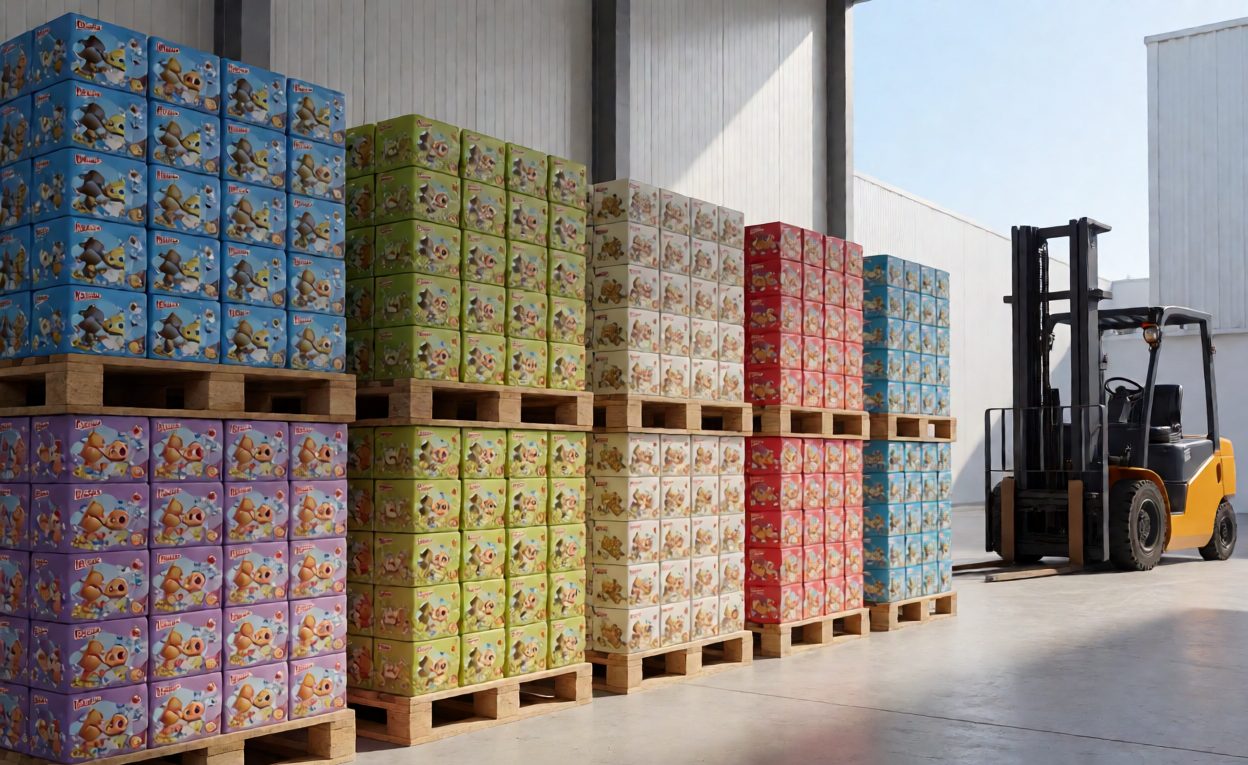
Depth wins when demand is concentrated and predictable. A core item selling in three colors should be bought deeply in the best-selling color rather than evenly across all three, because an even split produces a stockout in the winner and a clearance in the losers. Depth also wins where tooling has to be amortised, since unit cost falls as the run lengthens and a second tool for a variant does not.
Depth is the right answer for commodity categories where the buyer competes on availability and price: basic plush in standard sizes, clay and dough in standard pack weights, sensory sand in standard volumes. In these lines the customer is buying the category rather than the variation, and a deep, always-in-stock core converts better than a wide shelf with gaps in it.
When Breadth Earns Its Keep
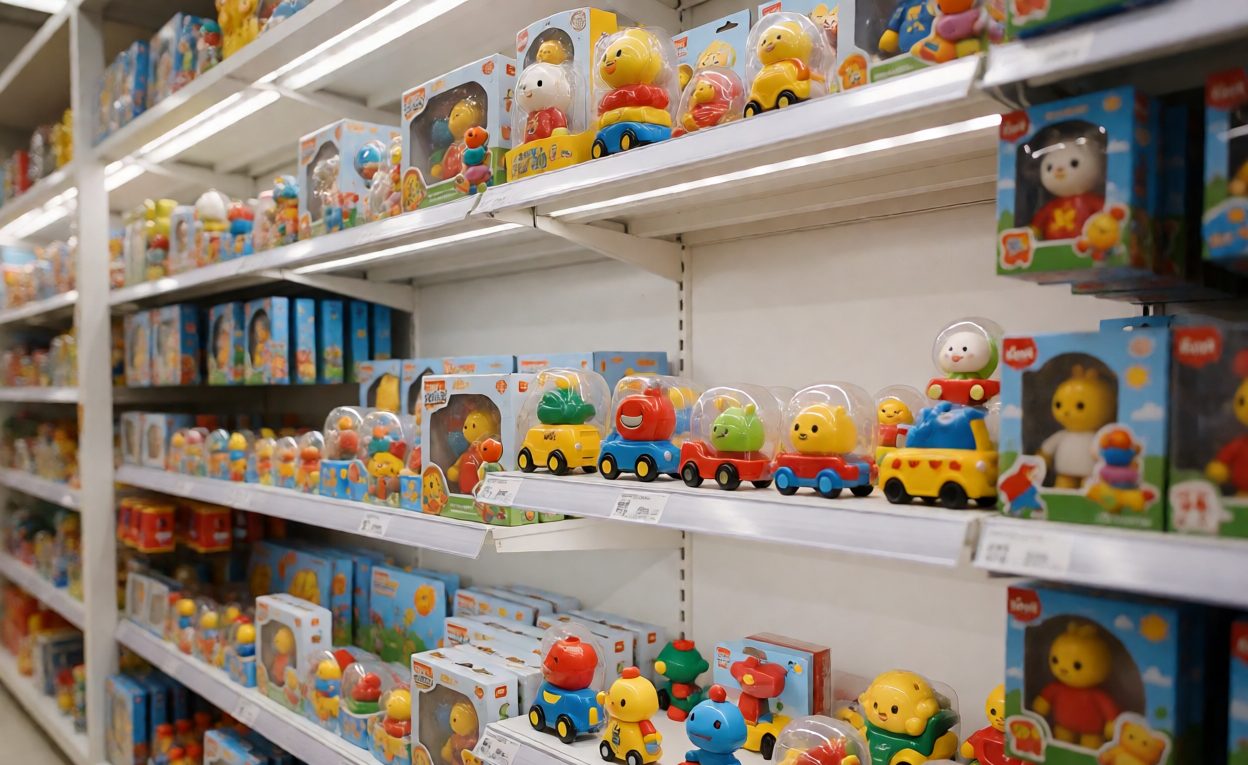
Breadth wins when the purchase decision is driven by novelty, or when the retail program demands shelf presence. A buyer supplying claw machines, vending or seasonal displays needs variety per square metre, and a program selling into independent stores needs enough distinct items to read as an assortment rather than a single product line. Breadth also wins early in a category’s life, when nobody yet knows which variant becomes the standard.
The test is sell-through per SKU, not revenue per SKU. If each additional SKU contributes less than its own fixed costs, breadth is being subsidised by the core, and the range is getting weaker as it gets larger.

Building the Grid
A practical range plan is a grid: families down one axis, variants across the other, with a target depth per cell. Start from the families the program is known for, allocate a depth figure to each cell from last season’s sell-through rather than this season’s optimism, then check the total against minimums and container capacity. The grid makes trade-offs visible, because adding a family means taking depth from an existing cell unless the total budget grows.
Two constraints shape the grid before taste does. Minimum quantities are usually negotiable per family rather than per SKU, so a family with five colorways can often be ordered against one combined quantity, which changes the arithmetic entirely. And container capacity sets a hard ceiling on units per shipment, so a wide, shallow range fills cube with slow stock while a narrow, deep one fills the same container with goods that move.
Technical Background
The unit of account is the stock keeping unit, the identifier separating one sellable variant from another. Assortment decisions sit inside category management, the retail practice of planning a category as a portfolio rather than a list. Products sharing one design platform form a product line, usually the level at which tooling and family minimums are negotiated.
Reviewing the Range Each Season
Ranges should be cut as deliberately as they are built. Discontinue the tail: SKUs whose sell-through falls below the carrying-cost threshold, variants kept only because a sample looked good, and items whose certification cost exceeds their contribution. The review belongs before the next seasonal booking rather than after it, because the slot freed by a discontinued item is worth more than the sentiment attached to it.
Minimums per SKU versus per family are compared in the MOQ by SKU versus by family guide, and the calendar the plan runs against in the seasonal assortment planning guide. Filling a container with a mixed range is covered in the mixed container guide, and the exit process for weak items in the discontinued SKU transition guide.
Frequently Asked Questions
How many SKUs should a starting toy range have?
Enough to look like an assortment and few enough to buy deeply, which for most wholesale programs means a handful of families rather than dozens of one-off items.
Is it cheaper to add a colorway or a new shape?
A colorway, by a wide margin. A new shape brings tooling, new testing and new artwork, while a colorway mostly brings a setup and a minimum run.
Do variants need separate testing?
Not always. Variants sharing one design and material set can often sit under one report, but a change in material or structure needs its own coverage.
What sell-through justifies keeping a SKU?
Any figure above its own carrying cost plus its fixed setup costs. Below that, the slot is worth more to an item that moves.
Should minimums be negotiated per SKU or per family?
Per family wherever the factory allows it, since combined quantities let a buyer hold depth in the winners without overbuying the rest.
How does container capacity limit the plan?
It caps units per shipment, so a wide shallow range spends cube on slow stock while a narrow deep one spends the same cube on goods that sell.
When should a SKU be discontinued?
At the seasonal review, before the next booking, when its contribution no longer covers its carrying and documentation costs.