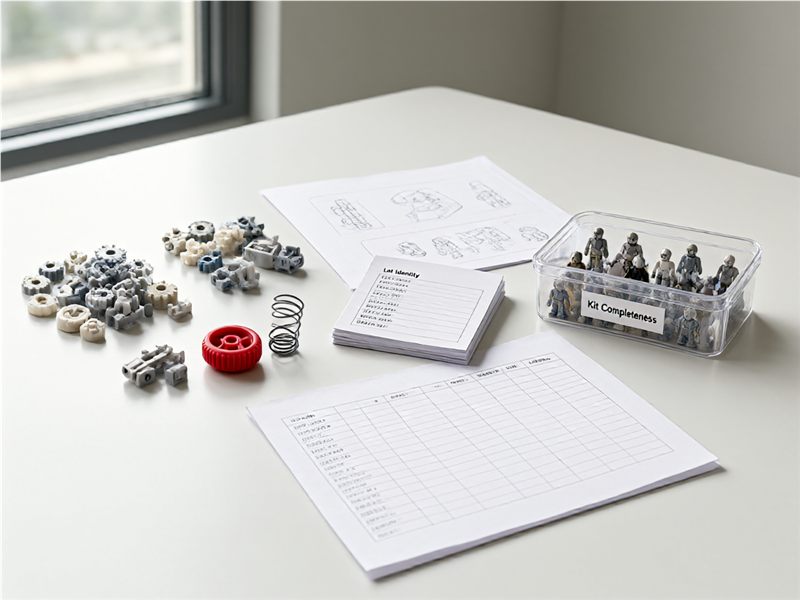
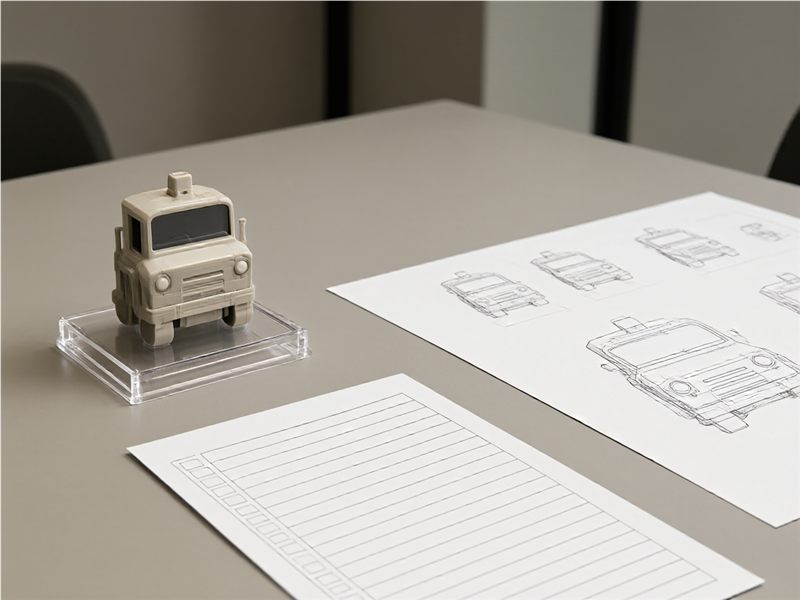
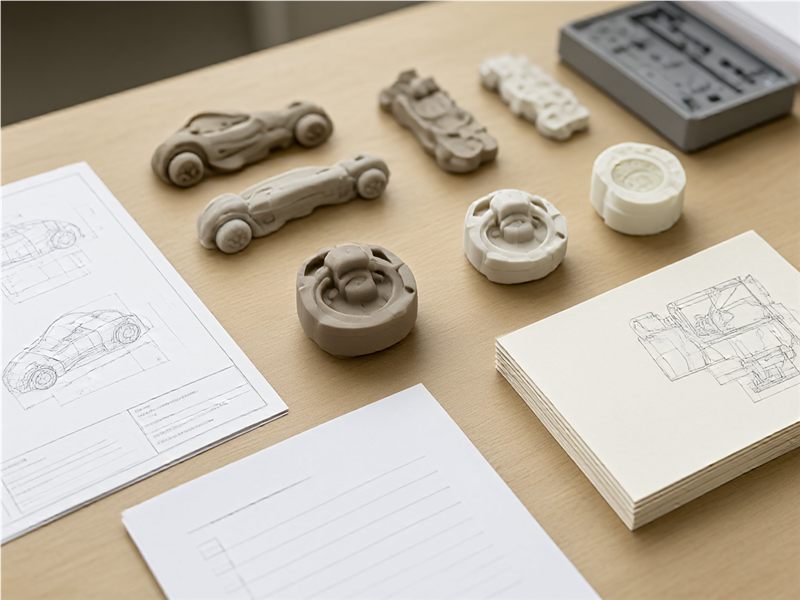
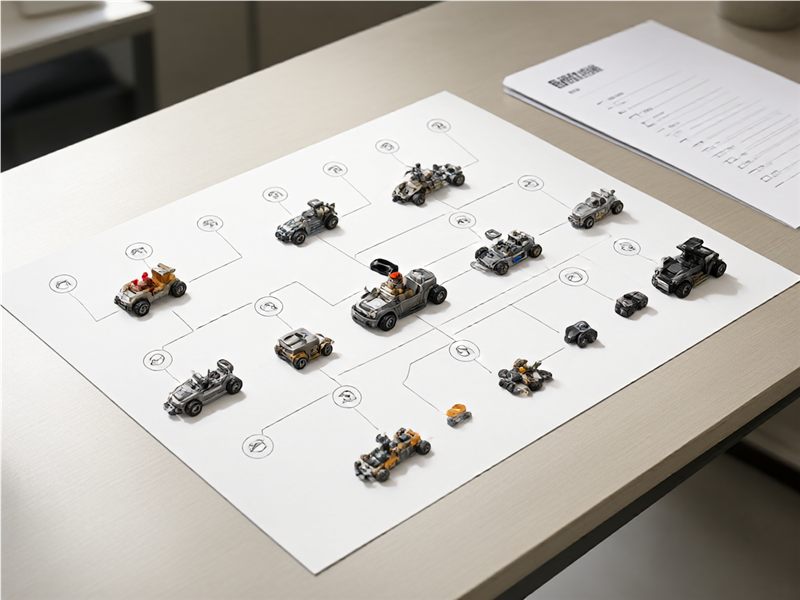
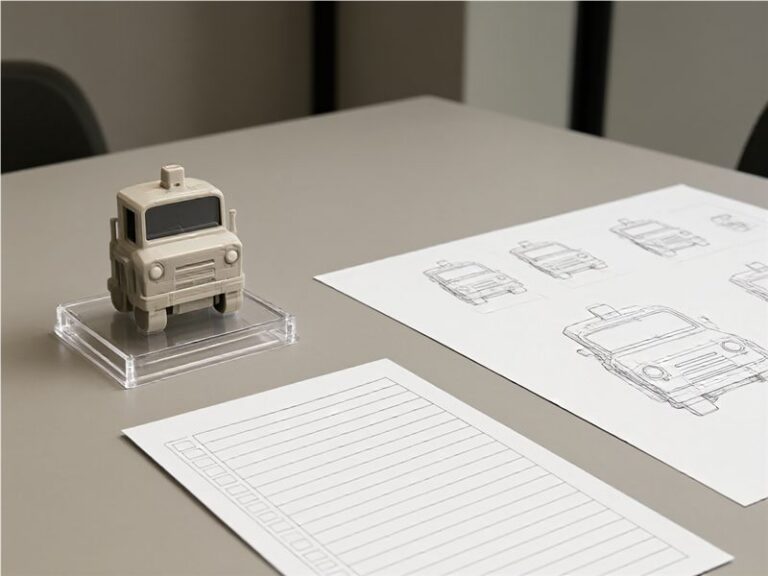
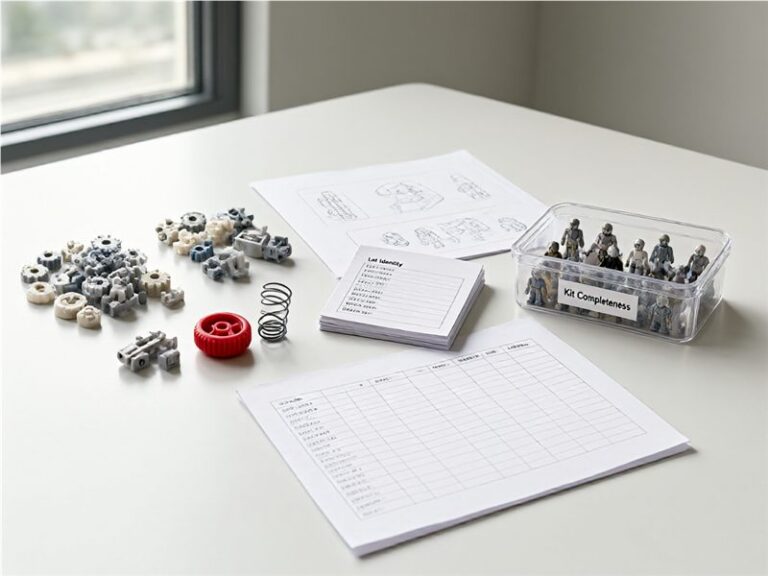
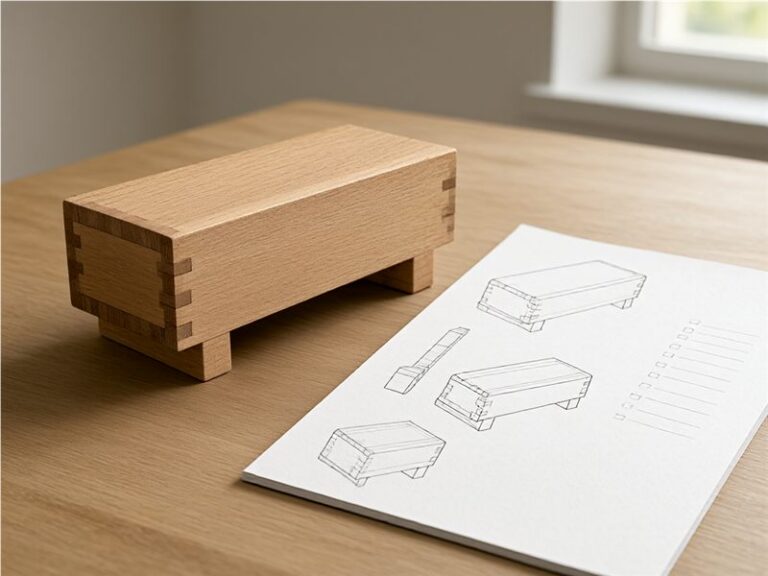
The complaint reached me as a forwarded email with three photographs attached. A distributor had opened a carton of a model kit and found that the spare nozzle in the accessory bag would not seat on the body packed in the same box. Their warehouse team had checked the pick list twice; it was correct. What nobody could produce was one place stating which accessory belonged to which version of the model. I was asked to audit the master data, not the shipment, because the shipment was exactly what the system had been told to send. That distinction is where this note begins.
Scope of the audit and what landed on my desk
Five artefacts arrived: an inventory export, a spreadsheet on a shared drive, two screenshots of a live product page, sample-approval photographs, and two purchase orders six months apart. None carried an effective date. Before judging whether a mapping was wrong, I had to work out which document governed at the moment the order was placed. That question, more than any cell, defined the audit.
I limited scope to one product family and its accessories, and excluded pricing, freight and test documentation. Those have separate owners. Mixing them buries the finding: a price can be renegotiated, but a part that does not fit cannot be argued into fitting. The narrow question was whether, for a given sellable unit, we could prove which accessories, which tooling revision and which listing text were in force on a given date.
Finding one: a single product wearing four identifiers
The same article appeared under four names. Inventory used a material code grown out of an old purchasing convention. Sales quoted a SKU with a colour and pack suffix. The printed carton carried a model number marketing had shortened for shelf legibility. Engineering referenced a drawing number predating all three. No crosswalk joined them. A service agent reading the carton could not reach the material code; a picker reading the material code could not reach the listing. Everyone was locally correct.
This is common in programmes that grow by accretion: a new channel gets a new code, a rebrand shortens the printed model, a tooling change adds a suffix, and nobody retires the old identifiers. The failure is not four codes — large catalogues need them — but the absence of one row declaring them equivalent. I wrote that missing row down as the first finding, because every downstream error depended on it.
The mapping table as it actually existed
The shared spreadsheet was the closest thing to a compatibility register. It listed the base model, a column of accessory names, and a free-text notes column, with no version, no owner and no date. Two rows were blank in the accessory column; one note read “use old pump until stock runs out” with no indication of which stock or who wrote it. Its last saved timestamp predated both purchase orders. The document that should have answered the distributor still looked authoritative because its filename said master.
I reconstructed the intended schema before judging content. A usable row needs the sellable identifier, the base product, the tooling revision, the accessory set that fits that revision, the insert version, the listing it feeds, an effective date and an approver. The table below shows what each field protects against.
Field in the register
What it holds
Failure it prevents
Sellable SKU
Code the buyer orders and the channel displays
Quoting a code that resolves to a different pack
Base model reference
Engineering or drawing identifier
Accessories chosen by name rather than geometry
Revision marker
Tooling or formulation version in force
Old-version parts shipped with a new-version body
Accessory set
Explicit compatible part identifiers
A generic spare pulled from a shared bin
Insert version
Instruction card and warning panel revision
Instructions naming a component no longer in the box
Effective date
When the row began to govern
Disputes over which document applied to an old order
Approver
Role authorised to change the row
Silent edits by whoever has the file open
Read the right-hand column as complaints I no longer had to investigate once the field existed. Each traced to a column that was missing or stale.
Finding two: revision suffixes that never reached the listing
Engineering correctly issued a revised mould drawing after a fit problem on the nozzle seat; the drawing gained a suffix and the sample photograph was retaken. Neither change reached the sales SKU, the printed model number or the product page, which still described the earlier body. The spreadsheet still named the old accessory set. The factory built the new version, the warehouse picked against the old one, and the listing promised compatibility with a product that no longer existed in that form.
Every team had followed its own procedure. Engineering versioned the drawing; the sample team approved the new sample; sales had no trigger, because the trigger was a conversation rather than a rule. A revision suffix living only in an engineering file is not a revision, it is a note about a change the rest of the business cannot see. I tied this directly to the missing change-control events below.
How the mismatch surfaced in a live order
Both orders came from a wholesale buyer ordering by product family rather than by individual SKU — a sensible way to buy an assortment that pushes precision onto the supplier’s data. The line said model kit, assorted, and the system expanded it into sellable units. Accessories were attached from a general spare bin keyed to the base model, not the revision; nothing in pick logic referenced an accessory-set column, because none existed in the inventory system.
Three chances to catch it were missed. Picking treated the accessory as a family consumable. Packout counted the bag but did not open it, so a count check passed. Receiving checked quantity and pick list, both correct, and the defect appeared only when a child tried to fit the nozzle. By then the evidence was a photograph, not a record. That is the signature of a master-data fault: the physical operation is flawless and the failure is still guaranteed.
Where the error entered, between sample sign-off and purchase order
I traced entry to a copied template. The first order was built clean; the second was created by duplicating it and editing quantities, a habit that freezes every non-quantity field. Between the two, the mould revision had changed, yet the duplicate carried the original accessory lines and listing references. Approval records and purchase orders sat in different systems with no shared key, so there was no automatic contradiction for anyone to notice.
That is why approval and ordering must share an identifier. The golden sample is the physical definition; the purchase order is the instruction to build it. If they cannot be joined by a versioned key, a changed sample coexists indefinitely with an order describing the old one. Our note on the golden sample approval workflow for bulk orders covers the approval side; the audit finding was that the join had never been implemented.
Reconstructing the compatibility matrix from evidence, not memory
I refused to rebuild the register from the longest-serving coordinator’s memory, which is generous about intent and vague about dates. I worked from dated artefacts instead: sample photographs, mould drawing revisions, the printed insert proof, packaging approval and the two orders. Each confirmed a fact at a point in time; where they disagreed I marked the period unresolved rather than guessing. The result was less complete than a confident narrative but defensible.
Some relationships proved tightly. The revised drawing and retaken photograph shared a date and a visible nozzle-seat geometry, so the new body was identifiable; the disputed accessory bag matched the older photograph. What I could not prove was the day the warehouse bin switched, because the bin had no part-level transaction history. I left that open and recommended photographing one opened unit per carton position at receiving — cheap evidence that would have closed the gap in an afternoon. Different faults also surface at different stages, so a single end-of-line inspection cannot catch all of them: a family-keyed spare appears at the consumer, a stale listing at goods-in, and a duplicated order only if someone opens the inner bag.
Ownership of a row: who is allowed to change what
When I asked who maintained the spreadsheet, three people raised a hand, which is the same as nobody maintaining it. A register needs one role owning the row and a separate role approving changes. SKU creation belongs with the commercial team; the accessory set and revision fields belong with whoever controls tooling and the sample; listing copy belongs with the channel owner but should be populated from the register, not typed freehand. The separation turns an edit into a reviewable event.
I proposed a rule the team could follow: a row may be created by the commercial owner but cannot be marked effective until the technical owner confirms the accessory set and the approver signs the revision. That one gate would have stopped the duplicated order, because the stale row would never have become effective against the new sample. Governance here is not a committee; it is a single field with a named role.
Change-control events that should create a new version
Not every edit deserves a new version; a register versioning everything becomes unreadable. Qualifying events change what physically fits, what the pack contains, or what the buyer is promised: a mould modification, an accessory supplier change where interface geometry may differ, a reformulated material, a redesigned insert, a relabelled multi-market pack, or artwork altering a compatibility claim. A typo in a marketing description does not.
Each qualifying event should spawn a new effective-dated row and retire the old one rather than overwrite it. Overwriting is what made the second order possible: with no history, a duplication error looked identical to a legitimate order. Keeping the old row with an end date also lets service answer questions about a unit bought last season. This mirrors the logic behind SKU count versus assortment depth: more versions on paper are cheap, an ambiguous version in a customer’s hands is not.
What the corrected register looks like in practice
The rebuilt register is unglamorous: one row per sellable unit per version, the four identifiers declared equivalent, an accessory set listed by part identifier rather than name, insert and artwork versions, the listing reference, an effective date, an end date where applicable, and the approver. Free-text lives only in an observations field no system reads. Anything a pick, a pack or a product page depends on must be a structured column, because a note cannot be validated.
I also asked for a dated snapshot exported alongside each purchase order. When a dispute arrives the question becomes which snapshot governed, not what we meant, which turns most arguments into a two-minute lookup. Buyers who specify this at the outset fold it into the product data sheet covering variants, dimensions and packaging, so the commercial document and the master register share field names from the first quotation.
How a B2B buyer reads the same data from a product page
From outside, none of this structure is visible, which is the importer’s problem. A product page shows variant options, a compatibility line and a components list; each is a projection of the register, and one maintained by hand will drift. The defence is to ask how a version change reaches the page and to request a versioned data sheet whose SKU granularity matches how the order is placed. Where a buy is made by product family, the minimum-order question by SKU versus by family usefully reveals whether the supplier’s system distinguishes the two at all.
Treat a compatibility claim as a document request rather than a statement. Ask which revision it covers and what dated evidence supports it. A supplier producing an effective-dated row is offering something verifiable; one answering from memory is describing an intention. The same applies to spare parts quoted as an accessory order: confirm the part is keyed to the exact revision shipped, not to a generically named model.
Residual risks I could not close before signing off
Three items stayed open. Historical orders placed before the rebuild may contain the same mismatch, and without part-level bin history I could not scope them. Old packaging in a distributor’s warehouse carries the shortened model number, so a future complaint may still be hard to resolve even after the crosswalk is published. Listings on third-party marketplaces are maintained by partners who do not consume our register at all. I recorded each with an owner and a next action.
The honest conclusion is that the distributor’s photograph was not a shipping error. It was the last visible step of a data decision made months earlier, in a duplicated order, against a register nobody owned. Fixing the nozzle mattered to one customer; fixing the effective-dated row matters to every order not yet placed, which is why I wrote the finding against the master data.
What is a toy model compatibility map, and who should own it?
A compatibility map is an effective-dated register that states, for each sellable SKU and each product revision, which accessory set, insert version, artwork and listing text apply. One role should own the row, a technical owner should confirm the accessory and revision fields, and a separate approver should sign the version before it becomes effective. Three people all maintaining a shared spreadsheet is the same as nobody owning it. The map exists so a pick, a pack and a product page all read from the same fact.
How do accessory and revision mismatches actually show up in an order?
They surface late, usually at the consumer end, because the physical operation is correct. Picking attaches a spare keyed to the product family rather than the revision, packout counts the accessory bag without opening it, and receiving checks quantity against a correct pick list. The defect appears only when someone tries to fit the part to the body. An end-of-line inspection cannot catch this class of fault; the interception point is the master-data row that governs which accessory belongs to which version.
Which changes should create a new version instead of editing an existing row?
Any change that alters what physically fits, what the pack contains, or what the buyer is promised: a mould modification, a new accessory supplier with a different interface, a reformulated material, a redesigned insert, a relabelled multi-market pack, or artwork that changes a compatibility claim. Create a new effective-dated row and give the old one an end date rather than overwriting it. Typo corrections in marketing copy do not need a version. History is what lets customer service answer a question about last season’s unit.
What should an importer ask a supplier before trusting a compatibility claim?
Ask which specific revision the claim covers, what dated evidence supports it, and how a version change propagates to the product page and the purchase order. Request a versioned product data sheet whose SKU granularity matches how you order, and confirm that any quoted spare part is keyed to the exact revision being shipped rather than to a generically named model. A supplier who returns an effective-dated row is giving you something verifiable; one answering from memory is describing an intention.
OEM & ODM TOY MANUFACTURING
Ready to Develop Your Custom Toy Line?
10+ years factory experience • EN71, ASTM F963 & CPC compliance support • Flexible MOQ for toy brands, importers, and Amazon sellers.