


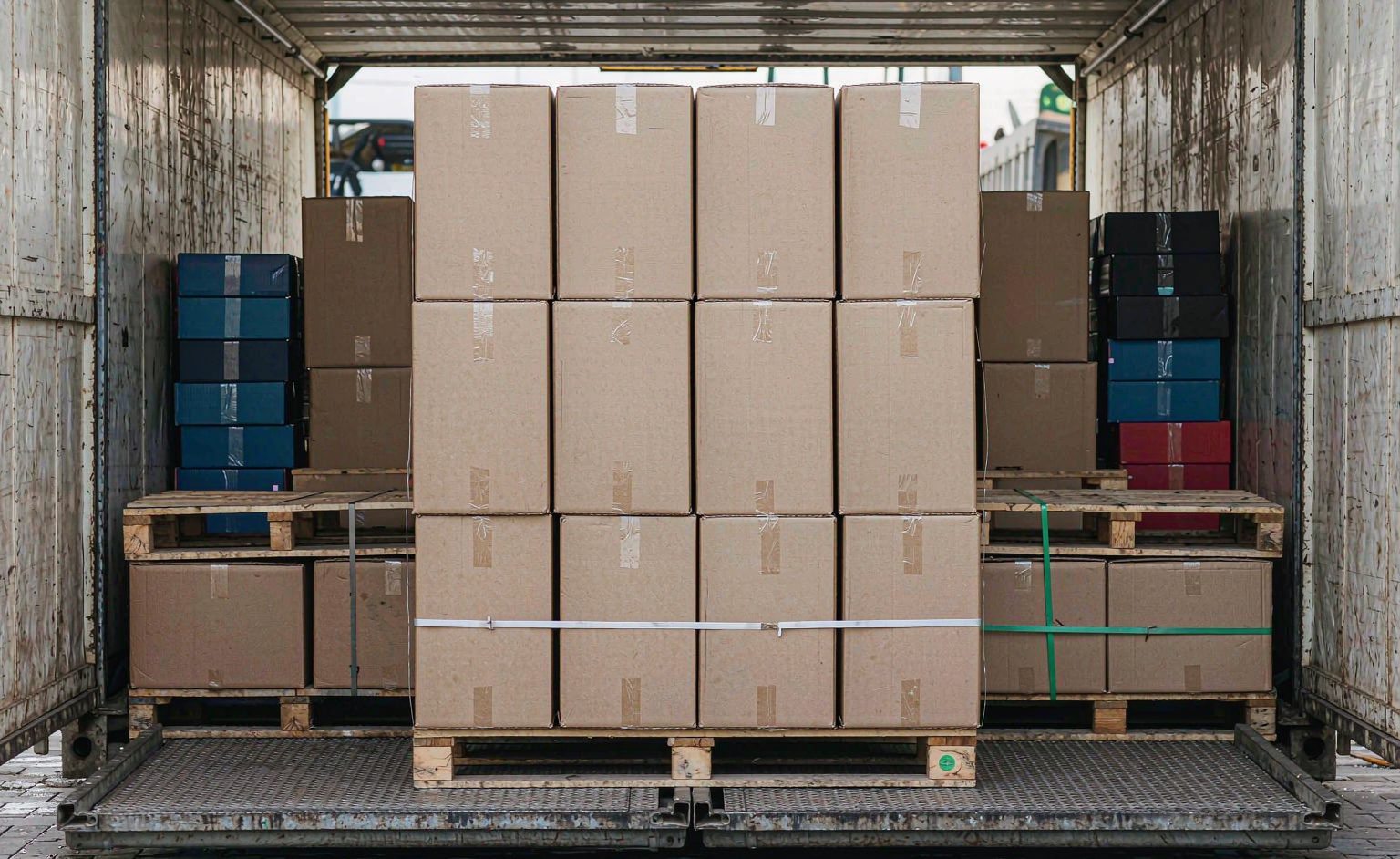


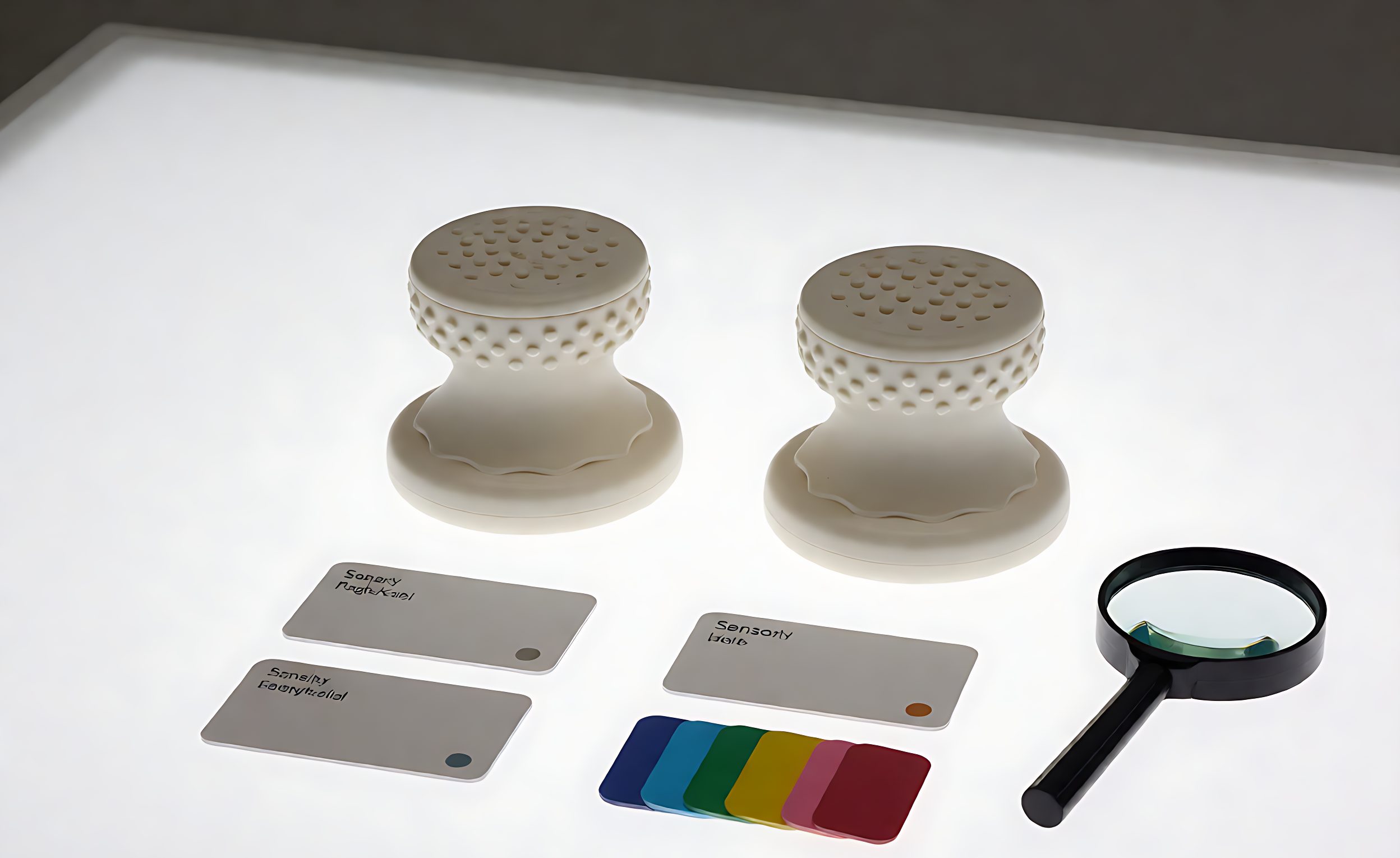
Almost every dispute about a bulk toy order comes down to one question: which unit was the reference? The buyer remembers the sample they approved in March; the factory is producing against the sample on its shelf, which may have been quietly superseded twice. A golden sample programme exists to make the reference unambiguous – a physical unit, sealed, dated, signed, and stored on both sides.
For sensory products this matters more than for hard goods, because the criteria include feel, scent, stretch behaviour and colour in ways that a drawing cannot express. Two formulas can both meet a written specification and be visibly different products to a customer.

Three Samples, Three Purposes
Development sample. Made to explore a formulation or shape. Useful for direction, not for approval, because it was probably made on a different machine or with a different batch of raw material.
Pre-production sample. Made on production tooling, with production material, by production operators. This is the one to approve, because it is the only one the bulk run can actually reproduce.
Golden sample. The approved unit, sealed and retained as the reference. There should be at least three: one at the factory, one with the buyer, one with the inspector. Units from the bulk run are compared against it at inspection.
Buyers often skip the middle step and approve a development sample. That is the single most common cause of a bulk run that is technically compliant and commercially wrong.
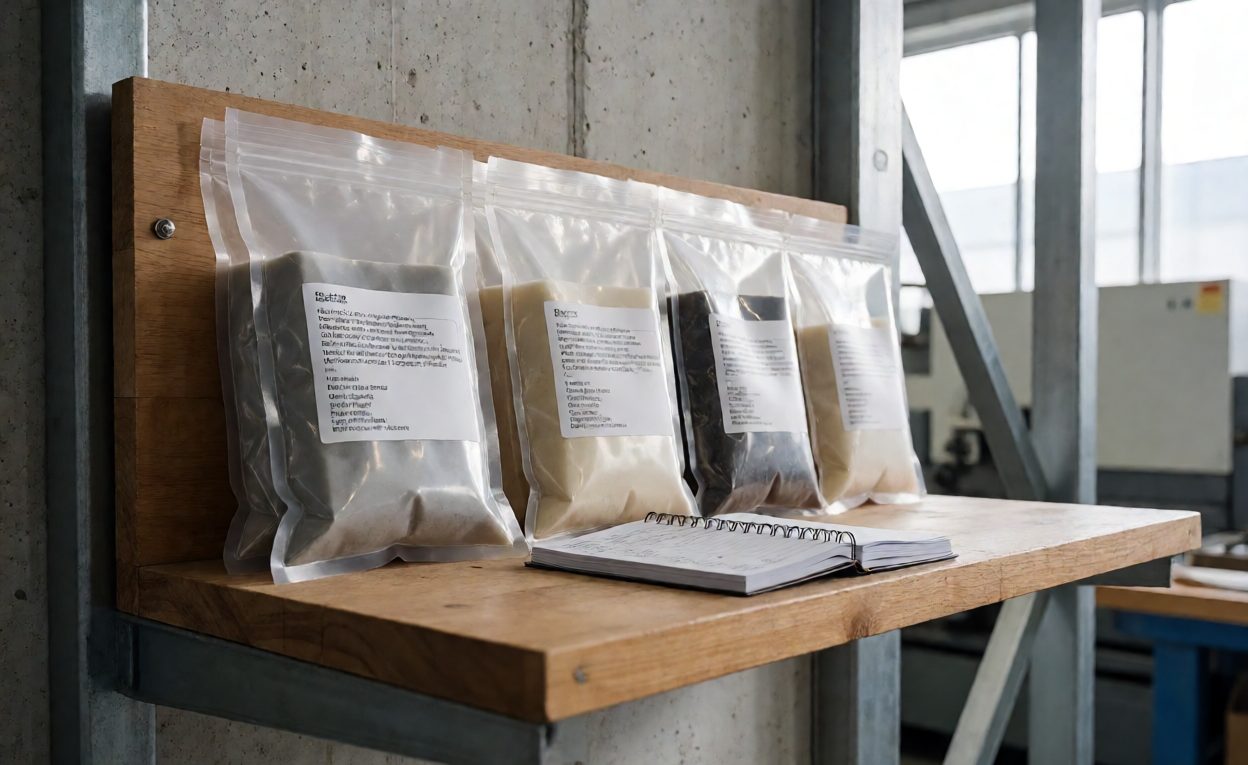
What to Evaluate Before Signing
Work through the attributes in a fixed order, because the ones people forget are the ones that drift:
- Colour, against a reference under defined lighting, not under whatever lamp is nearest.
- Texture and hand feel: firmness, stretch, recovery, tackiness.
- Scent, if the product is scented, and whether it is acceptable at the concentration used.
- Dimensions and weight, within a stated tolerance.
- Function: does it do what the packaging claims, and for how long?
- Packaging fit: does the unit fit the pack it will be sold in, at the tolerance extremes?
- Marking: are the required warnings and origin text legible and permanent?
Set tolerances in writing. “Match the sample” is not a specification; “within two millimetres and within an agreed colour difference” is. Where a supplier cannot hold the tolerance, the honest outcome is a wider agreed tolerance rather than a silent one.
Controlling Drift Through the Run
Approval is the beginning, not the end. Material lots change, operators rotate, and a second machine may be brought in to hit the schedule. The controls that work are simple: the sealed golden sample stays on the line as a visual reference, the inspector compares fresh units against it at the start of each shift, and any material or tooling change triggers a new pre-production sample.
Require the factory to declare changes. A resin substitution made to solve a supply problem is a reasonable factory decision and an unreasonable surprise, and it invalidates the approved sample along with any test report that referenced the original material. Where a change is unavoidable, the correct sequence is a fresh pre-production sample, a re-test if the standard requires it, and only then a revised approval.
Buyers who skip that sequence inherit the risk: the bulk run matches a sample nobody approved, and the paperwork still names the original material. That gap is what turns a routine inspection into a rejected shipment.

Technical Background
The concept descends from engineering practice, where a prototype establishes design intent and a production part is then validated against it. Verification itself sits within quality control, whose purpose is conformance to a defined reference. Formalised approval of a first production part is handled in some industries through a structured production part approval process, and the same logic applies to consumer goods at smaller scale.
Making Sign-Off Useful
Record the approval as a short document attached to the order: sample reference number, date, photographs, the tolerances agreed, and any deviations accepted. Photographs matter because samples discolour, dry out or deform in storage, and a squishy product kept in a drawer for six months is not the unit that was approved.
Then use the same reference at pre-shipment inspection. An inspection that compares against the golden sample rather than against a written description catches drift that a checklist never will.
Sample discipline connects to taking an OEM project from artwork to sample to bulk and to what to verify before a bulk order. Material behaviour across formulations is compared in the sensory toy materials guide, and certification evidence tied to the approved material is covered in the certification guide.
FAQ
What is a golden sample?
The approved physical unit retained as the reference for bulk production, sealed, dated and stored by both the factory and the buyer.
Why not approve the first development sample?
Because it was made under conditions the bulk run cannot reproduce. Only a pre-production sample from production tooling and material is a valid reference.
How many golden samples should exist?
At least three: one retained at the factory, one with the buyer, and one with the inspector who will check the finished shipment.
How should colour be approved?
Against a physical reference under defined lighting with an agreed tolerance, not by eye under arbitrary light.
What invalidates an approved sample?
A change in material, formulation, tooling or sub-supplier, which is why factories should be required to declare changes in writing.
Should photographs replace the sample?
No, they supplement it. Samples age and deform, so photographs preserve the condition that was actually approved.
How is the golden sample used later?
At pre-shipment inspection, fresh units are compared against it, and at the start of each production shift as a line reference.
For the manufacturing side of this topic, see custom toy ODM/OEM for development and sampling, and the product catalogue for items already in production.