The quarterly range review had run long past its slot. On the wall grid sat thirty toy SKUs, and the category buyer had circled the ones nobody had reordered in six months — roughly half the list. The owner wanted the range cut to twelve. When asked which twelve, the room went quiet. One voice said the fast movers obviously stay; another pointed out that two of those fast movers were the same squishy in two colors. Nobody could say what job a single SKU did in the range, so the argument kept circling back to last quarter’s numbers. That is not a sales problem. It is a range-planning problem, and it gets solved by deciding what each SKU is for before deciding how many to keep. A wholesale toy assortment has to balance two things at once: the play types a buyer needs on the shelf, and the replenishment logic that keeps those shelves stocked without parking cash in slow cartons. This piece sets out how to make that call — and defend it.
Why last quarter’s sales is the wrong cut list
Sales data tells you what happened, not what a SKU was supposed to do. A item that sold slowly may be the only low-price entry point that pulls a new customer into the category. A item that sold quickly may be eating the sales of a better-margin neighbor.
Ask a different question first: what would the shelf lose if this SKU disappeared? If the honest answer is nothing, it is a candidate. If the answer is a price step, a play type, or a buying occasion nobody else covers, it earns a place regardless of last quarter. Rank by role before you rank by revenue.
Sort the range by play type, not by color or supplier
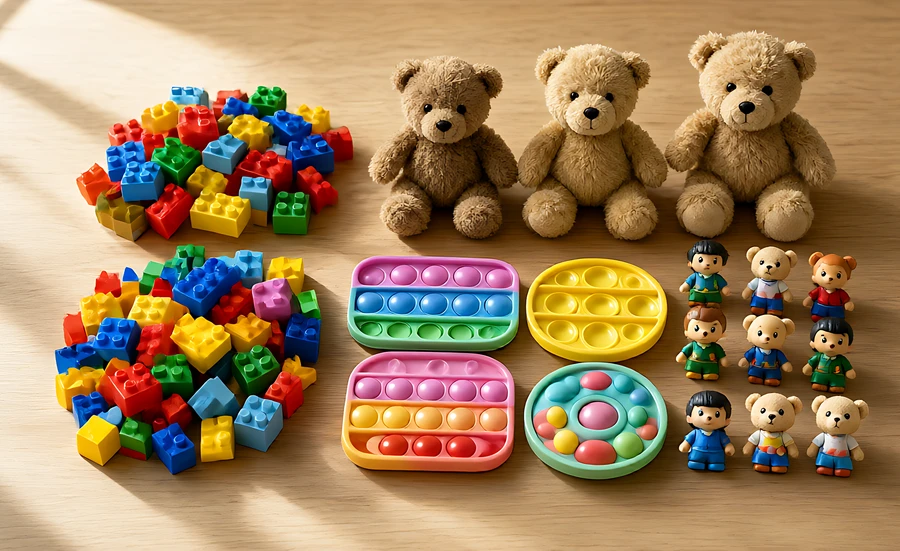
Most ranges are organized the way they were bought — by vendor, by carton, or by the order in which samples arrived. That hides overlap. Group the same thirty SKUs by what the hand actually does and the picture changes. Squeeze and stress relief covers squishy lines. Stretch, mix, and reveal covers slime and slime kits. Molding and pressing covers kinetic sand. Shaping and re-shaping covers play dough and modeling clay. Repeated click, spin, or flip covers fidget sensory items. Water play covers the bath and baby group.
Once the range is sorted this way, the duplicate discoveries start. Two suppliers may both be selling squeeze items that answer the same shopper need, and neither buyer noticed because they sat in different folders. A play-type view is the fastest way to see self-competition.
Give every SKU one job in the range
Assign each line a single primary role. Common roles are traffic driver, price entry, margin carrier, basket builder, seasonal or occasion item, and defensive SKU that stops a shopper walking to a competitor. One SKU, one job.
A SKU with no nameable role is just inventory with an opinion. In the thirty-SKU grid, the buyer could label perhaps a dozen lines cleanly and struggled with the rest — and those unlabeled lines were almost all in the cut pile. Naming the role is not a paperwork exercise. It is the test that separates a deliberate range from an accumulated one. If two SKUs share a role and a play type, the range is defending the same ground twice.
Map each play type to a buying occasion
Play type describes what the product does; occasion describes why someone buys it, and the two are not the same axis. A squishy bought as a desk impulse, a party favor, and a gift add-on is the same play type in three occasions. A wholesale range with a limited SKU budget should be chosen to cover distinct occasions, not to pile more options into an occasion already served.
List the occasions your buyers actually face: counter impulse, gift and celebration, classroom or bulk activity, at-home restock, and collectible or repeat purchase. Then check the range against that list. If five SKUs chase the counter impulse and none serve the classroom buyer, the assortment is lopsided even if every SKU is a good product. Coverage beats quantity when the SKU budget is fixed.
Find the self-overlap hiding in your bestsellers
Self-overlap happens when two SKUs compete for the same shopper in the same occasion. A second color, a slightly larger pack, a renamed version of the same mechanic — each feels additive at the moment it is approved. On the shelf they take one slot from each other and split the same demand.
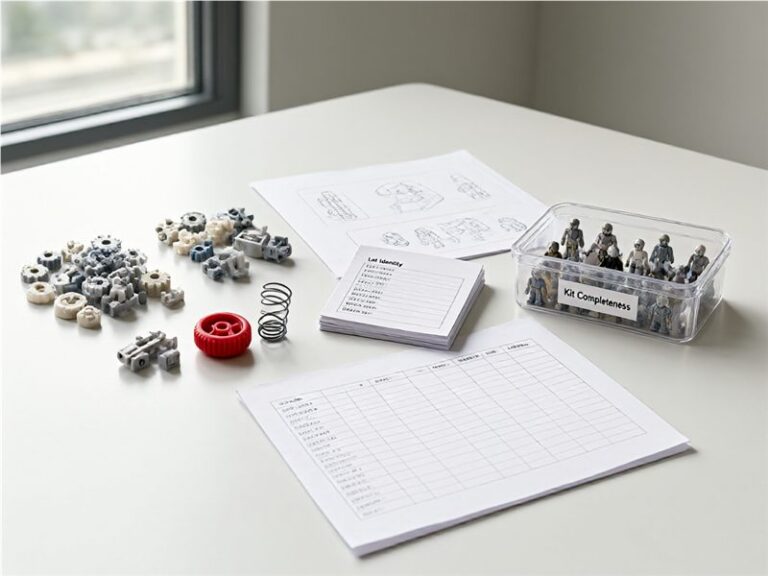
To detect it, write a one-line description of every SKU using three fields only: the play verb, the buying occasion, and the price band. Do not use the product name or the supplier. If two descriptions read the same, you have overlap. Sometimes one SKU should be repositioned into a different occasion or pack format so the two stop fighting. Sometimes the honest answer is that the range never needed both.
A working keep-or-cut grid
The table below turns a range review into a repeatable exercise. Each row is a play type from the six real product families, paired with the role it usually plays, the occasion it serves, a replenishment rhythm that fits it, and the signals that say keep or cut. The signals are deliberately qualitative: they are the evidence a buyer can check, not invented thresholds.
Play type
Typical role
Buying occasion
Replenishment rhythm
Keep signal
Cut signal
Squeeze / stress relief (squishy)
Traffic driver
Counter impulse, party favor
Fast and continuous
Reorders repeat without promotion; low returns
Slow turns while a near-identical color sits in the same bay
Stretch / mix / reveal (slime, kits)
Repeat purchase and add-on
At-home activity, gift add-on
Steady base with promo spikes
Refills and kits reordered by the same accounts
One-off novelty with no follow-on purchase path
Mold / press (kinetic sand)
Basket builder
Playroom, preschool gifting
Steady, medium pace
Holds its slot across more than one season
Duplicates another sand line only in pack size
Shape / re-shape (play dough, clay)
Price entry and margin carrier
Classroom, bulk, multipack
Steady, bulk-led
Multipacks move without discounting
Single units cannibalized by a stronger multipack
Click / spin / flip (fidget sensory)
Impulse and desk item
Counter, office, tween gift
Fast trend cycles
Each SKU carries a distinct mechanic
Two lines share the same action in different colors
Water play (bath and baby)
Occasion and gifting
Baby shower, seasonal gift
Slow and event-led
Gift sets sell at full margin around events
Slow items with no gift configuration to lift them
Read the signals, not just the rows
The grid makes one pattern clear: a keep signal is usually about repeat behavior or a distinct job, while a cut signal is usually duplication. A slow line with a clear role and no twin can still be worth keeping. A fast line with a twin is a problem even though it sells.
Apply the grid in two passes. First mark every SKU whose description matches another SKU’s description, regardless of sales. Then look at the remaining lines and ask whether each covers an occasion you would otherwise lose. Only after both passes should units sold enter the conversation. Order of decisions matters: role first, overlap second, volume third.
Tie replenishment rhythm to the role
A role without a replenishment plan is unfinished. Traffic drivers need a rhythm that can respond quickly, because a stock-out at the counter loses the sale entirely. Price-entry and bulk lines tend to move steadily, so they tolerate longer, larger orders.
When the buyer in the range meeting did this, several slow SKUs turned out to be occasion items checked at the wrong time of year — they were not failures, they were misread. Others were continuous items that simply could not justify a slot. Cadence does not rescue a duplicate, but it prevents a good seasonal line from being cut for being slow in the wrong month.
Breadth first, then depth where repeat demand earns it
Two numbers get confused in range planning: how many different play types you cover, and how many SKUs you carry within each. Our note on SKU count versus assortment depth draws the distinction carefully. Breadth is the set of play types and occasions on the shelf; depth is the number of variants inside one of them. A twelve-SKU range is not automatically thin if those twelve cover six play types cleanly.
With a fixed SKU budget, buy breadth before depth. One SKU per distinct play type serves more shoppers than four SKUs in one play type, because the four mostly split the same demand. Add depth only where you can show repeat reorders from the same accounts and a reason for the second variant — a different price step, pack count, or occasion.
Cover more buying scenarios with fewer SKUs
The goal is not the smallest range; it is the smallest range that still covers the scenarios your buyers face. Multipacks and graduated pack counts are useful here. A single play type offered in a single unit and a larger multipack can serve both the impulse buyer and the classroom or bulk buyer without adding a new mechanic or a new mold. That is depth doing real work because it opens an occasion, not just a color.
Choose variants that change something a shopper can see and that open a new use. Where a buyer brings a project outside the core families — wooden, plush, or Montessori-style goods, for example — treat it as a separate discussion with its own supply chain, not as a variant of an existing line. Those categories are common customer requests, but they are not part of this supplier’s six product families, and mixing them into a range plan creates false comparisons.
Where range logic meets the container floor
A range that looks balanced on a grid can still fail at the shipping stage. The number of SKUs affects how a container is packed, how many cartons sit open at the warehouse, and how much stock is committed before the first reorder arrives. Our breakdown of units per 40HQ container shows why carton cube and mixed-SKU loading belong in the range conversation rather than after it.
A twelve-SKU range that loads efficiently and sells through can beat a thirty-SKU range that ships half empty and ties up capital in slow lines. Before freezing the cut list, check carton dimensions, pack counts, and how a mixed order actually fills a container. A buyer who ignores the container floor discovers the cost only after the purchase order is placed.
Reorder cadence and the danger of stranded stock
Every cut decision has a quiet consequence in minimum order quantities. A slow SKU that carries its own minimum can strand stock for seasons, while the same SKU inside a shared family minimum is far cheaper to carry. Check whether the minimum is applied per SKU or across a product family before you decide that a line stays. A low-cost line with a high per-SKU minimum is often more expensive than its unit price suggests.
Common failure modes are worth naming. A fast line reordered too late misses its window. A seasonal line reordered on a calendar instead of against an event arrives after the peak. None of these show up in a sales ranking, and all of them show up in a range review that includes cadence and minimums.
Defending the twelve-SKU decision
The test of a range plan is whether it survives a question from the owner. “Why this one and not that one?” is easy to answer with the grid: this SKU holds a price entry that nothing else covers; that SKU duplicates a mechanic already in the range and has no distinct occasion.
Put the decision in a document with one row per kept and cut SKU: role, play type, occasion, replenishment cadence, keep or cut signal, and who agreed. The doc matters less than the discipline it forces. When a buyer wants a line back six months later, the team can see what job was missing and whether the new proposal fills it. Our overview of wholesale toy supply is useful context for the range decisions a buyer makes before an order goes out.
A range review you can run each quarter
Set a fixed sequence and follow it. Describe every SKU by play verb, occasion, and price band with no product names. Mark the duplicates. Assign one role to each survivor. Attach a replenishment cadence and the minimum that applies. Check carton cube and how a mixed order fills a container. Then, and only then, bring in units sold and margin. Write the keep and cut lines with a name against each.
The thirty lines became six play types, the duplicates removed themselves, and the twelve that remained were chosen because each covered something the others did not. That is the whole point: a wholesale toy assortment is a set of deliberate jobs, and a good range plan says what each one is for before it says how many there are.
Frequently asked questions
How do I decide which SKUs to cut without losing the customers who bought them?
First label every SKU with one role — traffic driver, price entry, margin carrier, basket builder, occasion item, or defensive line — before looking at sales. A slow SKU that is the only price entry or the only cover for a buying occasion should stay. A fast SKU that duplicates another line’s play verb, occasion, and price band is the stronger cut candidate. Check overlap first, volume second, and record the reason so the decision can be revisited with evidence rather than rebuilt from memory next quarter.
What is self-overlap in a toy assortment, and how do I spot it?
Self-overlap is when two SKUs compete for the same shopper in the same buying occasion. It often hides in bestsellers, because success invites a second color, a larger pack, or a renamed version of the same mechanic. Describe each SKU using only three fields: the play verb, the buying occasion, and the price band. If two descriptions match and you have not used product names, you have overlap. Then decide whether to reposition one line into a different occasion or pack format, or to cut it.
How many SKUs should a wholesale toy range carry?
There is no fixed number that fits every buyer. Plan breadth first: cover your distinct play types and buying occasions with one strong SKU each, then add depth only where you can show repeat reorders from the same accounts and a real difference such as a new price step or pack count. A twelve-SKU range that covers six play types cleanly serves more shoppers than thirty SKUs clustered in two. Judge the count by the jobs it covers, not by the size of the catalogue.
How does container loading affect range planning?
SKU count drives carton cube, mixed-SKU packing, and how much stock is committed before the first reorder. Before freezing a cut list, check carton dimensions, pack counts, and how a mixed order fills a container, since a range that ships half empty raises landed cost on every line. A lean range that loads efficiently and sells through can outperform a broad one tied up in slow cartons. Cube alone should not decide a cut, but ignoring it discovers the cost only after the purchase order is placed.
OEM & ODM TOY MANUFACTURING
Ready to Develop Your Custom Toy Line?
10+ years factory experience • EN71, ASTM F963 & CPC compliance support • Flexible MOQ for toy brands, importers, and Amazon sellers.