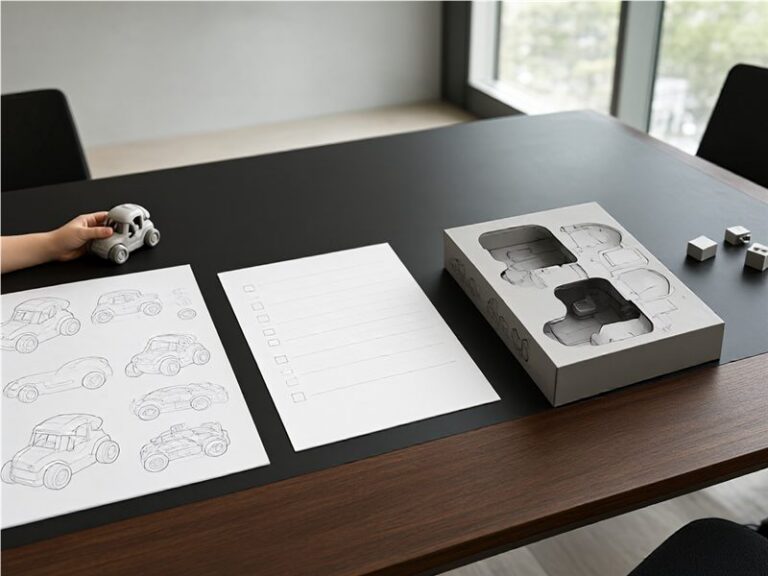
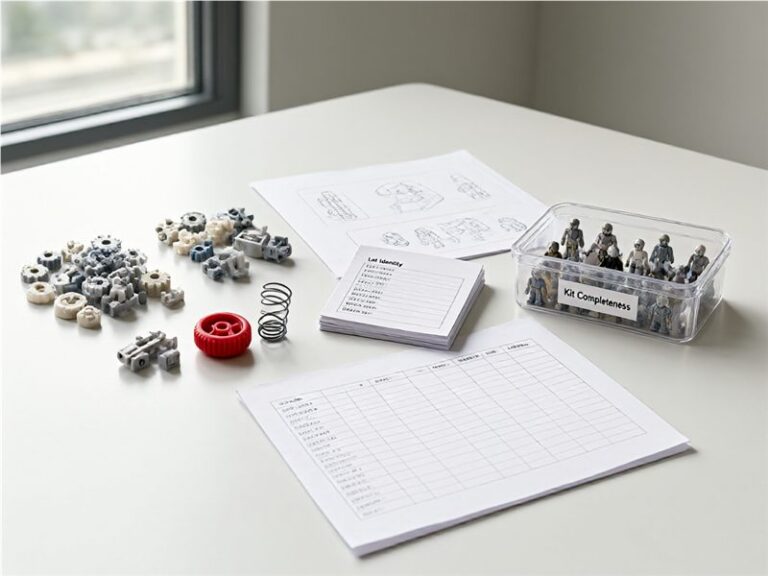
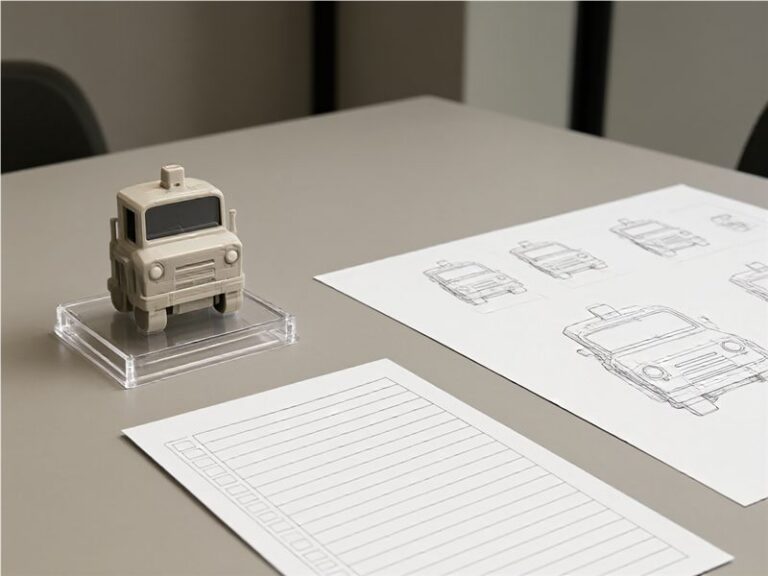
Packaging artwork is the last thing approved and the first thing blamed when something goes wrong. The claims that were never verified, the warning that moved 3 millimeters, the barcode that will not scan, the batch code that does not match the file — all of them are artwork errors, and all of them are caught by the same discipline: a structured review before the print house sees the file. This checklist is the one our buyers use, in the order the errors actually happen.
Claims: every adjective needs a file behind it
Packaging claims are the highest-risk words on the box. “Non-toxic,” “educational,” “eco-friendly,” “premium quality” — each one is a statement someone can challenge, and the challenge is answered with a document or not at all. The review rule is simple: walk every claim on the artwork and name the file that supports it. “Educational” should map to the play-pattern description; “non-toxic” should be replaced with the specific claim the test file supports; “eco-friendly” needs a definition — recycled content percentage, recyclable substrate, certified material — because regulators and marketplaces increasingly demand one. A claim with no file behind it comes off the artwork, however good it sounds.
Mandatory labels: the block that cannot move
Every market reserves space on the packaging for mandatory elements, and they are not negotiable against the design: the age icon and wording, the small-parts warning where applicable, the CE mark or the tracking label, the responsible-party details, the batch or production-date code, and the country of origin. The review checks three things per element: presence, placement (some markets require specific panels or proximity to the age grade), and wording that matches the current regulation — because rules update, and last year’s approved artwork can already be out of date. The mandatory block is laid out first in the dieline, and the brand art fills the space that remains.
Components: the artwork must match the physical kit
The most common packaging error in multi-component toys is drift between the artwork and the contents: the box shows eight pieces, the kit ships with seven after a component was cut for cost; the illustration shows a red shovel, production ran blue. The artwork review compares the “what’s inside” panel against the released bill of materials, item by item, count by count. Illustrations are checked against the actual samples for color and form, because children notice and parents photograph. If a component is aspirational — coming soon in the range — it does not appear on the current box.
The technical layer: barcodes, bleed and files
Below the design layer sits the layer that printers judge: barcode quality (a real scan test, not an eyes-pass), bleed and safe margins on every panel, CMYK versus spot color decisions and their cost effect, die-lines matching the structural sample, font embedding, and the substrate specification — because the same file prints differently on coated board, uncoated kraft and corrugated. The structural sample and the print proof are approved separately: structure first (does the box assemble, stack, survive), then print (color, registration, finish). Approving both in one meeting is how errors slip between them.
Multilingual artwork: the panel math
Multi-market packaging multiplies the text, and text multiplies layout risk. The review allocates panels per language before the design starts, because German and French need more characters than English and the warning block is mandatory in every market language. Translation is checked against the mandatory wording of each market — machine-translated warnings are a compliance risk, not a cost saving. And the artwork versioning is named: EU-EN/DE/FR, US-EN/ES, each a separate approved file, because a shared artwork updated for one market and not the other is the drift problem wearing a bigger hat.
The sign-off: who approves what
The artwork review ends with named approvals, each for their layer: the brand approves the design and the logo usage; the importer approves the claims and the market-specific wording; the factory approves the technical feasibility and the component match; the test lab confirms the claims and warnings align with the report scope. Four sign-offs on one printed proof, dated, filed with the released artwork version. The proof then becomes the golden reference for the packaging at inspection — the printed sheet in the carton is compared against it at receipt, the same discipline as the toy against its golden sample.
A warning label that existed on the artwork but not on the print file — the designer worked from an old version — and the batch shipped with a missing small-parts warning until a receipt check caught it. A barcode that scanned on screen but not at the warehouse: the print house reduced the quiet zone to fit a redesign, and nobody scan-tested the proof. A “what’s inside” panel showing a component that was value-engineered out two weeks before printing — caught by comparing the panel against the BOM, which is why the comparison is a step and not a habit. Each error cost more than the review that would have caught it.
The checklist, condensed
Claims matched to files. Mandatory elements present, placed, current. Components matched to the BOM and the samples. Barcode scan-tested. Bleed, fonts and substrate confirmed against the print spec. Multilingual panels allocated and professionally translated. Structural sample approved before print proof. Four named sign-offs, dated. Printed proof filed as the golden packaging reference. Ten lines, one hour of review, and the difference between a shipment and a story.
Claim deep-dive: the three that cause the most trouble
“Educational.” The claim invites an evidence question — what skill, at what age, by what mechanism. Kits that survive the question name the skill in the artwork (“builds fine motor control”) rather than leaning on the word, and the play-pattern description in the age-grading file already says it. The word alone, unsupported, is the one marketplace reviewers strike.
“Eco-friendly.” The vaguest claim in the category and the most regulated direction of travel. The defensible versions are specific: “box made from 90% recycled cardboard,” “printed with soy-based inks,” “plastic-free packaging.” Each needs a supplier certificate behind it, and each is checkable — which is why checkable claims earn their space and vague ones do not.
“Premium quality.” Unverifiable by definition, which is why it carries no compliance risk and no persuasion either. The premium signal on toy packaging is built from substrate weight, finish quality and the honest piece count — the buyer feels it before reading it, and the artwork review’s job is to make sure the physical box can cash the check the design writes.
Artwork versioning across a product’s life
Packaging artwork does not end at first print. Regulations update, claims get refined, components get value-engineered, and each market’s mandatory wording shifts. The version discipline that works: every approved artwork is named by product, market, language and date; every change is logged with the reason; and the printed proof of each production date is photographed and filed beside the toy’s golden sample. Two years later, when a regulator asks which version shipped in which month, the folder answers in minutes — and the answer is the difference between a correction and a case.
Where the artwork review lives in the project calendar
The review runs twice, at two different moments, for different reasons. The first pass happens at the dieline stage, before the structural sample: the mandatory block is laid out, the claims are drafted against the files, the multilingual panels are allocated — design changes here cost nothing. The second pass happens on the printed proof, after the structural sample is approved: the checklist runs again against the actual print — color, registration, barcode scan test, substrate — because a perfect file printed badly is still a defective carton. Two passes, one checklist, and the errors fall between the chairs when either pass is skipped.
Who should run the review
The best-run reviews have three chairs filled: the brand side, who owns the claims and the market wording; the factory side, who owns the component match and the technical feasibility; and one person whose only job is the checklist — usually the importer’s QC or a sourcing partner — who is incentivized to find problems rather than to ship. The review that ships products has all three; the review that ships errors has one chair trying to wear three hats on the day before the print deadline.
Component deep-dive: the insert is the product’s skeleton
The insert is the least photographed part of a toy package and the one that decides the customer’s first impression — everything in its place, or a rattle of loose parts. Insert engineering runs on three inputs: the component list (locked before testing), the drop and transit spec (carton level), and the retail presentation (does the customer open the box in store). The three compete for the same space, and the review resolves them in order: protection first, presentation second, cost third — because a beautiful insert that fails the drop test protects nothing. Vacuum-formed trays, molded pulp, printed corrugated dividers and simple tissue wraps each have their cost class, and the choice is quoted into the program rather than discovered at packing.
When the artwork review saves a whole market
A recent multi-market kit illustrates the stakes. The EU artwork carried the CE mark, the EU responsible person, and warnings in three languages; the US version carried the CPC tracking label and CPSIA phrasing. The two files shared the brand design but not the mandatory blocks — and the review caught that the US file had inherited the EU age icon without the US wording, and the EU file was missing the updated EN 71-3 reference date. Both fixed in a day on screen; either one printed would have been a delisting or a border hold. The checklist found in minutes what a reprint finds in weeks.
Sustainable claims on toy packaging: the honest versions
Buyers increasingly ask for “sustainable” packaging, and the claim that survives review is the measurable one. Recycled content stated as a percentage with the supplier certificate behind it. Plastic-free as a literal count of plastic components in the pack. FSC-certified board with the chain-of-custody number. The unmeasurable version — “eco-friendly,” “green,” “kind to the planet” — is the one that gets struck by marketplace reviewers and increasingly by regulators, because it cannot be evidenced. The review treats sustainability claims exactly like safety claims: every word needs a document, and the document needs a supplier who will stand behind it.
The artwork review, condensed to ten lines
Claims matched to files. Mandatory elements present, placed per market, current wording. Components matched to BOM and physical samples. Barcode scan-tested on the print proof. Bleed, fonts, substrate confirmed. Multilingual panels allocated and professionally translated. Structural sample approved before print proof. Four named sign-offs, dated. Printed proof filed as golden reference. Version log updated with the reason for every change. Ten lines, one hour, two passes in the project calendar — and the difference between a shipment and a story, every time.
The wholesale supply page covers how packaging specs are quoted into the program, and private label buyers will find the artwork review built into the OEM process before any carton is printed.
OEM & ODM TOY MANUFACTURING
Ready to Develop Your Custom Toy Line?
10+ years factory experience • EN71, ASTM F963 & CPC compliance support • Flexible MOQ for toy brands, importers, and Amazon sellers.