


For a wholesale toy buyer, packaging is not decoration. It is the difference between a carton that goes straight onto a shelf and one that has to be unpacked, re-labelled and repacked at destination – an operation that costs more per unit than the packaging it replaces. Shelf-ready decisions also determine how many units fit in a container, which feeds directly into landed cost.
The specification has to be written before bulk production because packaging tooling, print plates and carton dies are made for the order. Changing artwork after the fact is cheap; changing the carton structure after the fact is not.
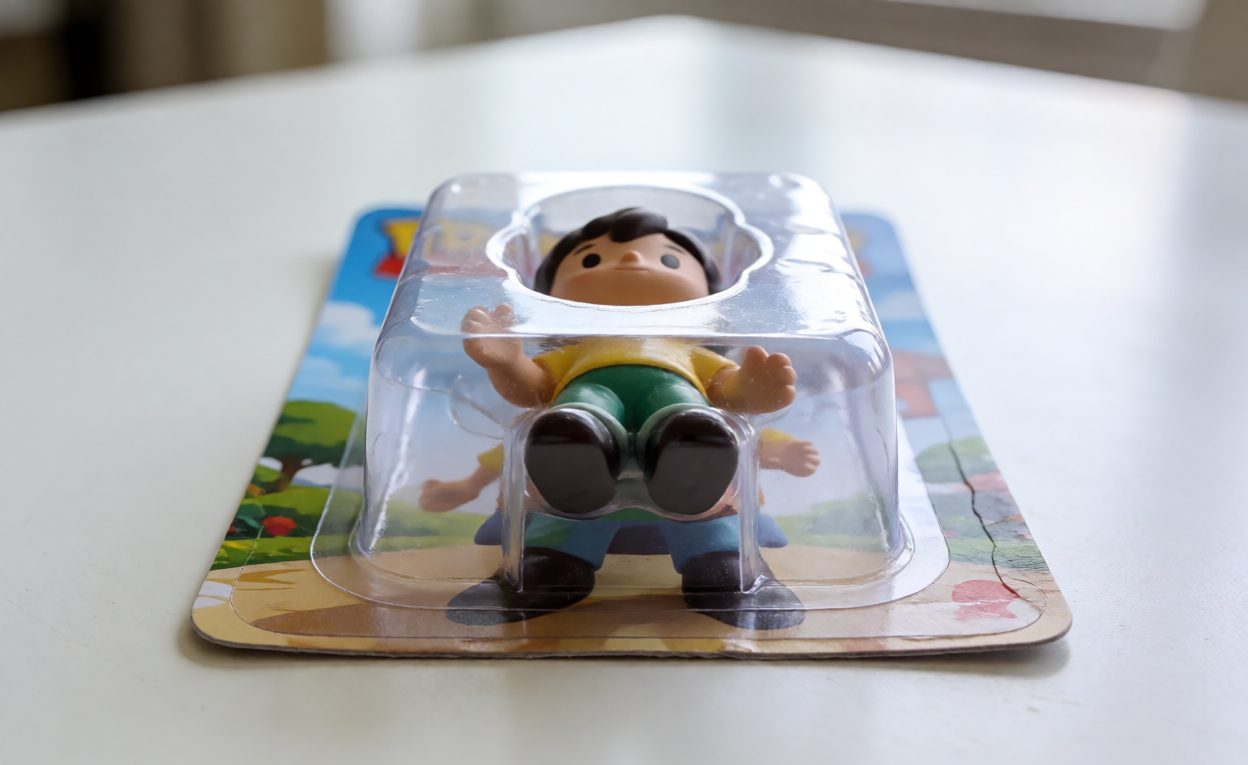
Three Formats and What Each Buys You
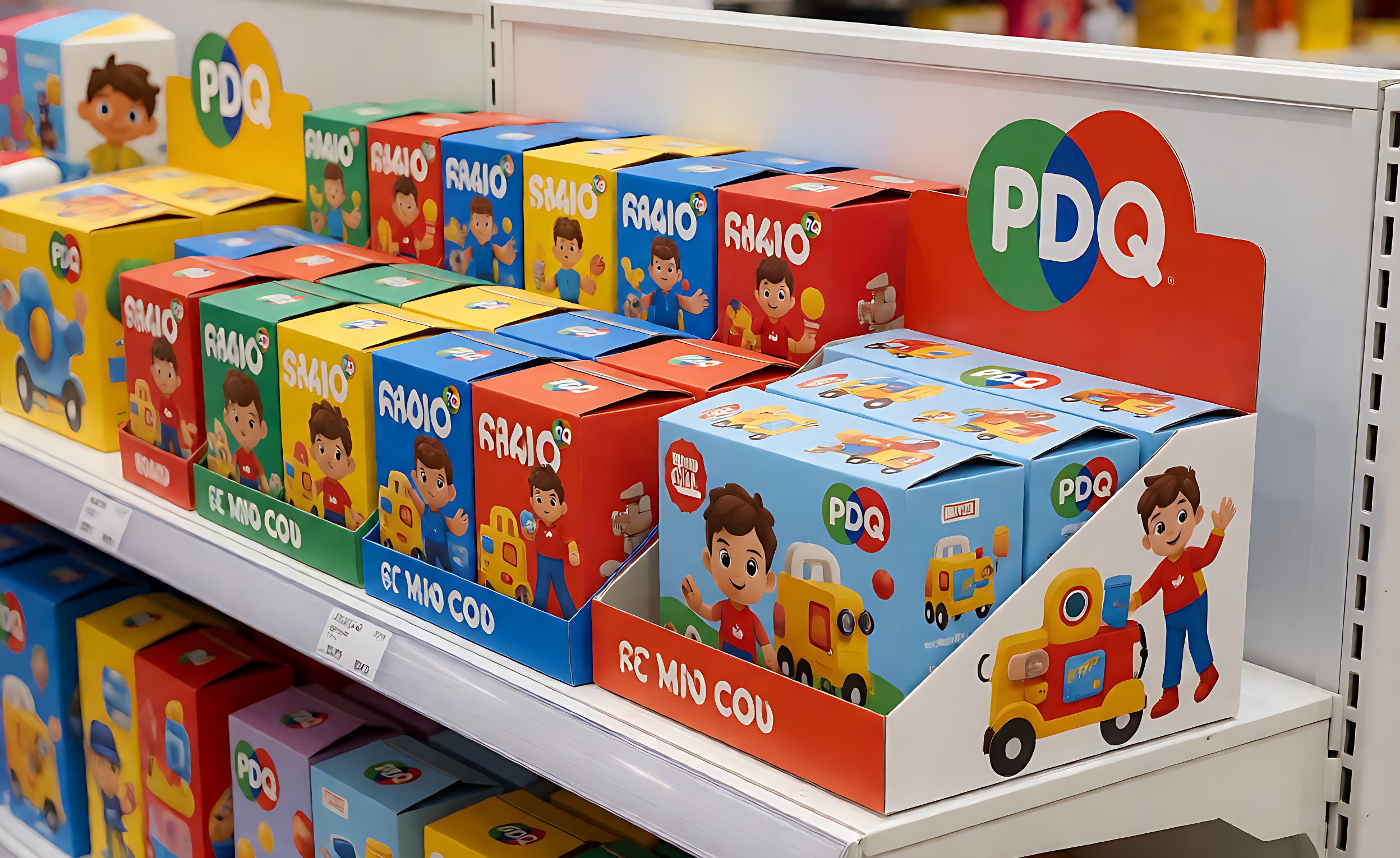
PDQ or shelf-ready display cartons. An outer carton that converts into a counter or shelf display by removing a perforated section. The retailer saves shelf-stocking labour, which is why many chains mandate it. For the buyer, it adds corrugated cost and a structural design step, and it removes a repackaging operation at destination.
Blister packs. A moulded transparent cavity heat-sealed to a printed card. Good for hanging display and for showing the product, but they require tooling per shape, they are awkward to recycle, and the seal quality decides whether units arrive separated. Blister tooling is a real line item and is usually amortised across the order.
Printed folding cartons. The cheapest route and the most flexible on artwork. Best where the product is sold in a bin or online, and where branding is carried by print rather than by structure.
The decision is driven by the channel. Hanging blister for a peg wall, PDQ for counter placement, plain carton for e-commerce fulfilment. Buyers serving several channels often need two pack formats for the same product, which is a MOQ question as much as a packaging one.

Barcodes, Marks and the Retailer’s Compliance Pack
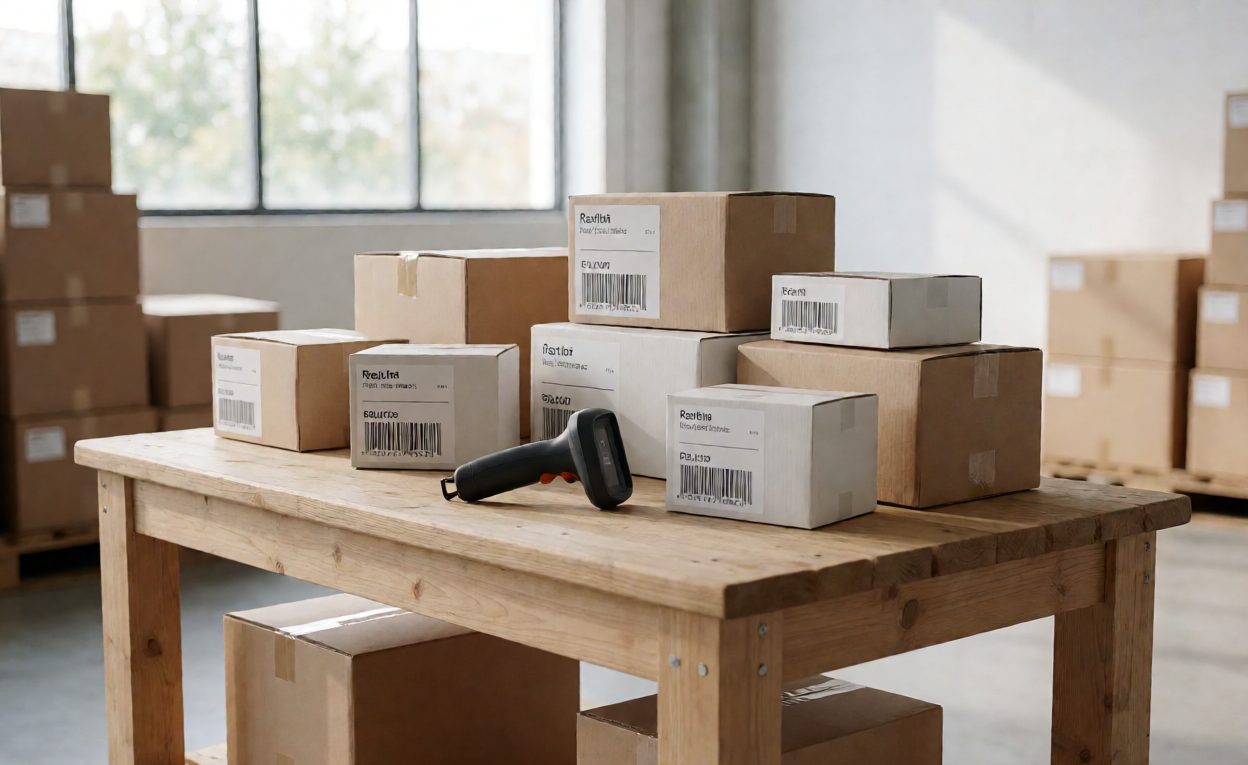
Retail chains enforce a checklist, and non-compliance is charged back rather than negotiated. The recurring items: a scannable retail barcode of the correct symbology printed at a verified size and contrast, a human-readable number beneath it, country of origin, importer identity and address, age grading with the correct warning format, and any required material or disposal marking.
Every one of these needs to be in the artwork approval, and the approval should be on a physical printed sample rather than a PDF. Screens differ from print, and barcode verification is a measurement, not an opinion – a code that scans on a proof can fail on a glossy carton.
What Packaging Does to Unit Cost and Cube
Packaging has three cost effects, and only the first is obvious:
- Direct cost: board, print, blister tooling amortised over the quantity.
- Labour: hand-packing a display carton takes longer than dropping units into a plain shipper, and that difference is per unit.
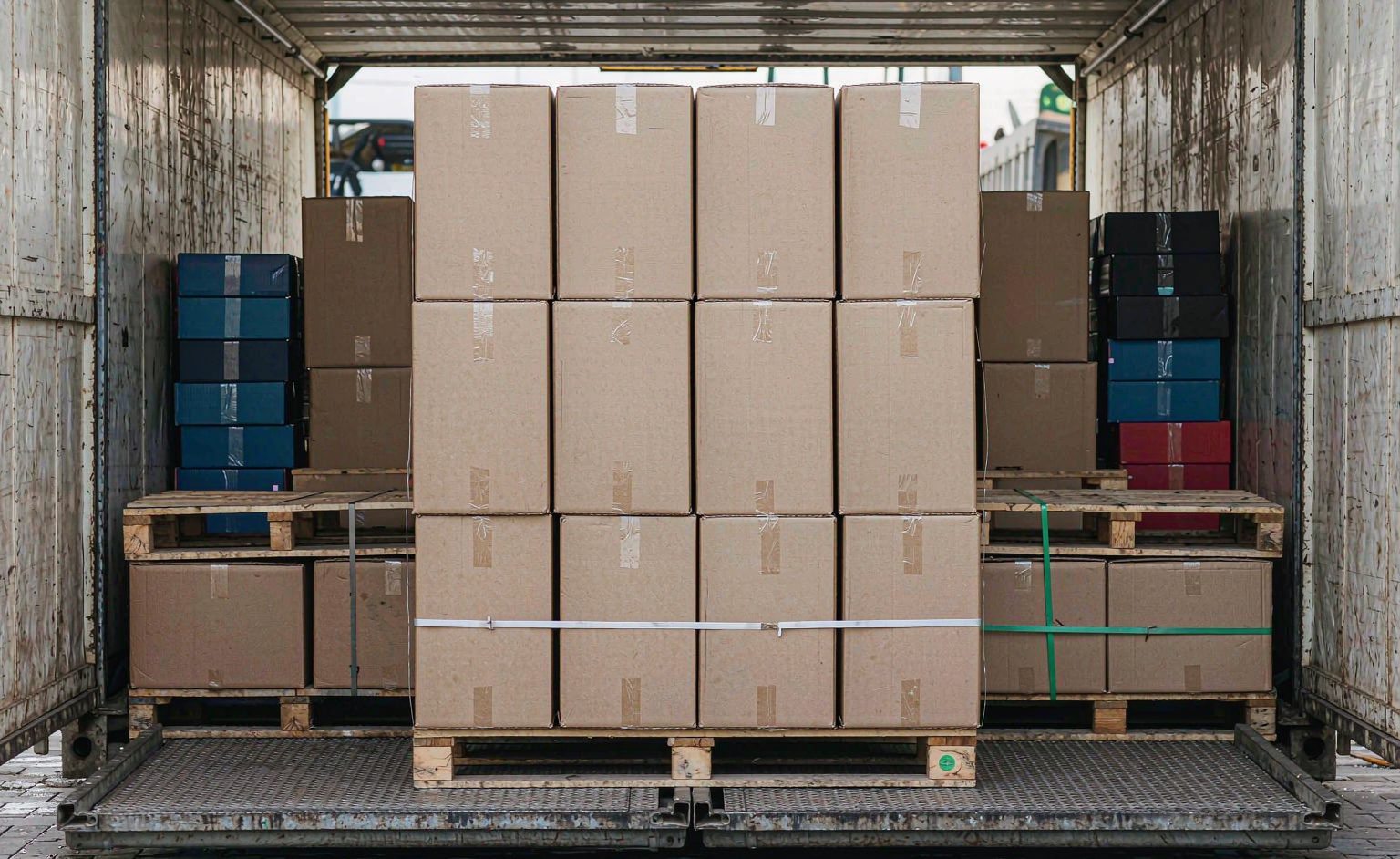
- Cube: the pack size sets how many units fit in the master carton and how many cartons fit in the container. A pack that is one centimetre taller can remove a carton layer from a pallet.
The cube effect is why packaging should be designed against container dimensions rather than against shelf appearance alone. Ask the factory for a packing calculation – units per inner, inners per master carton, cartons per pallet, pallets per container – as part of the quotation, and check it against the actual container you will book.
Technical Background
The hanging format most toy buyers encounter is the blister pack, a thermoformed cavity sealed to a printed backing. Retail identification depends on the barcode symbology the chain specifies, which is why the printed code has to be verified rather than assumed. Both sit inside the wider discipline of packaging and labelling, where the pack carries legal marking as well as brand communication.
A Specification Worth Sending
Put these on the purchase order as explicit lines: pack format, board grade and flute, print colours and finish, dimensions of the finished pack, units per inner and per master carton, barcode type and number, origin and importer text, age grading and warning text with language, and whether the factory or the buyer owns the print plates and tooling.
Ownership matters more than it sounds. Tooling owned by the factory can be reused for other customers; tooling paid for by the buyer should be marked as such, with the understanding recorded in writing, particularly for bespoke blister shapes.
Packaging decisions interact with order quantity, discussed in combining categories to meet MOQ, and with private label programmes in the private label OEM guide. Certification marks that must appear on the pack are set out in the EN71, ASTM and CPC certification guide, and factory capability to execute the pack is part of the pre-order factory audit.
FAQ
What is a PDQ display carton?
A shipping carton designed to convert into a retail display by removing a perforated section, so the retailer can place it directly on the shelf without unpacking.
Is blister packaging more expensive?
Yes, because it needs tooling per shape and a sealing operation, though the cost per unit falls as volume rises and it suits peg-wall display.
Who owns the blister tooling?
Whoever paid for it, which should be stated in writing on the order. Factory-owned tooling may be reused for other customers.
Why do retailers charge back for packaging?
Because non-compliant packs create labour at the store or distribution centre. Barcode failures, missing origin text and wrong warning formats are the usual triggers.
How does packaging affect freight cost?
Pack dimensions decide units per master carton and cartons per container, so a small dimensional change can shift landed cost on every unit.
Should artwork be approved on screen or in print?
In print, on a physical sample. Barcode verification is a measurement, and colours and contrast differ between screen and press.
Can one product have two pack formats?
Yes, and it is common when serving both peg-wall retail and e-commerce, though each format carries its own MOQ and tooling implications.
If you are moving from planning to ordering, the wholesale toy supply page covers pricing tiers and capacity, and the product catalogue lists pack formats and carton details.