Assembly instructions are part of the product. They arrive inside the box, they are the first thing a frustrated parent reaches for, and they are the reason a well-made toy gets returned as “broken” when it was only unclear. Yet instructions are usually the last document written and the least tested — drafted after the toy is finished, approved without a child in the room, and shipped. The discipline that changes this is simple: test the instructions the way the toy was tested, with the people who will actually use them.
Three readers, three different jobs
Every assembly sheet serves three readers at once, and each reads it differently. The child follows the pictures and skips the words. The parent reads the sequence and checks the parts count. The teacher or group leader scans for the setup time and whether twenty kits can be assembled in one lesson. An instruction sheet designed for one reader fails the other two. The test that catches this: give the sheet to all three, watch where each one hesitates, and fix the hesitation — not the reader.
Steps: the subtraction principle
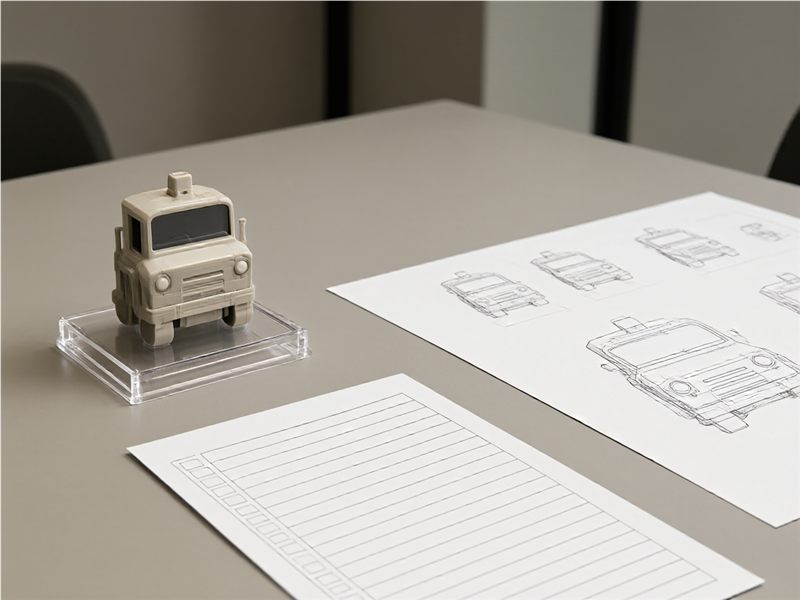
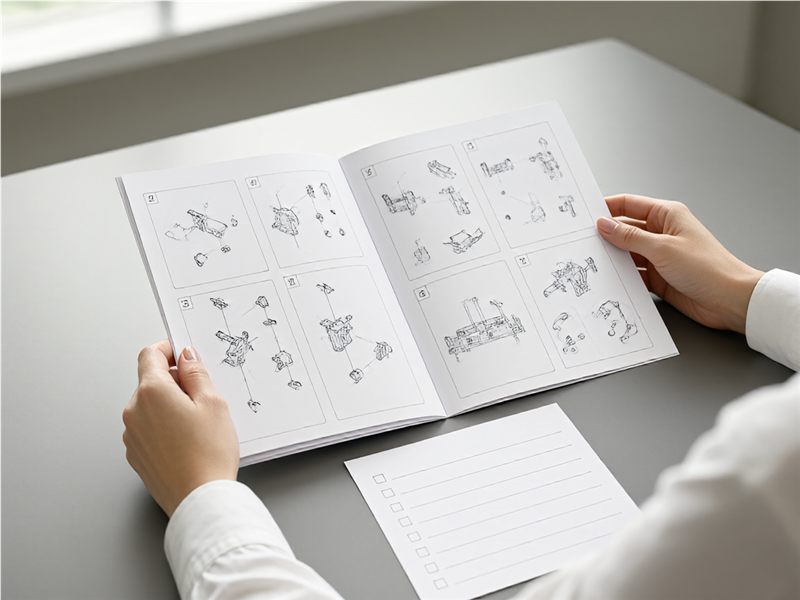
The best instruction sheets are shorter than the first draft, always. The drafting instinct is to explain everything the factory knows; the reader needs only what they cannot see. Each step should carry one action, shown at the moment it happens, with the part that changes drawn in bold and the parts that do not matter drawn faded. If a step needs two sentences to explain, it is usually two steps. And the step that defeats most assembly sheets is the orientation flip — the moment the build turns over or rotates — which deserves its own step with the orientation obvious before anything moves.
Parts: the checklist that prevents the “missing piece” call
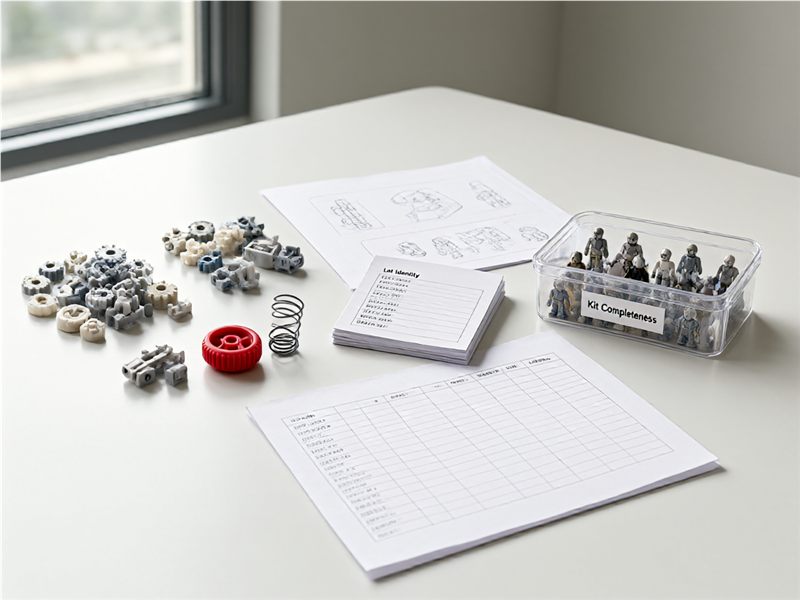
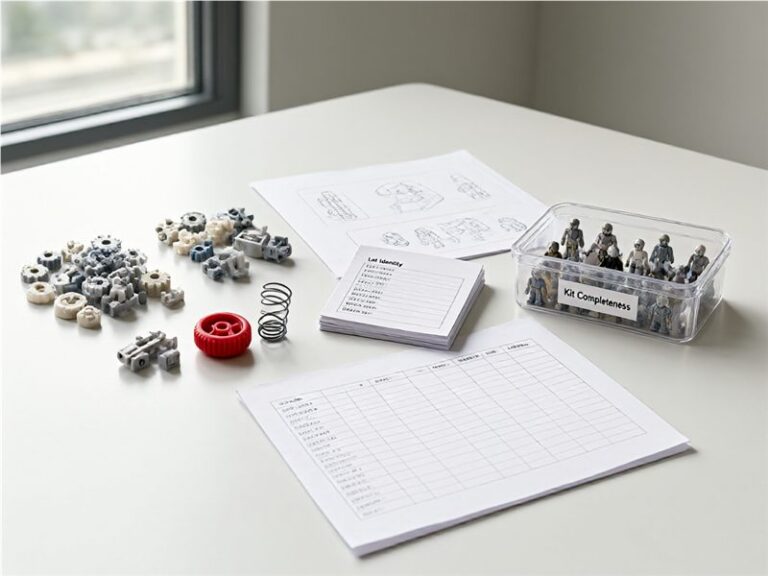
A parts panel drawn at actual size is the single cheapest service an instruction sheet provides: the buyer lays every part on the sheet and knows in thirty seconds whether anything is missing — before the build starts, before the frustration, before the call. The panel should match the released bill of materials exactly, in count and in form, and the count should be stated numerically as well as visually, because a small part drawn once can be overlooked twice. When a kit ships with consumables — clay, stickers, batteries — the panel says how many, and the label repeats it.
Pictures and words: who leads
Assembly sheets lead with pictures for young users and international sales, and words exist to disambiguate — which way the piece rotates, which hole is which, what “click” should feel like. The pictures are tested without any words at all: if the picture-only sequence can be followed by an adult who does not speak the language, the sheet works internationally and the words become support rather than crutch. Words that repeat what the picture shows are clutter; words that answer the question the picture raises are service.
Language and localization: the warnings are mandatory, the rest is service
Mandatory warning text is a compliance item and follows the regulation of the destination market — it is translated professionally, never machine-translated, and it is proofed against the regulation rather than against a dictionary. The instructional text is service: it can be shorter, simpler, and more visual than legal safety. Multilingual kits allocate panels per language at the dieline stage, because adding a language after layout is the rework that pushes print dates. And the icons used should be tested for comprehension too — a small icon that reads as “warning” in one market and “recycling” in another is a call waiting to happen.
The test: assemble without the sheet, then with it
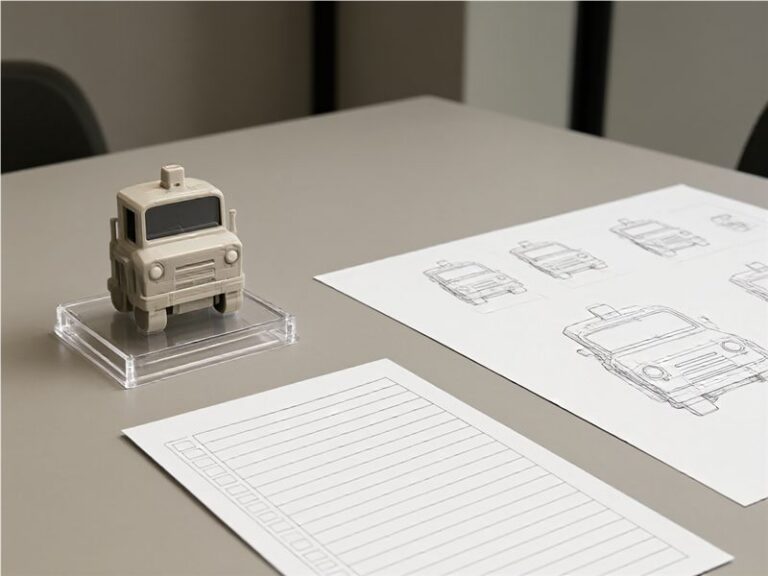
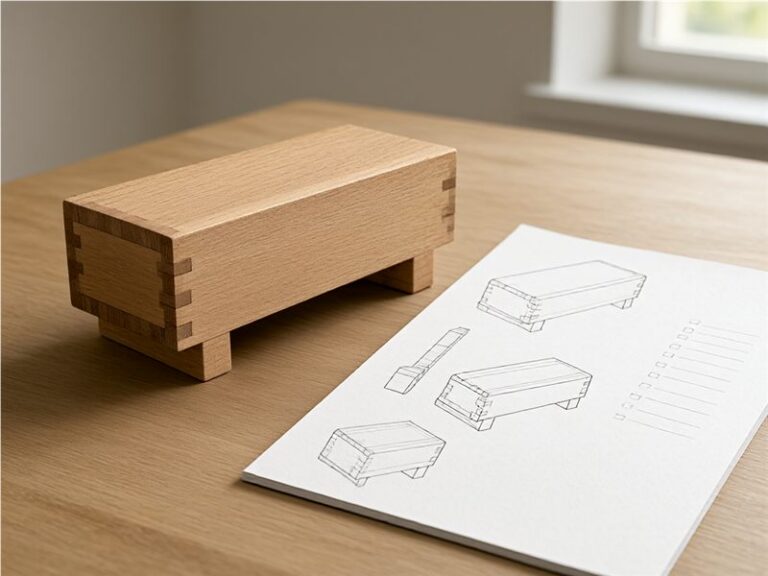
The factory tests instructions in two passes. First, the design pass: an assembler who built the toy builds it again following only the sheet — any step they do from memory instead of from the page is a step the sheet has not earned. Second, the fresh pass: someone who has never built the toy builds it with the sheet, timed, and every hesitation is marked on the page. The marked-up sheet comes back to the drafting table, and the second version is the one that ships. A sheet that passes the fresh pass for its target reader — child, parent, or teacher — is a sheet the review section will never mention, which is exactly the goal.
Four questions buyers ask about instructions
Can instructions be multilingual without doubling the page count? Yes, if the pictures lead — a pictorial sequence needs only the warnings and the parts names in each language, and the panel allocation is done at the dieline stage.
Who writes the warnings? The warnings follow the regulation of the destination market and are proofed against it; the playful instructional text follows the brand. The two are kept visually distinct so the mandatory block is unmissable.
Do instructions affect the compliance file? They are referenced by it — the assembly sequence demonstrates the mechanical requirements are met as intended, and the instructions carry the warnings the file requires. A changed mechanism reopens both.
Can the sheet carry our brand? Yes — the sheet is brand surface like any other, and the mandatory block is laid out first so the brand art fills the space that remains.
The parts count, tested twice
The parts panel is checked twice in a working process: once against the released bill of materials at the artwork stage, and once physically at packing — a packer lays every component on the sheet for one kit per line, per shift. The double check exists because the two failures are different: the artwork can drift from the BOM when a component is value-engineered out and the panel is not updated, and the packing can miss a part when a sealing machine jams. Either failure produces the same customer sentence — “one was missing” — and the same refund. Thirty seconds per kit at the factory is the price of never reading that sentence.
Tools: named, drawn or excluded
If the build needs a screwdriver, the sheet says so on the first page and the kit includes one — or the sheet says the toy needs no tools at all. The ambiguity between “some assembly” and “no tools required” is where returns come from in gift purchases, because the gift-giver assumed and the parent discovered on a birthday morning. Kits that include tools draw them at actual size in the parts panel with the rest, and the build steps show the tool only at the steps that use it.
Instruction sheets for multi-build kits
Kits that build several models from one part set multiply the sheet’s job, and the layout that survives is the modular one: a parts panel for the whole kit, then one build section per model, each starting from a shared base photograph so the builder knows where every build begins. The models are ordered by difficulty, and each section states its build time honestly — a “15 minutes” build that takes forty-five is the review screenshot of the category. Modular sheets also localize cheaper: the shared base pages are language-neutral, and only the build captions and warnings translate.
When instructions carry the safety story
Some toys have assembly steps that are safety steps: battery compartment screws, barrier fittings, stabilizer installation. Those steps are marked in the sheet as required-for-safe-use, tested with the same fresh-reader pass, and referenced in the compliance file — because a safety-relevant assembly step that a reader skips is a hazard the file did not anticipate. The marking is visual (a filled icon in the step corner) and the wording says why: “screw required for safe battery use.”
The digital companion, used sparingly
A QR code on the sheet that leads to a build video earns its space when the build has a moment words and pictures genuinely cannot carry — a flexible part routed through a slot, a tension adjustment, a fold that needs seeing at speed. The video supplements the sheet; it does not replace it, because the sheet works in the box without a phone, and the compliance warnings must survive without a signal. QR leads to a hosted video the brand controls, so a hosting change does not orphan a thousand printed sheets.
A marked-up sheet, and what it taught
One of the most useful documents a toy project produces is the marked-up instruction sheet from the fresh-reader test. A recent one came back with three circles and an arrow. Circle one: step four showed the piece from the builder’s angle but the drawing was of the top — a perspective flip nobody at the factory noticed because everyone there had built it. Circle two: the parts panel drew the small connector at half scale, and the reader thought it was missing. The arrow: between steps six and seven, the build silently changes orientation, and the reader had turned the model the wrong way and fought step seven for ten minutes. All three fixes were sentence-level changes to the drawings. The second fresh reader built it straight through, and the sheet shipped.
Why instructions belong in the development calendar
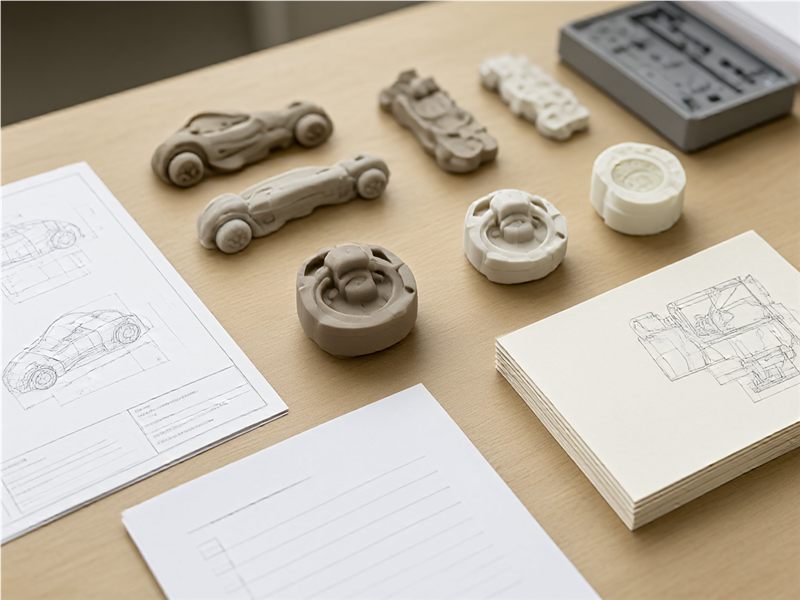
Instructions drafted after production are drafted under deadline, by people who no longer remember which step confused them, with no child in the room. The working calendar pulls the sheet draft into the sampling phase: the hand sample is built while the first sheet draft is written, the mold sample tests the revised sheet, and the fresh-reader test runs on the pilot build. The sheet then ships with the product the same way the golden sample does — tested, dated, and referenced. The cost of the discipline is a day of drafting and a reader’s afternoon; the cost of skipping it is the review that says “instructions useless, toy fine, kid frustrated,” which is the review that makes the next buyer hesitate.
Instruction testing is built into the OEM manufacturing process, and the educational toy range shows assembly kits whose sheets have passed the fresh-reader test in classroom quantities.
OEM & ODM TOY MANUFACTURING
Ready to Develop Your Custom Toy Line?
10+ years factory experience • EN71, ASTM F963 & CPC compliance support • Flexible MOQ for toy brands, importers, and Amazon sellers.