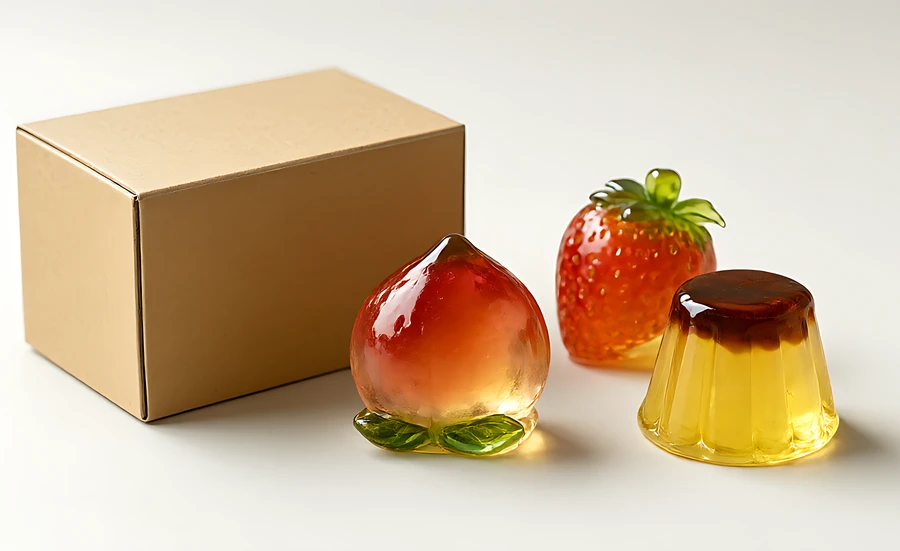
A carton of maltose gel squishy samples landed on the bench just after I switched the lights to the daylight setting. I had asked for several pieces from each of two colourways, so finish could be compared across a batch rather than admired one at a time. Under the bench light the first piece looked clean; tilted toward the window it showed a faint sheen that had not been there a minute earlier, and the clear bag around the second piece had gone slack, folded in at the corners. One sample felt slightly tacky at the seal. Nothing was dramatic enough to phone the supplier about on the spot, and all of it was exactly the kind of small drift that becomes a dispute three months into a wholesale order. The hour’s work was to settle three things at once: whether the finish was consistent, whether the pack was genuinely sealed, and whether the compliance file described the goods in front of me.
Why the sample table decides the wholesale order
A maltose squishy is a soft, translucent gel whose whole appeal lives in surface and feel, which makes it awkward to buy from photographs. A seller can shoot a glossy piece under flattering light and ship a batch that greys, bleeds oil or sticks to its bag weeks later. The sample is the only moment when buyer and supplier handle the same physical object, and the last cheap moment to disagree. Once a bulk order is packed, a finish complaint becomes a freight argument rather than a short email.
Slow-rise behaviour is a separate specification again: the rebound time, the foam density and the fill weight are decided at the tooling stage, not the sample stage. We set out how those slow rising squishy toys are specified before quotation.
The purpose of a sample review is not to decide whether the toy is charming. It is to turn a soft impression into a few recorded decisions both sides can read the same way. Three questions carry most of the risk: is the finish uniform, does the pack keep the product as packed, and does the document pack match the goods on offer?
What “maltose finish” means on a physical sample
The word maltose is used loosely in this category, so pin it to observable features rather than a smell or a memory. Under two light angles, describe what is actually there: the degree of translucency, whether light passes at the edges, the smoothness of the skin, the tack felt when a finger is pressed and lifted, and the way the material rebounds. Those features can be seen or felt, which lets two inspectors compare notes instead of trading adjectives.
For wholesale, one perfect piece means little; the spread across the batch is the risk. Lay the colourways side by side and compare them in the same light at the same moment. A piece slightly more opaque than its neighbour may simply carry a darker pigment, while a piece whose skin feels greyer or drier is the variation that surfaces as complaints once a retailer opens cartons in front of customers. Write the differences in plain words before forming a view about acceptability.
Reading surface oil under inspection light
The sheen I saw is common in gel materials, and it must be split into two cases before anyone calls it a defect. An even gloss that does not transfer to a clean finger is usually the finish of the compound. A patchy film that gathers in the dips of the shape, feels greasy, or marks paper suggests material migrating to the surface, and will usually worsen in warm transit rather than improve.
Test the sheen rather than debate it. Press clean white paper against the surface for a moment and set it aside; note whether a translucent mark appears and whether it spreads on standing. Repeat on a second piece from a different bag. One mark is a sample anomaly to flag; marks on several pieces from different bags make this a formulation or shelf-life conversation that belongs in the rejection note, not in a private worry.
Fix the conditions so the finding can be reproduced: use the same light for every piece, compare like with like, and record the time since unpacking, since gel just out of a sealed bag looks different from one open for an hour.
The collapsed bag is a seal question, not a cosmetic one
The slack bag is easy to dismiss as presentation. For a moisture-rich gel product it should not be. A bag sucked inward around the piece usually means the headspace changed after packing: gas or moisture moved, the film creased, and the seal line took a load it was not meant to carry. Ordinary wrinkling can be harmless; a bag drawn onto the product, or a seal channel that is cloudy and uneven, is telling you about the barrier rather than the printing.
Check the seal line before the film. Look for a continuous, even weld with no gel trapped in the weld, no corner that lifts, and no short section where the two layers failed to join. Trapped gel in the seal is a classic leak path and a good thing to photograph, because it is unambiguous. Separate that from a crease in the film, which is a handling mark and usually a minor point rather than a reason to hold a shipment.
Testing the seal without a laboratory
No specialist equipment is needed to screen a sample pack. Press a sealed, unused bag gently and watch the seal line under light pressure; a channel that opens or a corner that lifts is a real failure. For a stronger check, submerge a sacrificial sample in its original bag and watch for bubbles coming from the seal rather than the outside of the film. Record that the bag was opened for testing, since these checks confirm present integrity, not shelf life.
Ask the supplier what barrier and seal settings were used and what checks run at packing, then judge whether those are frequent enough for a wholesale run. A sample that passes a squeeze check but arrives with no packing record still leaves the important question open.
The compliance file that should arrive with the sample
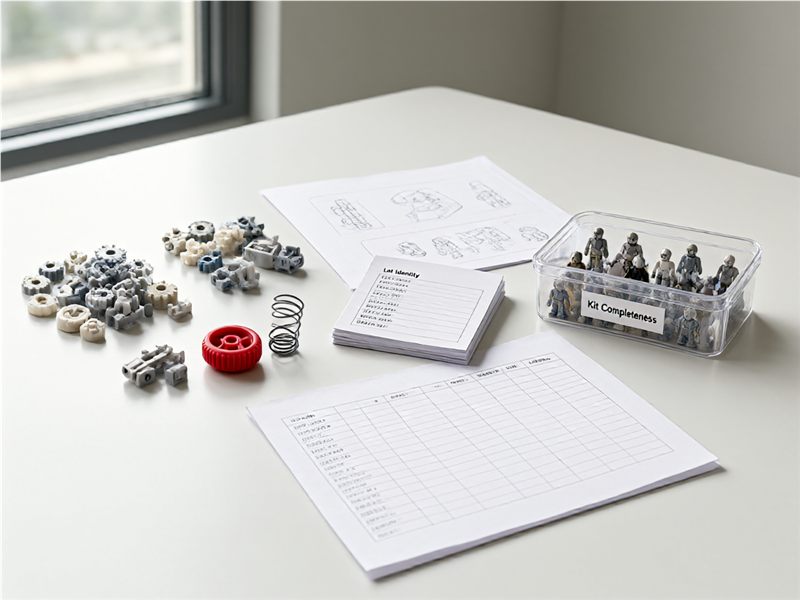
A sample that arrives alone is incomplete. For a gel toy sold through retail channels, the document pack should be assembled with the physical pieces so the two can be checked against each other. Ask for the material declaration, the test reports for the intended markets, the age-grading reasoning, the label artwork and any warnings that travel with the product. The documents need not all be final at sample stage, but the gaps should be named rather than silently omitted.
Then compare names, numbers and descriptions across the documents. The product name on the label should match the test report; the declared material should be the material you are holding; the age mark should be supported by the reasoning in the file. Marketing claims about purity or very young users should be traceable to something in that file, or treated as an open item. Our guide to the safety document pack for importers lists which records belong together when the supplier’s folder arrives as loose files.
Accept, hold or reject: the working table
The most useful output of the session is a single table separating what you saw from what you decide. Use four columns: the check area, the observation, the boundary you are applying, and the evidence kept. Filling it in forces vague judgements into a form the supplier can answer. “Finish felt odd” cannot be answered; “patchy film on two of four pieces, transferring to paper, boundary set at no transfer” can.
Check area
Observation to record
Accept / reject boundary
Evidence to keep
Finish consistency
Translucency, skin smoothness, tack after press-and-release, compared across colourways in one light
Accept even gloss and uniform skin; reject a patchy film or grey, dry areas differing between pieces of one variant
Side-by-side photo of all pieces under the same light, plus a note of the comparison order
Surface residue
Whether white paper pressed to the surface picks up a translucent mark that spreads on standing
Accept no transfer; hold if one piece transfers; reject if several bags transfer, pointing to the compound rather than one piece
Photo of the paper before and after, sample identifiers, time between unpacking and test
Bag seal
Continuity of the weld, trapped gel in the seal channel, corners lifting under gentle pressure
Accept a continuous even weld; reject any open channel, trapped product in the seal, or corner that lifts
Close-up of the seal line, failing corner marked, bag retained unopened
Bag condition
Film drawn onto the piece, slack folds, creases away from the seal
Accept ordinary creasing; hold bags sucked onto the product pending a seal check; reject creasing with a failed weld
Photo of the full bag against a plain background, with the seal line visible
Compliance file
Names, material description, age mark and warnings across reports, declaration and artwork
Accept only where names and materials agree; reject a printed claim with no support anywhere in the file
Copies of the mismatched pages with the conflicting lines marked and dated
These boundaries are proposals for the review, not universal laws. What matters is writing one down before the decision, so the discussion is about whether the boundary was right rather than what anyone remembers seeing. Classifying findings as critical, major or minor comes after the observation; our note on defect classification for toy inspections explains how to keep those labels consistent across a team.
Photographing evidence that survives a claim
A note in a notebook persuades the person who wrote it and nobody else. Photographs turn a finding into something the supplier can inspect on their own screen. Use a plain background, include the whole piece in one frame and the suspect detail in a second, and keep both at the same light setting so colour and sheen stay comparable. Put a sample identifier in the frame, a bag label or written tag, so the photograph ties to a specific piece rather than “the one that looked oily”.
Keep the physical evidence too. A bag with a failed seal should stay unopened where possible, and a piece that transferred residue should be bagged and labelled separately. Photographs can be argued about; the actual piece cannot. Record the date, the time since unpacking and who was present, then send the set while the samples are fresh. Evidence arriving two weeks after a rejection reads like an excuse; evidence arriving with the email reads like a finding.
Freezing the approved sample as a reference
Once the review is over and the acceptable pieces are agreed, the job is unfinished until one is set aside as the reference for the bulk run. Seal it, label it with the date and the agreed finish description, and store it where it will not be handled, warmed or left in sunlight. A second piece held by the supplier under the same identifier gives both sides the same object to disagree about later.
Be explicit about what the reference covers: finish, bag type and label artwork together, since those were assessed as one package. A colourway added after the order is placed is a new sample, not a variation of the approved one. The golden sample approval workflow describes how to hold that reference through production and what to do when a later batch drifts; for a finish-led product like maltose squishy, that discipline is the difference between a consistent run and a slow argument.
Writing the rejection note so the factory can act
The note accompanying a rejection should make the next action obvious. State the decision, then list each finding in the order of the table, attaching the matching photograph and naming the boundary breached. Separate observations from the requested response. A supplier told “the finish was inconsistent, please improve” has nothing to do; one told “two of four pieces transferred residue to paper, photos attached, please confirm the compound lot and whether the same lot was used for the other colourway” can answer in one reply.
Keep the tone factual and the scope tight. Do not fold a packaging complaint into a finish complaint, or raise a document mismatch as a defect in the toy; each has a different owner. State which samples are held, rejected or acceptable, and ask for a dated response. Holding back the acceptable pieces denies the supplier information about what passed.
From the sample table to the bulk order
Handled this way, the hour at the bench produces more than a yes or no. It yields a finish description both sides can repeat, seal checks that were actually performed, a document pack with gaps named, and a reference piece that will arbitrate the bulk run. Those four things separate a wholesale purchase from a hope that the goods will resemble the photograph. Squishy products are bought largely on feel and finish, which is exactly why the written record matters more here than in categories where appearance is easier to specify.
The next order benefits too. The boundaries written here become the starting point for the next, and the photographs show a new inspector what a failing seal looked like. Samples always bring small surprises — a slack film, a faint sheen, a label that does not quite match — but a repeatable review turns each into a decision with evidence behind it.
How can an inspector tell normal gel gloss from surface oil on a maltose squishy?
Use a press test rather than an opinion. Tilt the piece under a fixed light, then press a strip of clean white paper against the surface and set it aside. An even gloss that leaves no mark is the compound’s finish. A patchy film gathering in the dips, or a translucent mark on the paper, is a real finding. Repeat on pieces from different bags: one isolated mark is an anomaly, while marks on several point to the formulation and belong in the rejection note.
What is the fastest way to check whether a squishy sample bag is really sealed?
Inspect the weld first, looking for a continuous join with no gel trapped in the seal and no corner that lifts. Press a sealed, unused bag gently and watch the seal under light pressure. For a stronger check, submerge a sacrificial sample in its original bag and watch for bubbles from the seal rather than the outside film. Record that the bag was opened for testing. These checks confirm present integrity, not shelf life, so also ask what sealing checks the supplier runs at packing.
Which sample deviations can be accepted, and which should be rejected?
Accept even gloss, uniform skin and ordinary creasing away from the seal. Hold a bag drawn onto the product until a seal check is done. Reject open seal channels, gel trapped in the weld, patchy residue transferring to paper across several bags, and any printed claim unsupported by the document pack. Write the boundary before deciding, and keep finish, pack and documents separate so each reaches the right owner. Retain one acceptable piece alongside the rejected ones to show where the line sits.
What evidence should be kept after a sample review?
Keep three kinds tied to one sample identifier: a written observation with the time since unpacking, photographs of the whole piece and the suspect detail under the same light, and the physical sample in a labelled bag. Retain a failed-seal bag unopened and store residue pieces separately. Mark the conflicting pages of any document that does not match the goods. Send the set to the supplier while samples are fresh, and keep one copy until the bulk order and any later claim are closed.
OEM & ODM TOY MANUFACTURING
Ready to Develop Your Custom Toy Line?
10+ years factory experience • EN71, ASTM F963 & CPC compliance support • Flexible MOQ for toy brands, importers, and Amazon sellers.