




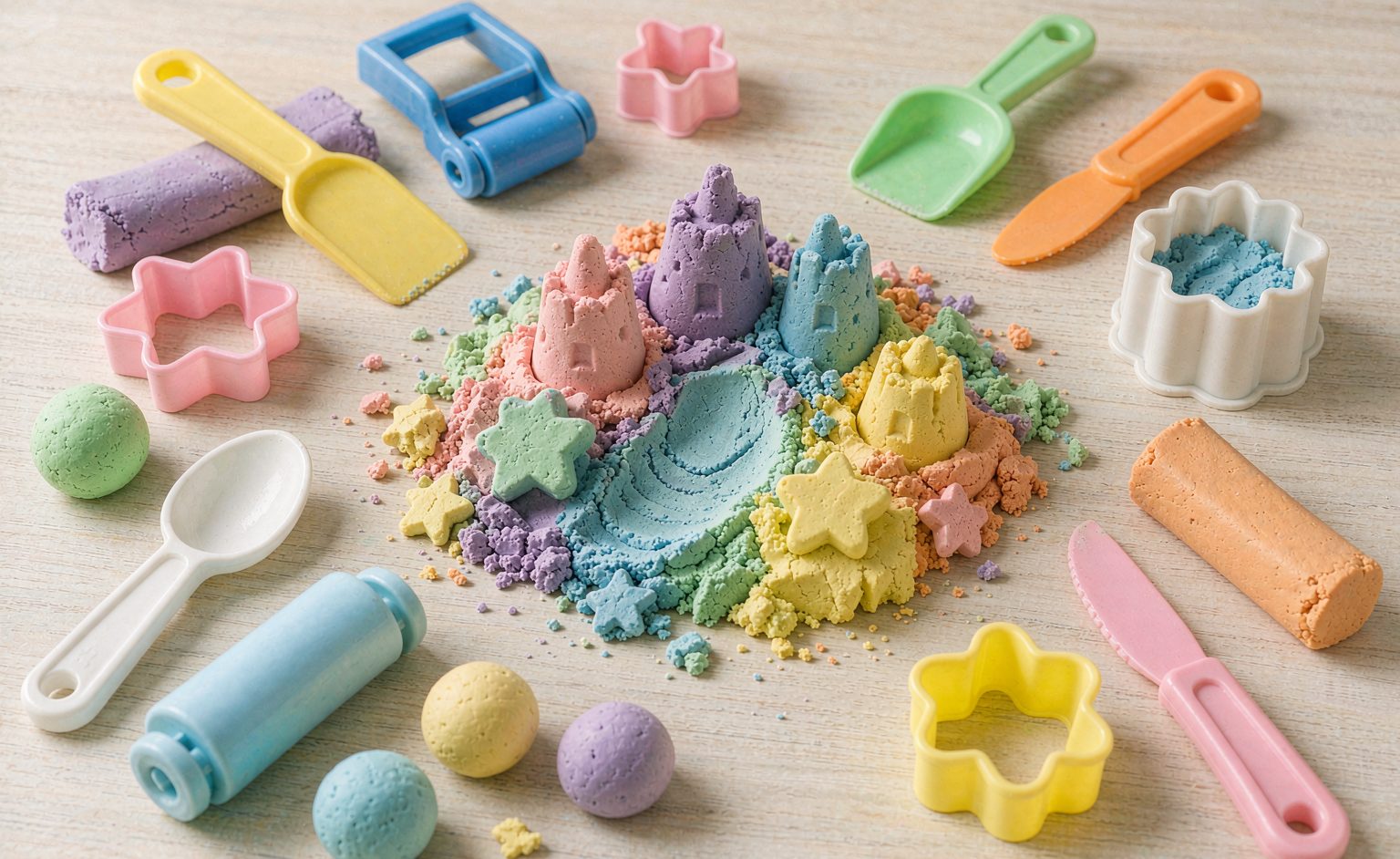
Kinetic sand looks like one product but is a formulation, and the formulation is where bulk buyers win or lose. Two suppliers quoting the same per-kilo price can deliver sand that holds a shape for five minutes versus forty, or sand that passes toy safety versus sand that fails at customs. This guide covers the spec sheet that actually matters, the MOQ and lead-time reality, supplier verification, and the quality checks that stop a bad container before it ships.
Key Takeaways
- Specify polymer ratio, particle size, odor, reusability and certification — not just price per kilo.
- Real MOQ and lead time depend on color mix and packaging; confirm both before committing.
- Verify the factory with certificates, third-party lab tests and a physical sample, not a catalogue.
- Quality checks: stretch test, mold-release cleanliness, heavy-metal and phthalate screening.
- Packaging and shelf life decide whether the product survives the warehouse, not just the shelf.
The Spec Sheet That Matters
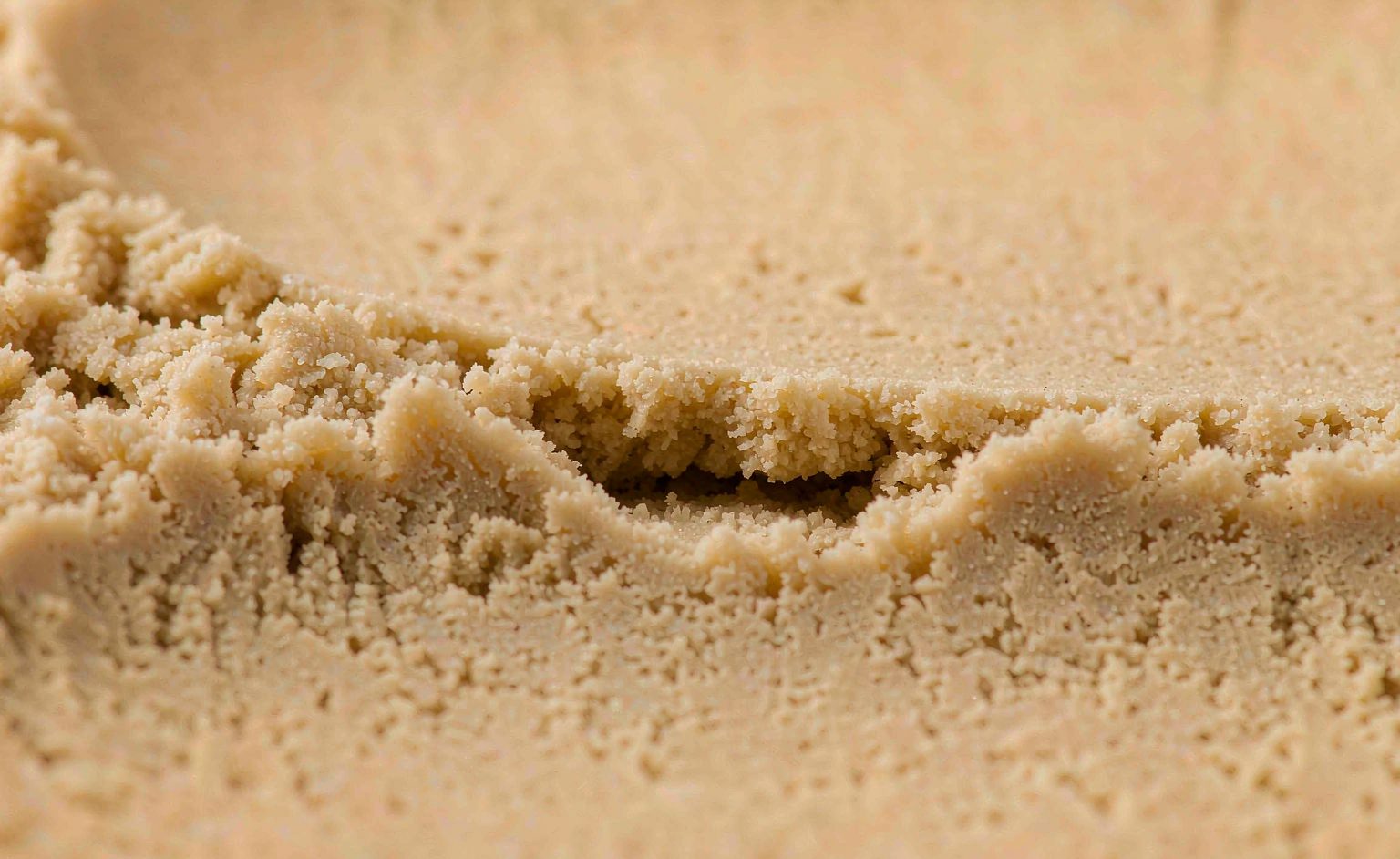
The functional spec is the polymer (usually a silicone or polymer-coated sand) ratio to sand, the particle-size distribution, odor, and reusability after repeated handling. A higher polymer ratio holds shape longer but costs more and can feel oily; the right balance is market-specific. The buyer’s specification framework is in our sensory sand specification guide, and the material comparison — TPR, silicone, PU, PVA, air-dry clay — is in our materials compared.
| Spec | Why it matters | What to require |
|---|---|---|
| Polymer ratio | Shape-hold and feel | Defined range, not “magic” |
| Particle size | Texture and safety | Screened, no fines |
| Odor | Consumer acceptance | Low / neutral |
| Reusability | Value perception | Recovers after handling |
| Certification | Market access | EN71 / ASTM / CPSIA as required |
MOQ, Lead Time and Color Mix
Published MOQ is a starting point; the real number moves with your color mix and packaging. A 10-color set with custom tins has a different tooling and changeover cost than a single bulk bag. Lead time follows the same logic — confirm both against your actual SKU plan, not the supplier’s headline. Creative use and packaging ideas that affect SKU count are in our creative-play ideas.
Supplier Verification
Verify with certificates, third-party lab tests against the target market’s standard (EN71, ASTM F963, CPSIA), and a physical sample you test yourself — not a catalogue or a video. A factory that cannot produce valid test reports for the exact formulation is a risk regardless of price. The water-safe angle, relevant if you bundle with bath lines, is in our water-play guide.
Quality Checks That Prevent a Bad Container
Before a full container, run the stretch test (does it hold a peak?), check mold-release cleanliness (oily residue ruins packaging), and screen for heavy metals and phthalates at a lab. These catch the failures that a visual inspection misses and that surface as returns or customs holds after the container is paid.
Frequently Asked Questions
What spec matters most in bulk kinetic sand?
The polymer-to-sand ratio and reusability — they decide shape-hold, feel and value perception.
Is a low per-kilo price a good deal?
Only if the spec, certification and packaging hold. A cheap formulation that fails safety or feels oily costs more in returns.
How do I verify a factory?
Certificates, third-party lab tests for the exact formulation, and a physical sample you test yourself.
What lab tests are required?
EN71 (EU), ASTM F963 (US), CPSIA (US children’s) as applicable — plus heavy-metal and phthalate screening.
Does color mix affect MOQ?
Yes — more colors and custom packaging raise tooling and changeover, pushing real MOQ above the headline.
How do I avoid a bad container?
Stretch test, mold-release check and lab screening on a pre-shipment sample before committing the full order.
Technical background: sand properties, polymers and sensory play cover the underlying concepts.