




Transit damage is obvious: a crushed corner, a torn wrap, a photograph for the claim. Warehouse damage is slow and diffuse. Cartons soften, printed boxes lose their crispness, plush develops an odour that customers notice before anyone else does, and the loss shows up months later as returns rather than as a single event. Humidity is the common agent, and it is the most controllable variable in ordinary storage.
A toy product is assembled from materials that disagree about moisture. Corrugated board absorbs it and loses strength, paper and printed labels cockle, plush fabric and natural fibre hold it, metal components corrode, and water-based compounds such as clay and dough lose it. Storage conditions therefore have to be chosen against the most sensitive material in the mix.
Targets and What Breaks Outside Them
A working band of roughly forty to sixty percent relative humidity suits most mixed toy inventory, and each end of the range has a characteristic failure mode:
- Carton compression strength falls substantially as moisture rises, so a stack that was safe when packed can crush its lowest layers after a humid season.
- Mould growth becomes likely above roughly sixty-five percent with poor airflow, appearing first on paper inserts, fabric surfaces and the glue lines of cartons.
- Metal components corrode in sustained high humidity, affecting battery contacts, springs and screws before they reach the customer.
- Damp-sensitive compounds such as modelling clay and dough can dry out and harden in very low humidity, which is the opposite failure from the same lack of control.
Temperature swings compound every one of these, particularly through condensation. Warm moist air meeting a cold surface deposits water exactly where it does the most harm, which is why sealed poly bags inside a cool warehouse can trap moisture against a product.
Measure Before Acting
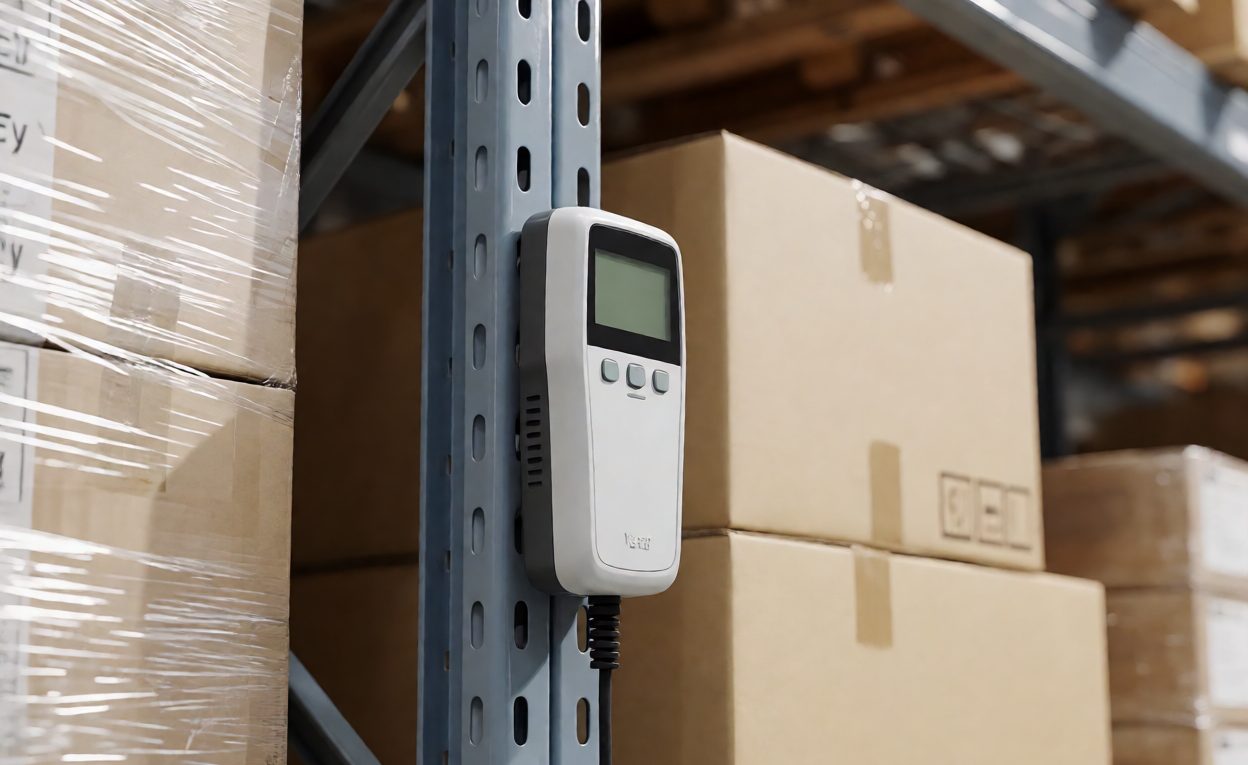
Single readings mislead. Humidity varies by height, by proximity to doors and exterior walls, and by season, so one instrument near the office door says little about conditions at the top of the racking on the far wall. Place several data loggers where stock actually sits, including one high in the racking and one near the loading door, and download them monthly.
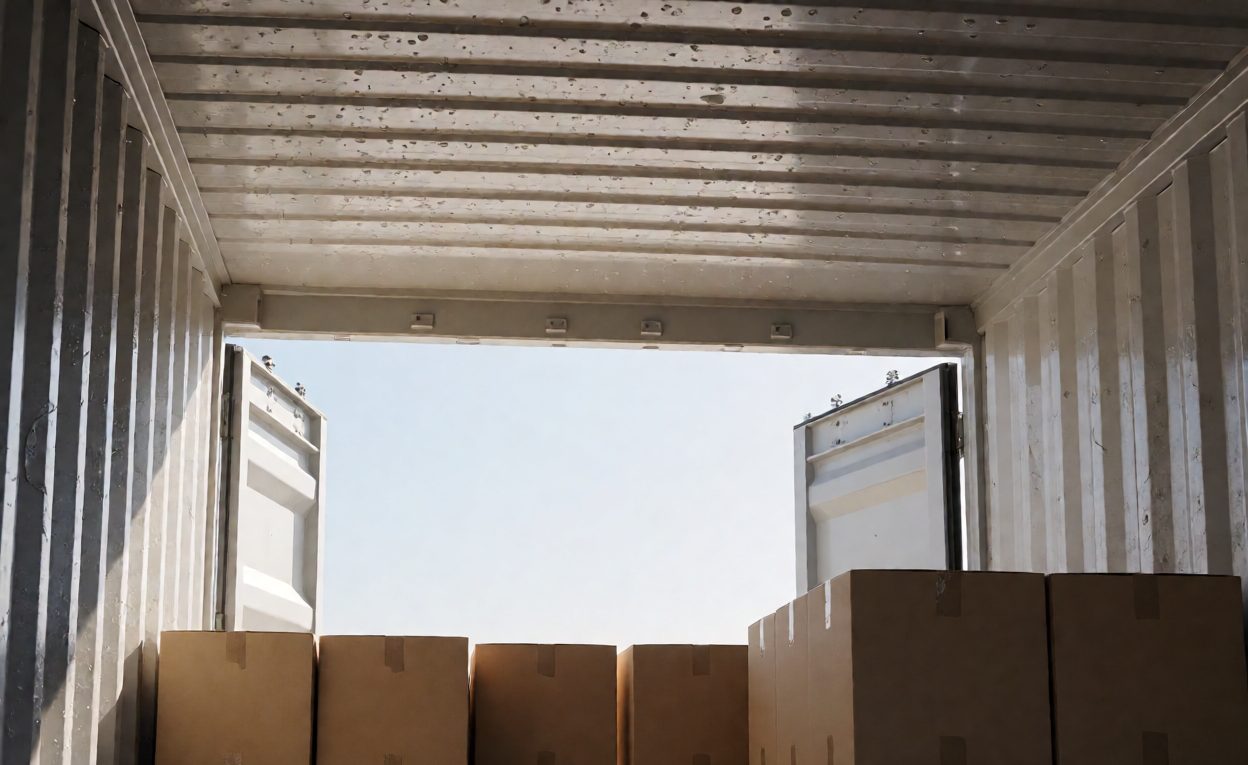
The most important spot many operators miss is the container itself. Goods shipped from a humid port into a cool destination arrive warm, and moisture condenses inside the box – container rain – wetting cartons that were packed dry. The remedy is procedural: use desiccant appropriate to the load, and allow sealed containers to acclimatise before opening so moisture does not flash onto cold product.
Storage Practice That Prevents Most Damage
Layout does more than mechanical equipment in most warehouses:
- Keep stock off the floor: concrete wicks moisture, so use pallets or racking with genuine clearance rather than a plastic sheet under a stack.
- Leave air gaps between stacks, against walls and below the roof, since stagnant air is where mould establishes.
- Limit stack height to what the carton grade supports, especially for long-stay inventory, because compression is time dependent.
- Rotate stock on a documented first-expiry-first-out basis, and schedule line reviews so slow lines are examined rather than forgotten.
- Protect from light, since ultraviolet exposure fades printed cartons and some coloured plastics independently of humidity.
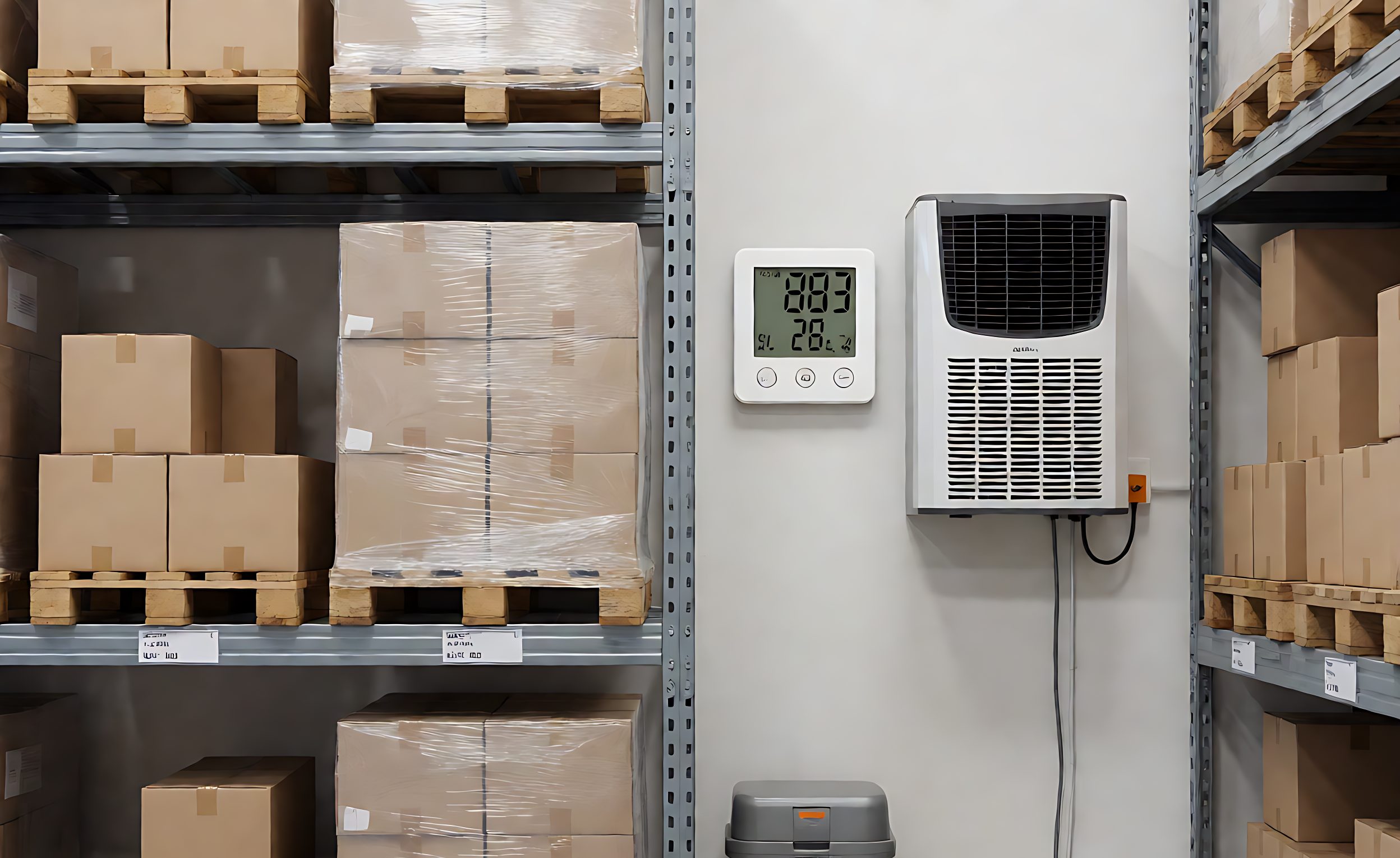
Where mechanical help is needed, dehumidification in a sealed area costs far less than heating an open shed, and wiring it to logging with alarm thresholds converts a climate policy into an operational one.

Technical Background
The quantity being managed is humidity, most usefully expressed as relative humidity because what materials absorb depends on it. Absorbed moisture can be removed with a desiccant in sealed environments, and the growth risk being managed on paper, fabric and adhesives is mold.
Receiving and Ongoing Checks
Storage discipline starts at the dock. Note carton condition and any damp or odour on arrival, photograph suspect pallets before unloading, and open a claim promptly rather than after stock has been put away. Inspect damp-affected units before sale rather than assuming the damage is superficial.
Then audit. A quarterly walk-down covering logger data, stack heights, floor clearance and pest evidence is inexpensive, and it produces the dated records insurers and suppliers expect when a claim is made. Storage is one of the few areas where a policy written down and checked once a quarter prevents nearly all of the loss.
Carton performance in humid conditions is tested through ISTA transit testing, while moisture-sensitive lines have additional requirements set out in the shelf life and preservative specification guide. Stock rotation depends on seasonal assortment planning, appearance faults such as moisture-related fading relate to colour consistency across batches, and container conditions begin with the container loading plan.
A final operational note: humidity records are only useful if someone reads them. Assign a weekly check with a stated action threshold, and record the reading alongside the outside weather rather than in isolation – a rise that tracks a wet week outside is expected, while the same rise in dry weather indicates a building problem worth investigating before cartons are affected.
Frequently Asked Questions
What humidity should a toy warehouse target?
Roughly forty to sixty percent relative humidity suits mixed toy inventory, with constancy mattering almost as much as the absolute figure.
Why do cartons crush in humid weather?
Corrugated board absorbs moisture and loses compression strength, so a stack stable in dry conditions can fail its lowest layers later.
Where should humidity loggers be placed?
Several positions where stock sits: high in the racking, near exterior walls and doors, and away from office equipment.
What is container rain?
Condensation forming inside a shipping container when warm moist air meets a cooled surface, wetting cartons packed dry at origin.
Should containers be opened immediately on arrival?
No. Allow sealed containers to acclimatise first, so moisture condenses on the box rather than on cold product surfaces.
Can cartons be stored directly on concrete?
Not safely. Concrete transfers moisture into the lowest cartons, so pallets or racking clearance are required.
How often should storage conditions be audited?
Quarterly for most operations, with logger data reviewed monthly and after any period of extreme weather.