



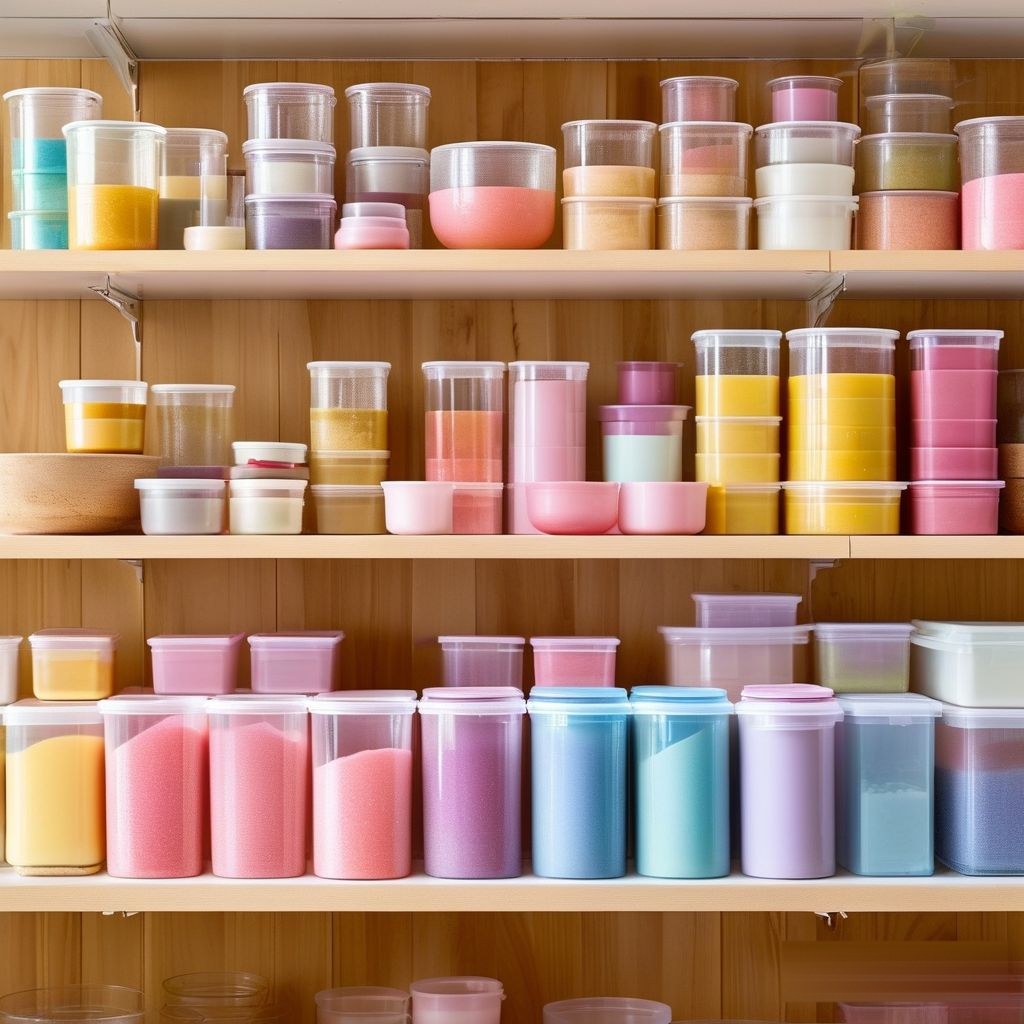
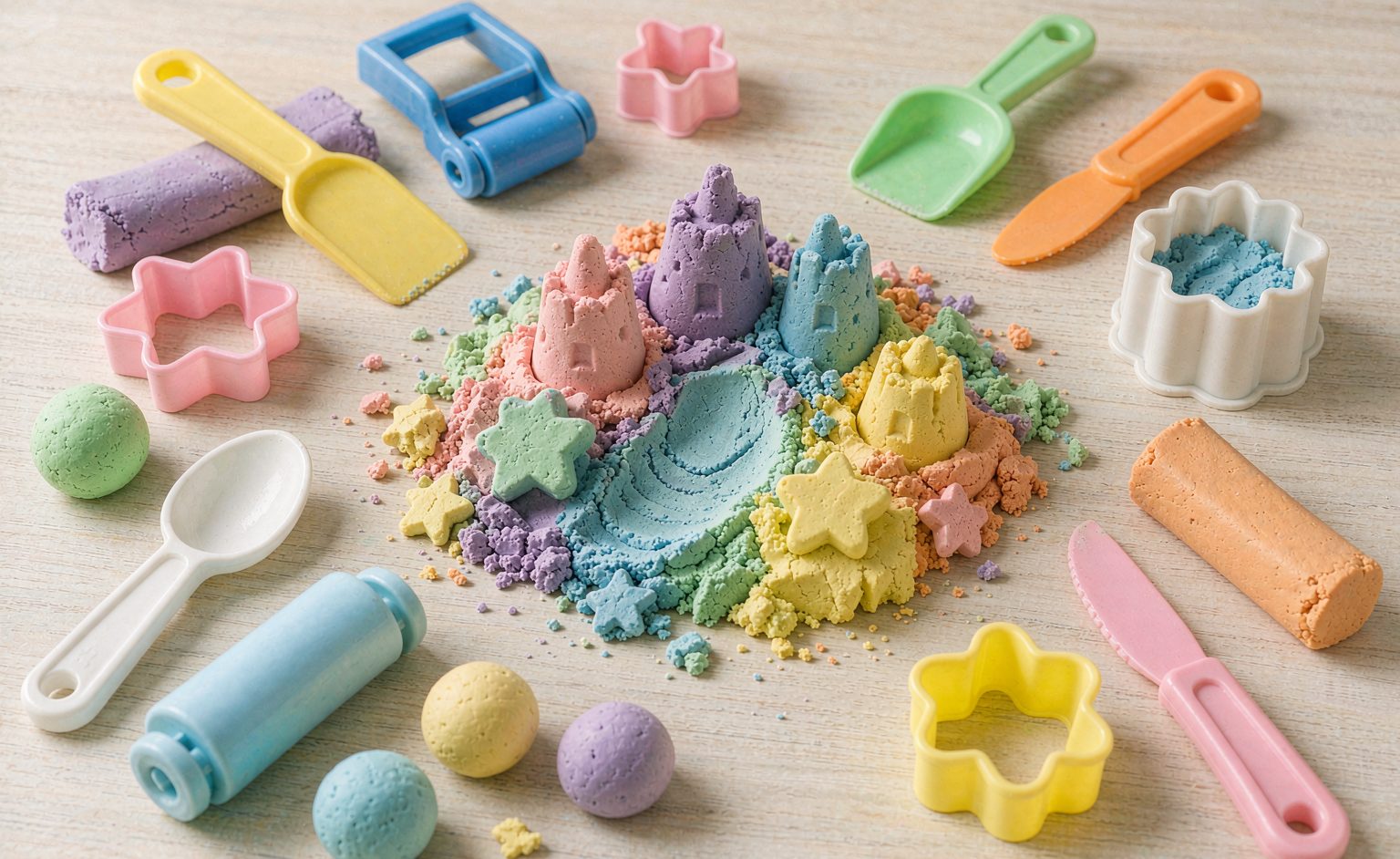
Buying kinetic sand for retail or a private-label line is a sourcing problem disguised as a product problem. Two bins can look identical and behave completely differently, and the difference is in the formulation, not the marketing. This guide covers what to specify, what a supplier should be able to document, and how to compare quotes that are not actually comparable.
What kinetic sand actually is
Kinetic sand is a mixture of very fine sand and a binding agent — usually a small percentage of silicone-based polymer — that makes the grains stick together under pressure and flow apart when released. The ratio of sand to binder and the grain size distribution determine the two properties buyers judge it on: how cleanly it separates from hands, and how well it holds a molded shape.
Because the formulation is a ratio, small supplier differences show up as large behavioral differences. A sand with slightly too much binder feels greasy and leaves residue; too little and it crumbles. Neither is visible in a product photo, which is why the specification sheet matters more than the sample bin.
The specification sheet to request before comparing price
A serious supplier will send a spec sheet with these fields. If they cannot fill it in, the quote is not really comparable.
| Spec | Why it matters | What to ask for |
|---|---|---|
| Sand grain size | Determines feel and mold detail | D50 value and range in microns |
| Binder content | Cohesion vs. residue | Percentage by weight |
| Color set | Consistency across orders | Pantone references per color |
| Unit weight | Cost per gram and value perception | Grams per pack, ± tolerance |
| Drying behavior | Whether it can be marketed as reusable | Spec after water exposure |
| Additives | Scent, glitter or mold kits change compliance scope | Full component list |
Two of these fields do most of the work. Grain size and binder content together explain almost every “why does this batch feel different” question you will ever ask.
Minimum order quantities and how they scale
Kinetic sand pricing is dominated by mold cost and color runs. Molds for shaped sand, and the tooling for any included accessory, are amortized across the whole order.
| Item | Typical MOQ | Main cost driver |
|---|---|---|
| Loose bulk kinetic sand | 500–1,000 kg | Color run and mixing batch |
| Retail pouches or tubs | 1,000–3,000 units | Packaging tooling |
| Custom molded shapes | 3,000+ units | Mold amortization |
| Private label with custom artwork | 2,000+ units | Print plates |
If your first order sits below these levels, ask whether the supplier can supply their existing stock shape with your label. That is the standard path to a private-label launch without a tooling bill, and it is how most private-label toy programs actually start.
The safety documents to ask for
Sensory products are tested against toy safety standards, and the documentation is what a retailer or marketplace will ask you for. Request the actual reports, not a statement of compliance.
Documents a credible supplier can produce
- EN 71 test report (parts 1–3) from an accredited lab, covering mechanical, physical and flammability properties plus migration of elements.
- ASTM F963 report if you sell into the US market.
- CPSIA tracking labels and, where applicable, a Children’s Product Certificate.
- REACH / SVHC declaration for the binder system.
- Safety data sheet for each colorant and additive.
Red flags in the paperwork
- A “certificate” that is a supplier self-declaration with no lab name or report number.
- Test reports for a different product or a different factory.
- Reports older than the current formulation. If the binder changed, the report is stale.
Quality checks on arrival
- Hand separation test. Press a sample, release it, and check how much residue stays on the hand. Excessive residue is the number one consumer complaint in this category.
- Mold retention. Press into a mold tool, remove it, and check edge definition.
- Color consistency. Compare against the sealed reference sample from the first accepted batch.
- Weight check. Weigh 20 units per color; a drifting average means a dosing problem in the mixing batch.
- Drying behavior. Leave a sample out for the documented period and confirm it still performs as claimed.
Comparing quotes honestly
Convert every quote to cost per gram of sand, not cost per unit. A 500 g tub and a 1 kg tub are not the same product, and suppliers quote them against different mold sets. Once you normalize by weight, the gap between quotes usually shrinks dramatically, and the real differences — documentation, color stability and mold options — become visible. The same discipline applies when you are comparing bulk kinetic sand against packaged formats.
Frequently asked questions
What MOQ should a first-time buyer expect?
For loose bulk, 500–1,000 kg is typical. For packaged retail units, 1,000–3,000 units. A private-label program with your own mold pushes it above 3,000.
Is kinetic sand safe for children?
Reputable kinetic sand is non-toxic and tested to toy safety standards, but it is not edible and it is not suitable for children below the age stated on the packaging. Keep the supplier’s test reports on file.
Why does some kinetic sand dry out faster?
Binder ratio and grain size distribution. A sand with less binder or a wider grain spread loses cohesion faster. Ask the supplier for the drying specification instead of guessing.
Can I get a sample before committing to an order?
Yes, and you should. Ask for a sample of the exact formulation in the exact color, plus the matching test report.