


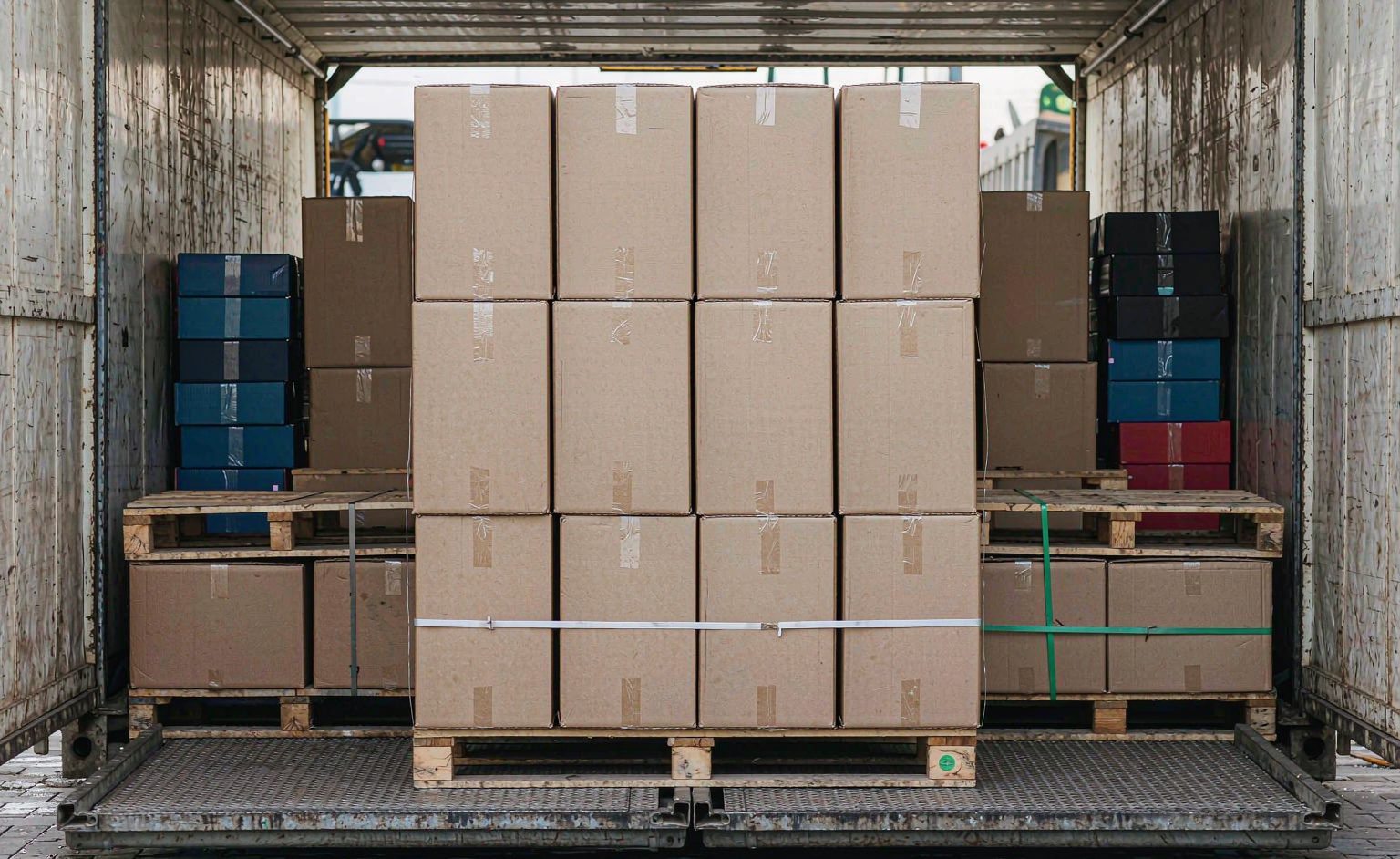


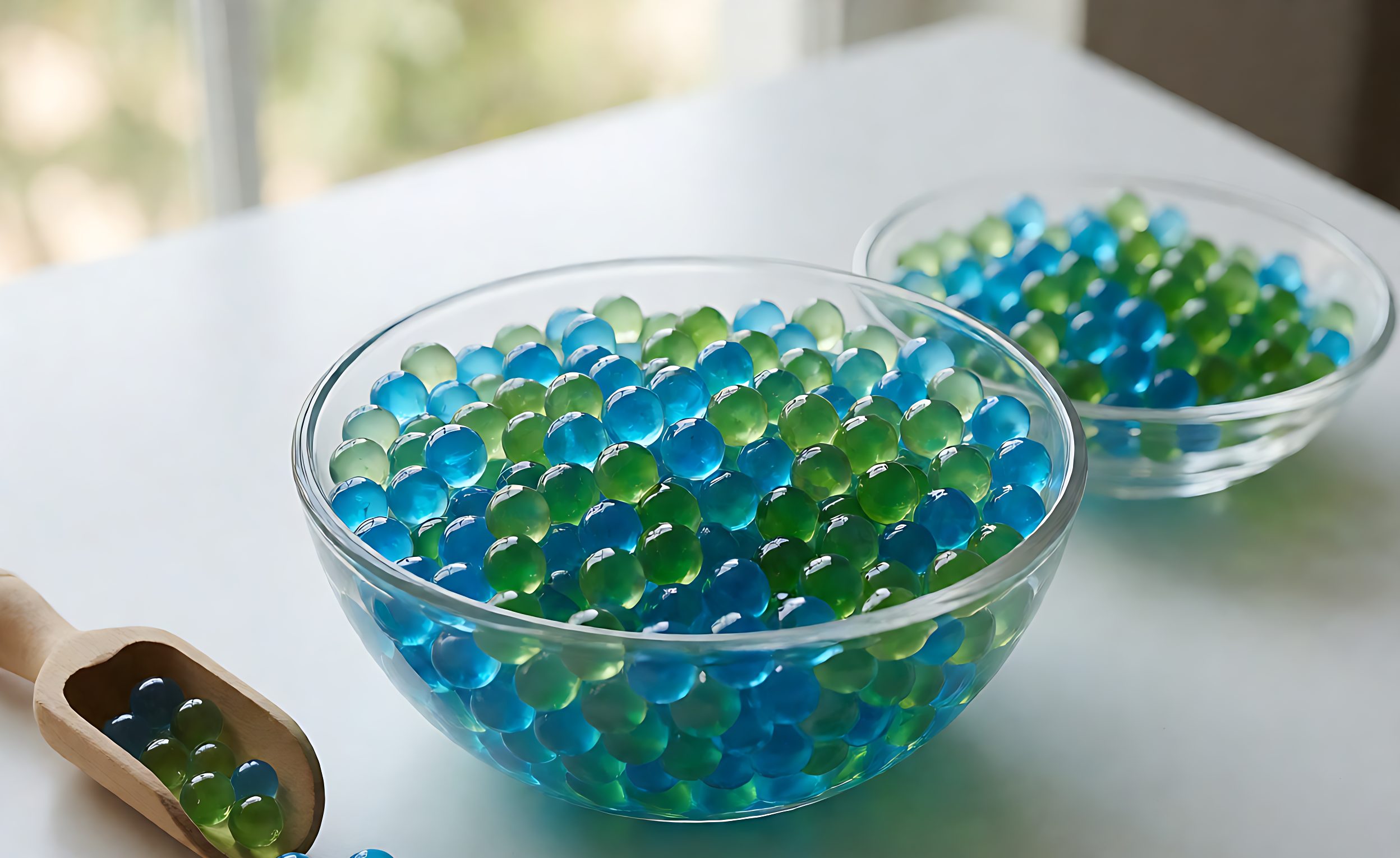
Water beads are the one sensory product where the compliance conversation is not administrative. A hydrated bead is small, smooth, brightly coloured and almost indistinguishable from candy to a young child. Swallowed, it passes through the stomach and keeps absorbing fluid in the intestine, where it can cause an obstruction that is difficult to see on an imaging scan. Regulators in several markets have moved on this, and the direction of travel is toward tighter size limits, stricter age grading and, in some jurisdictions, outright restriction of sale to children.
That makes water beads a category where a buyer has to decide what they are selling before deciding how to source it. This guide covers what the product physically is, how the rules have moved, what an importer should verify on a shipment, and how to design a product that reduces risk rather than hiding it behind a warning label.
What the Product Actually Is
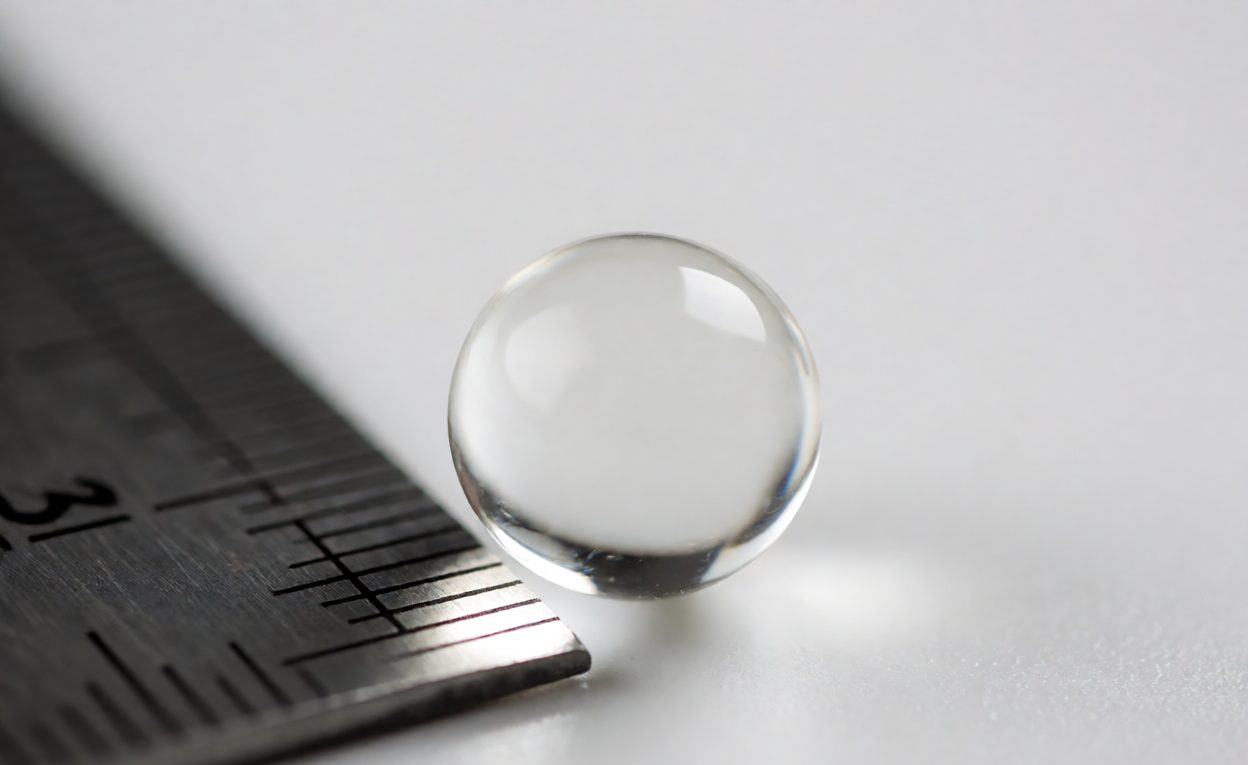
Water beads are made from a superabsorbent polymer, usually a sodium or potassium polyacrylate. In dehydrated form they are hard, tiny and roughly one to three millimetres across. Hydrated, they swell to a multiple of their original diameter, and the multiple is the number that matters for safety. A bead that grows from two millimetres to fifteen is a different risk profile from one that grows from five to twelve, even though both are sold as the same category of product.
Buyers tend to specify colour and pack size and leave expansion to the factory. That is backwards. Expansion ratio, final hydrated diameter, and how the bead behaves when it dries out again are the three properties that determine both the safety case and the customer complaint rate. A bead that shrinks back to a hard crumb on a carpet is a vacuum cleaner problem; a bead that never dries is a mould problem.
- Expansion ratio: state it as a multiplier of diameter, not as a vague “grows up to” claim.
- Hydrated diameter: specify a minimum and maximum, measured after a fixed soak time.
- Colourfastness: dye that bleeds stains hands, fabric and grout, and it is the most common complaint.
- Durability: beads that fracture under pressure leave fragments that are harder to see and harder to remove.
How the Rules Have Moved
For years water beads were treated as a generic sensory toy and cleared under the ordinary toy framework. That changed as ingestion injuries accumulated. In the United States, the ASTM F963 toy safety standard was revised to add requirements specific to water beads, covering expansion and size characteristics, and several states have restricted or banned their sale as children’s products. In the EU, water beads fall under the Toy Safety Directive and EN71 when marketed to children, with EN71-1 small parts and expansion requirements plus the general obligation that a toy must not present a hazard that is not obvious to the user.
The practical consequence for an importer is that the market status is not uniform and not static. A product legal in one state may be restricted in another; a product legal as a craft material may be illegal when packaged with a picture of a child. Before committing to a container, confirm the current position for each destination market you ship into, and put the confirmation in writing with a date. Treat any statement of the rules more than a few months old as stale.
The certification route for toy imports explains how a test report becomes a declaration of conformity. For water beads the critical point is that the test must be run on the finished retail product, including the pack, the instructions and the beads at their specified hydrated size.
Age Grading: The Decision That Changes Everything
The single most consequential choice is whether the product is a toy for children or a material for adults. Marketing the same beads to florists, sensory rooms for adults and crafters avoids the children’s product framework in many markets. Marketing them with a cartoon animal and a “3+” badge puts you squarely inside it.
Age grading has to be honest, not tactical. A product with a 3+ marking still reaches younger siblings, and regulators assess foreseeable use rather than the label alone. If the design, packaging and imagery all point at a four-year-old, a 3+ badge will not be treated as a defence.
Where a children’s product is the business model, design for the oldest defensible age band, keep hydrated beads above the small parts threshold where the standards allow it, and make the warning prominent rather than decorative. Where an adult or professional market is viable, the cleaner route is to sell to it properly: neutral packaging, clear instructions, no child imagery.
What to Verify on a Shipment
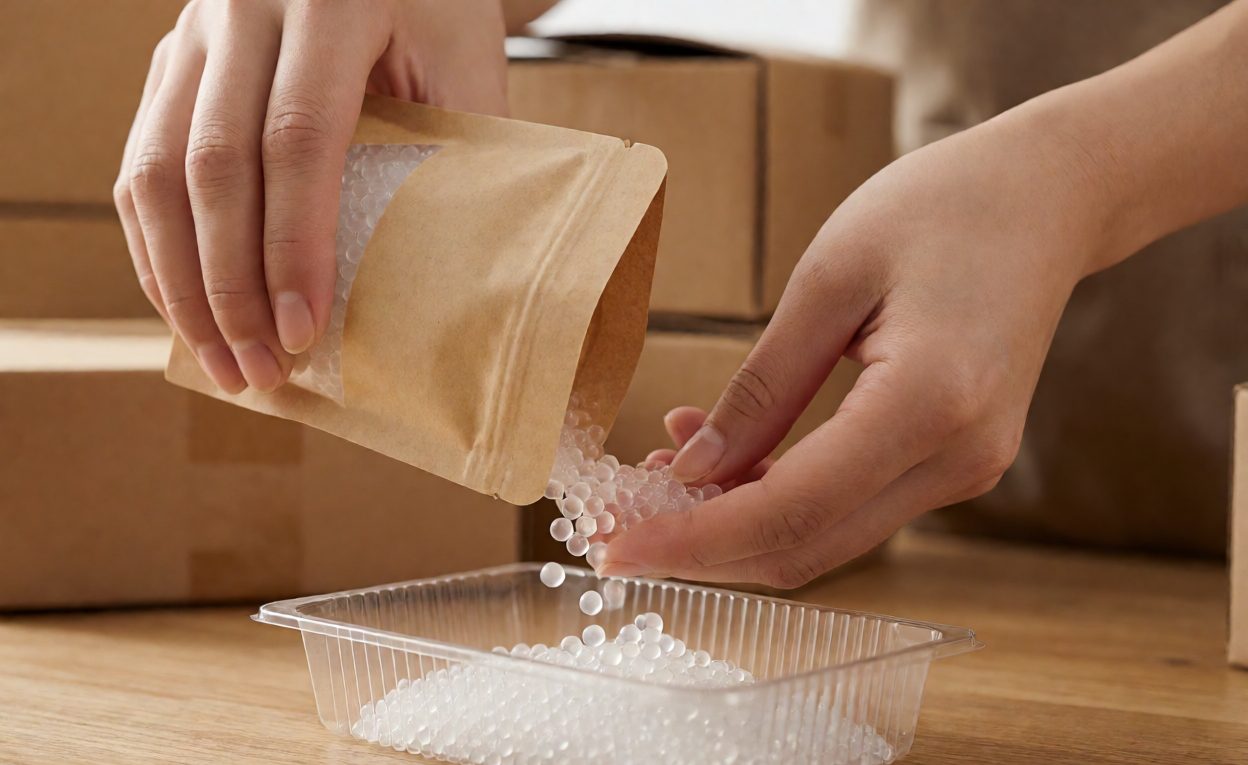
Verification is cheap compared with a recall. Build these into the pre-shipment inspection rather than trusting the sample room.
- Measure hydrated diameter on a random sample after a fixed soak, and record the distribution, not just the average.
- Confirm the beads are not magnetic to a magnet and do not fluoresce under a UV lamp in a way that suggests a different polymer.
- Check the dye for bleed by soaking a sample on damp white paper for 24 hours.
- Verify the retail pack carries the correct age marking, warning text and importer identification for the destination market.
- Confirm the test report covers the hydrated size and the finished pack, and that the report predates the shipment by less than a year.
- Pull a retail carton and check that the picture on the box does not contradict the age grading.
Kit-style products such as slime show how quickly a warning-heavy category becomes normalised in retail. Water beads are heading the other way: the regulatory trend is toward restriction rather than accommodation, so a buyer’s advantage is being early to a design that does not depend on the most hazardous format.
Design Choices That Reduce Risk
Risk reduction is mostly a set of unglamorous decisions. A larger dehydrated bead with a lower expansion ratio is safer than a tiny one that becomes enormous. Pre-hydrated beads sold in a sealed container remove the swelling step at home, which removes the most common pathway for a bead to end up somewhere it should not be. A colour that is clearly non-food, such as a deep blue or grey, is less likely to be mistaken for candy than a translucent red or orange.
Pack size matters too. A tub of a thousand beads is a spill waiting to happen; a small sealed pack of a few dozen is easier to control and easier to supervise. Instructions should state plainly that the beads are not edible, that they must be kept away from children under the marked age, and what to do if one is swallowed, including that an X-ray may not show the bead.
Comparing sensory materials is worth doing before you commit to water beads as a line. TPR, silicone and air-dry clay all deliver tactile play without an ingestion hazard that grows inside the body, and a category mix that includes them is more resilient to regulation than a range built on one material.
Technical Background
The material behind water beads is a superabsorbent polymer, a cross-linked polyacrylate network that holds water in its structure rather than in a cavity. Cross-link density controls how much it can absorb and how firmly it retains shape, which is why two beads that look identical can behave completely differently in the body.
Regulatory attention on this category sits inside the broader field of toy safety, where the governing principle is foreseeable use rather than intended use. Standards for toys in Europe are produced by the European Committee for Standardization and referenced by the Toy Safety Directive, while the US relies on ASTM F963 as the route to a Children’s Product Certificate.

A Buyer Checklist
Before you place a purchase order, be able to answer every line below without asking the factory twice.
- Which market is this product for, and what is that market’s current position on water beads as a children’s product?
- Is the age grading defensible from the packaging, imagery and instructions, not just the badge?
- What is the specified hydrated diameter range and expansion ratio, and who measured it last?
- Does the test report cover the hydrated product in its retail pack, dated within the last year?
- What does the pack say about ingestion, and does it mention that the bead may not appear on a scan?
- What is the complaint history on dye bleed and bead fragmentation for this formulation?
- Is there a second product in the range that delivers similar play without the same hazard?
Are water beads banned?
Not uniformly. Several US states have restricted or banned sales as children’s products, and the ASTM F963 standard now includes water bead requirements. The EU regulates them as toys when marketed to children. Confirm the current position per market before shipping.
Why are water beads considered dangerous?
A swallowed bead keeps absorbing fluid in the intestine and can cause an obstruction. Because it is translucent and not dense, it may not be obvious on a standard scan, which delays diagnosis.
What expansion ratio should I specify?
Lower is safer. Specify a hydrated diameter range rather than a marketing multiplier, and measure it after a fixed soak time on a random sample from the actual production lot.
Can I sell water beads as an adult craft material?
In many markets yes, provided the packaging, imagery and instructions genuinely target adults. A product that looks like a child’s toy will be assessed on foreseeable use regardless of the label.
What test report do I need?
A report on the finished retail product at its specified hydrated size, covering the relevant mechanical and chemical requirements for the destination market, dated within the last year.
Are pre-hydrated beads safer than dehydrated ones?
They remove the swelling step at home, which removes a common pathway for beads to be spilled or mishandled. The ingestion hazard remains, so age grading and warnings still apply.
What is the most common quality complaint?
Dye bleed onto hands, fabric and grout, followed by beads that fragment underfoot. Both are formulation issues and both are testable before shipment.
The fidget and sensory toy range shows the current shapes, sizes and materials available for wholesale. For a custom shape, hardness or retail packaging, see custom toy manufacturing.