





No importer plans a recall, and the ones who handle them well are distinguishable before anything goes wrong. They can identify which units are affected, where those units went, and what the evidence says – within hours rather than weeks. That capability is built from records that exist for ordinary commercial reasons, which is the encouraging part: most of it is a by-product of doing the paperwork properly.
The cost of not having it is disproportionate. Without traceability, the only safe action is to withdraw everything, so a problem confined to one batch becomes a problem across the entire programme.
Traceability: The One Capability That Matters
Traceability answers two questions in opposite directions. Upwards: which production batch, material lot and factory made this unit. Downwards: which customers, warehouses or retail accounts received units from that batch.
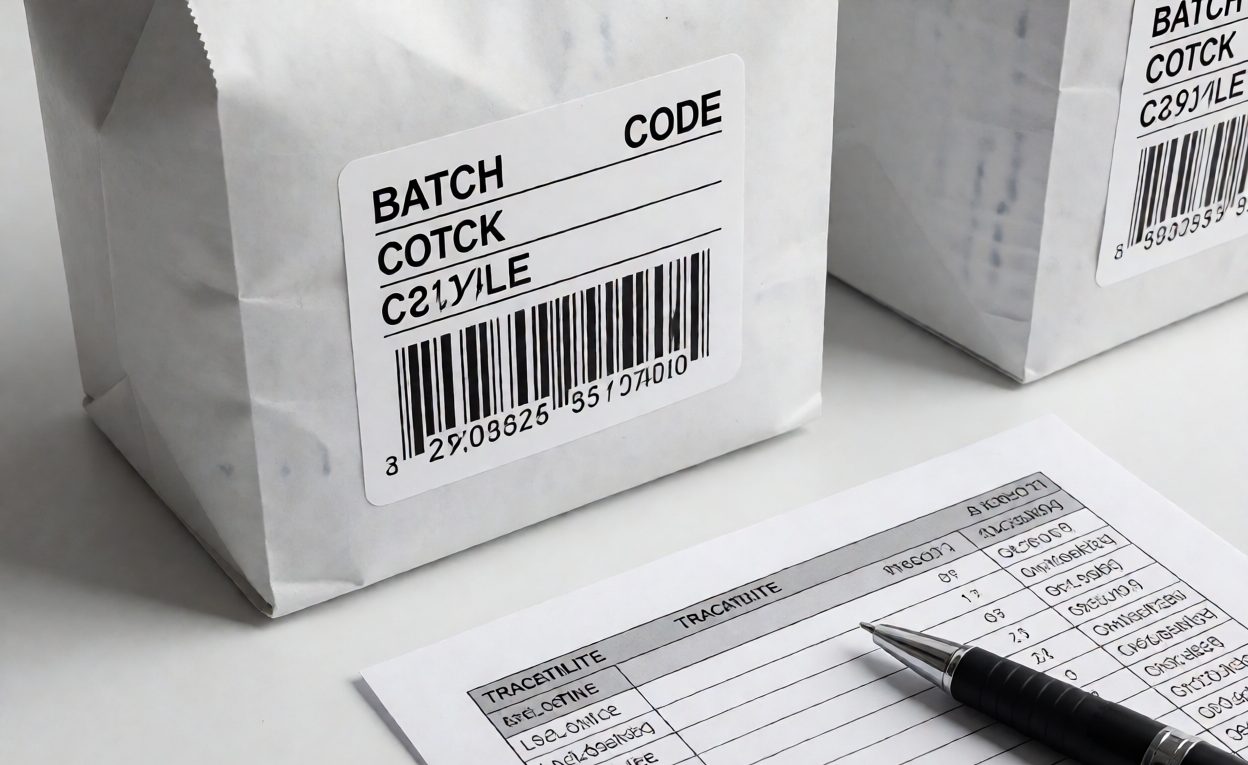
Upward traceability depends on batch coding applied at production and recorded against a production record naming material lots. Downward traceability depends on shipment records linking batch codes to orders and destinations. Most importers have one direction and not the other, and the missing half is usually the downward one, because sales systems and production records are not connected.
A practical minimum: every master carton carries a batch code, every dispatch record lists the batch codes shipped, and the factory can produce a material lot list for any batch code on request within a working day. Test that last part by asking, before you need it.
The Documentation Set
When something goes wrong, the questions arrive in a predictable order, and each has a document:
- What was made and when: production records and batch coding.
- What it was made from: material lot records and supplier declarations.
- What it was tested against: test reports with dates, laboratory and scope.
- Who received it: dispatch and sales records by batch.
- What was known and when: complaint logs and internal correspondence, which is why complaints should be logged rather than handled informally.
Complaint logging deserves emphasis because it is the weak point in most operations. A pattern of three similar complaints spread across three inboxes is invisible; the same three in one log is a signal, and spotting a signal early is the difference between a corrective action and a withdrawal.
The First Forty-Eight Hours
When an incident surfaces, the sequence is consistent. Quarantine the suspect stock first, because the cheapest outcome is a problem that never reaches another customer, and quarantine is reversible whereas a sale is not. Identify the affected batch codes and pull the dispatch records for them. Then hold the retained samples from that batch and have them assessed before forming a view on cause.
Notify the supplier and the insurer at the point the problem is credible rather than confirmed, because policies and contracts usually require prompt notification and treat delay as a breach. Keep a written timeline from the first complaint onward; in any later dispute, the contemporaneous record is the most persuasive document available.
Contract Terms That Decide Who Pays
Two clauses matter more than the rest. An indemnity clause that makes the supplier responsible for losses arising from non-conforming product, and a specification clause that defines conformance precisely enough to be enforced. An indemnity without a specification is difficult to invoke, because the argument becomes about what was agreed.
Product liability insurance is the other half, and it should be placed with the actual product and market in mind. Policies vary on whether they cover recall costs, not only third-party injury, and that distinction is the difference between a policy that helps and one that does not.

Antecedentes técnicos
The mechanism is a product recall, which removes affected units from the market and requires the speed that traceability provides. Financial exposure is governed by product liability, which attaches to the party placing goods on the market regardless of who manufactured them. The structured response expected afterwards is a corrective and preventive action, which addresses the cause rather than the symptom.
Preparing Without Alarm
Three exercises, none expensive, cover most of the gap. Run a mock trace: pick a batch code and see how long it takes to produce the material list and the customer list. Review the purchase contract for indemnity and specification language. And ask the insurer, in writing, whether recall costs are covered and what triggers notification.
Do these annually. Products, suppliers and markets change, and a capability that was in place for last year’s catalogue may not cover this year’s.
Recall readiness connects to the labelling and grading discipline in age grading and warning labels, the evidence held in certification files, and the sample control described in the golden sample workflow. Supplier obligations are part of the pre-order audit.
Preguntas frecuentes
¿Cuál es la capacidad de recuperación más importante?
Traceability in both directions: from a unit back to its material lots, and from a batch forward to the customers who received it.
How should batch codes be applied?
On the master carton at minimum, recorded against a production record, with dispatch documents listing the codes shipped.
Why does missing traceability make a recall worse?
Because the only safe action without it is to withdraw everything, turning a single-batch problem into a programme-wide one.
Should complaints be logged formally?
Yes. Patterns are visible in a log and invisible across separate inboxes, and early pattern recognition prevents escalation.
What contract clauses matter most?
An indemnity for non-conforming product and a specification precise enough to enforce it.
Does product liability insurance cover recall costs?
Sometimes. Confirm in writing whether recall costs are covered in addition to third-party injury, and what triggers notification.
How often should readiness be reviewed?
Annually, and whenever products, suppliers or markets change materially.