


Battery compartments are where toy design meets its hardest safety rules. The hazard is unusual for the industry: the product works perfectly, the child enjoys it, and the injury happens only when a battery comes out. That asymmetry is why regulators treat battery access as a fixed requirement rather than a design preference, and why a compartment that opens too easily fails inspection even on an otherwise excellent toy.
For bulk buyers the exposure is concrete. A compartment specification that lives only in the factory’s head produces units that differ between production lines, and a button cell that exits a toy through a loose door is a medical emergency with the buyer’s brand on it.
Why Access Is Controlled So Tightly
Small coin cells are the driving case. If swallowed, a lithium coin cell can generate current across moist tissue and cause a severe internal burn within hours, an injury that is hard to diagnose and worse than its early symptoms suggest. Cylindrical cells bring different risks – leakage and shorting – but the coin cell set the regulatory tone, and the rules it produced now apply across battery types.
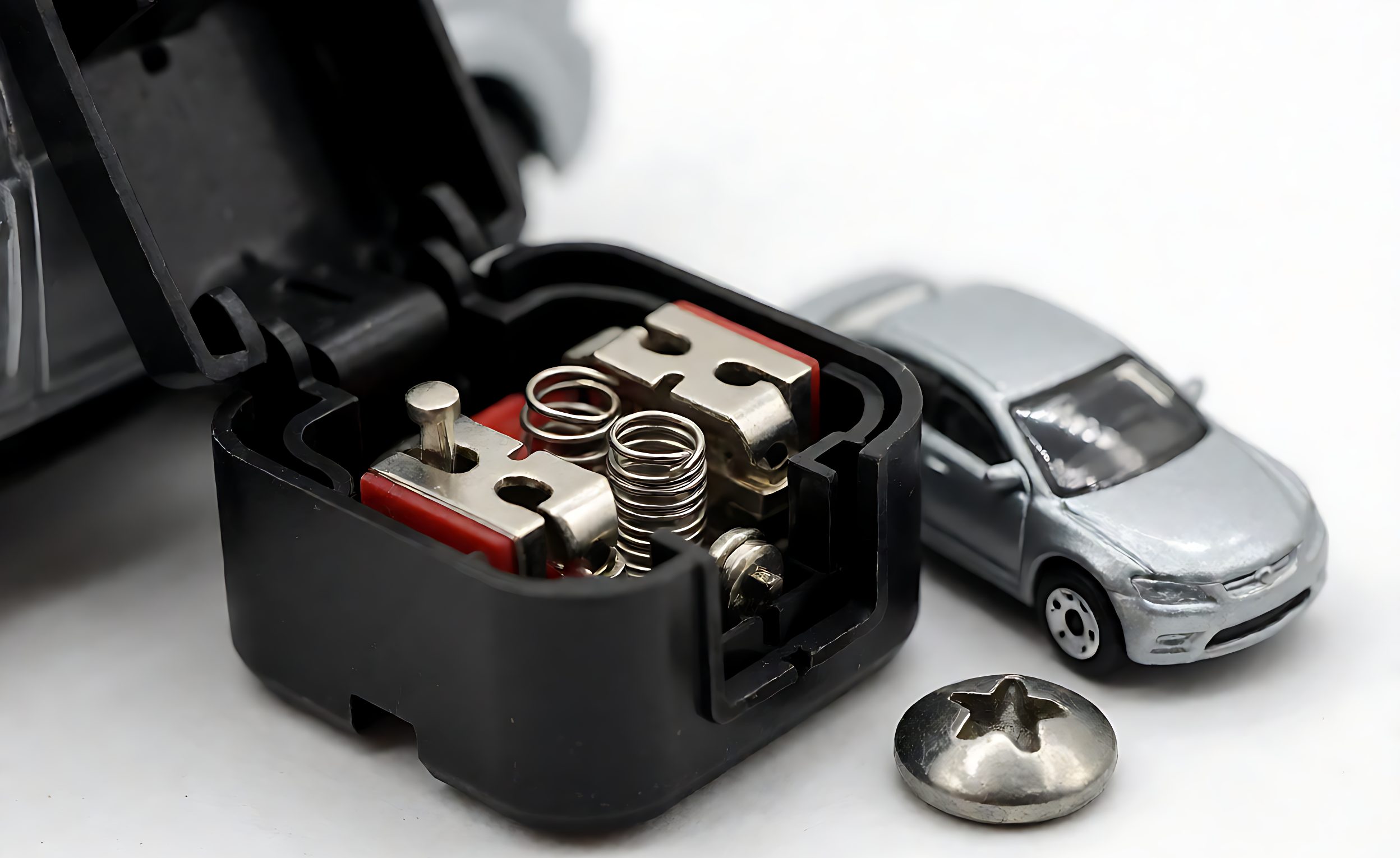
The design consequence is uniform: a child must not be able to reach the battery through any single action a child can perform. Doors need two independent movements to open, or they need a captive screw, and the compartment must keep satisfying that rule after the standard’s abuse tests – drops, torque, impact and pulling – because real toys get all of those.
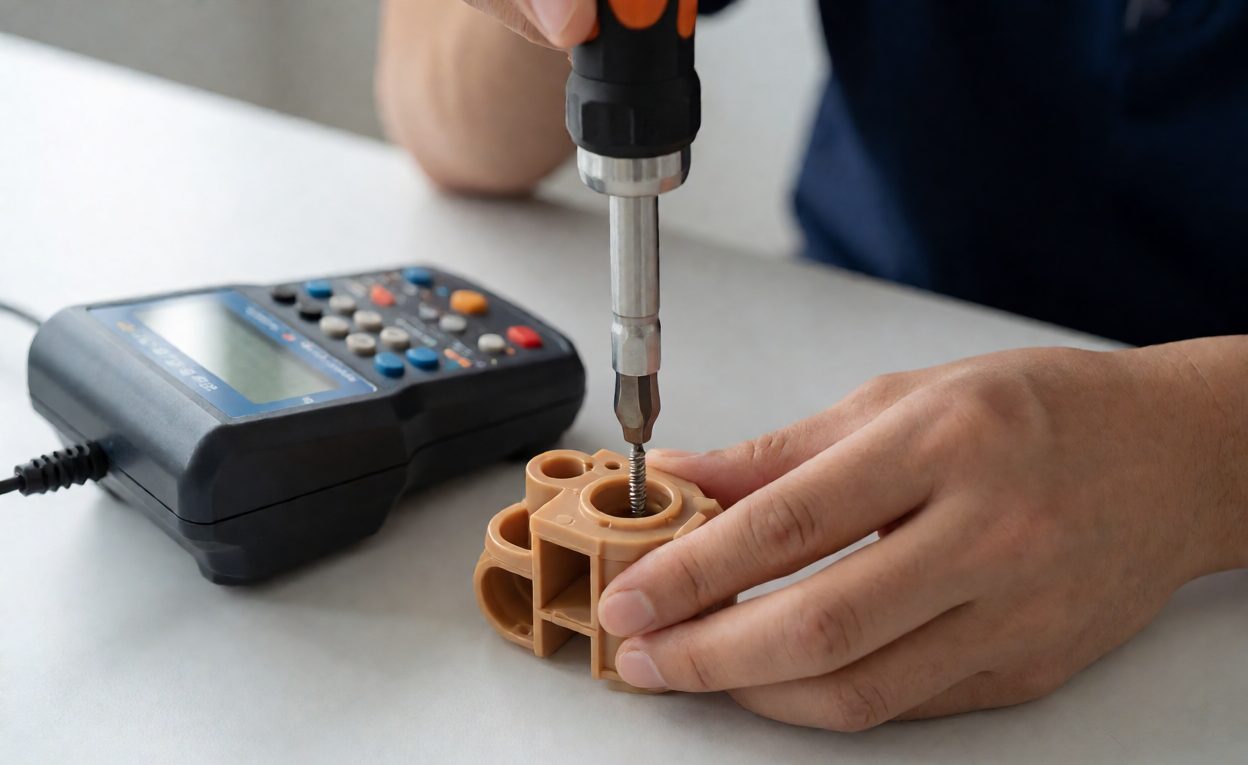
Writing the Screw and Access Specification
The screw is the detail most buyers leave vague, and it is the one worth specifying completely:
- Head type: a drive that resists a child’s available tools – the familiar slotted and cross drives are out – with torx or a security drive pattern as the usual choice.
- Captive design: the screw stays attached to the door or housing when loosened, so it cannot become a separate small part.
- Insertion and release torque: stated values, verified on the line, so the door neither rattles loose nor strips its boss during assembly.
- Thread engagement: enough turns into the plastic boss that the holding force survives repeated battery changes, which are the normal life of the toy.
- Post-abuse requirement: after the standard’s drop and impact tests, the door must still need the same two independent actions to open.
The rest of the compartment follows the same logic: correct polarity marking that survives handling, an insulated positive contact arrangement, and a battery type marked on or in the compartment so consumers replace with the right chemistry.

What the Tests Look For
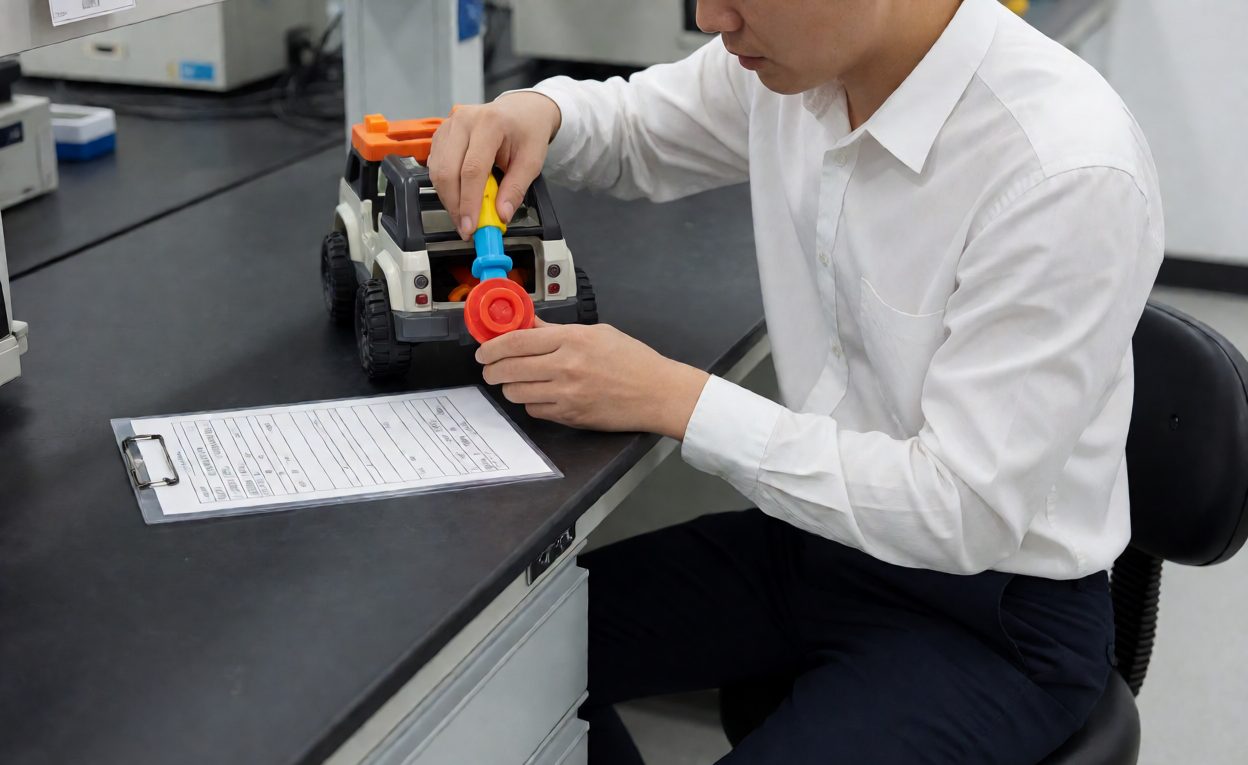
Testing combines the mechanical toy standard with product-specific battery rules. The mechanical standard treats the compartment as an accessible part and applies its force and abuse sequence; the battery rules examine whether a cell can be removed by a child, and they extend beyond the toy itself into warnings – on the pack, on the instructions, and in some markets directly in the listing. Sellers should expect the warning language to be checked verbatim, because regulators publish the required wording rather than trusting paraphrase.
The practical failure pattern in bulk runs is assembly drift rather than design error. A line that rushes torque control produces doors that pass the factory check and loosen in transit; a boss reamed slightly oversize passes today and loosens after ten battery changes. The controls that work are torque verification on a sampling schedule, periodic re-testing of doors after a simulated drop, and keeping a sealed reference unit with a known-good compartment on the line.
Технический контекст
The battery driving the strictest rules is the button cell, whose small diameter and high energy make it the ingestion concern. The fastening principle that keeps access secure is tamper resistance, applied here as a fastening a child cannot defeat with available tools. Cylindrical chemistries carry their own rules, summarised under lithium battery, which cover both the compartment design and transport handling.
A Specification Block Worth Copying
Put this on the order: battery type and quantity, door or screwed access with the drive type named, captive screw requirement, insertion and release torque values, polarity and battery marking text, and the warning statements with their required wording and placement. Then require a first-article check where the door passes the two-action rule after the abuse sequence, witnessed on the production line rather than on a sample bench.
The certification evidence behind these requirements is set out in the certification guide for toy imports, and the files it produces are archived per the EU document pack guide. The warning wording that accompanies battery compartments belongs to the labelling set in the multilanguage label requirements, and the instruction sheet text that carries the consumer warnings is planned in the manual localization guide.
A practical closing note: write the agreed basis into the purchase order itself, not into an email thread. A line reading “MOQ 1,000 units per SKU family, mixed across listed variants, minimum 150 units per variant” prevents most of the arguments this article describes, because it converts an understanding into a term both sides can point to. When the range changes – a variant added or dropped – revisit the clause rather than assuming it carries over, since a family definition that no longer matches the catalogue is worse than none.
Частые вопросы
Нужны ли шурупы во всех дверцах батарейных отсеков игрушек?
No. The rule is two independent movements for a child to reach the battery, so a door with a proper double-lock latch can comply, but screwed doors are the simplest reliable route.
Почему винт должен быть несъёмным?
A loose screw becomes a small part the moment it leaves the housing, which trades one hazard for another. Captive designs keep the fastener attached when loosened.
Какой момент затяжки должен быть у винта отсека?
Whatever value passes both conditions: firm enough to survive abuse tests and repeated battery changes, low enough not to strip the plastic boss. State the value and verify it on the line.
Are button cells banned in toys?
Not banned, but heavily regulated: secured access, specific warnings and, in several markets, child-resistance packaging for the cells themselves when sold separately.
Does the warning text need exact wording?
In many markets yes. Regulators publish required phrasing, and paraphrased warnings are treated as missing warnings, so copy the wording from the standard.
How is the compartment checked in bulk production?
Scheduled torque sampling, periodic drop-and-recheck of doors, and a sealed reference unit on the line. One-time approval does not survive assembly drift.
Who supplies the batteries for a bulk order?
Negotiable, but whichever side supplies must declare the chemistry and brand, since the cell affects both the compliance file and the shipping documents.