

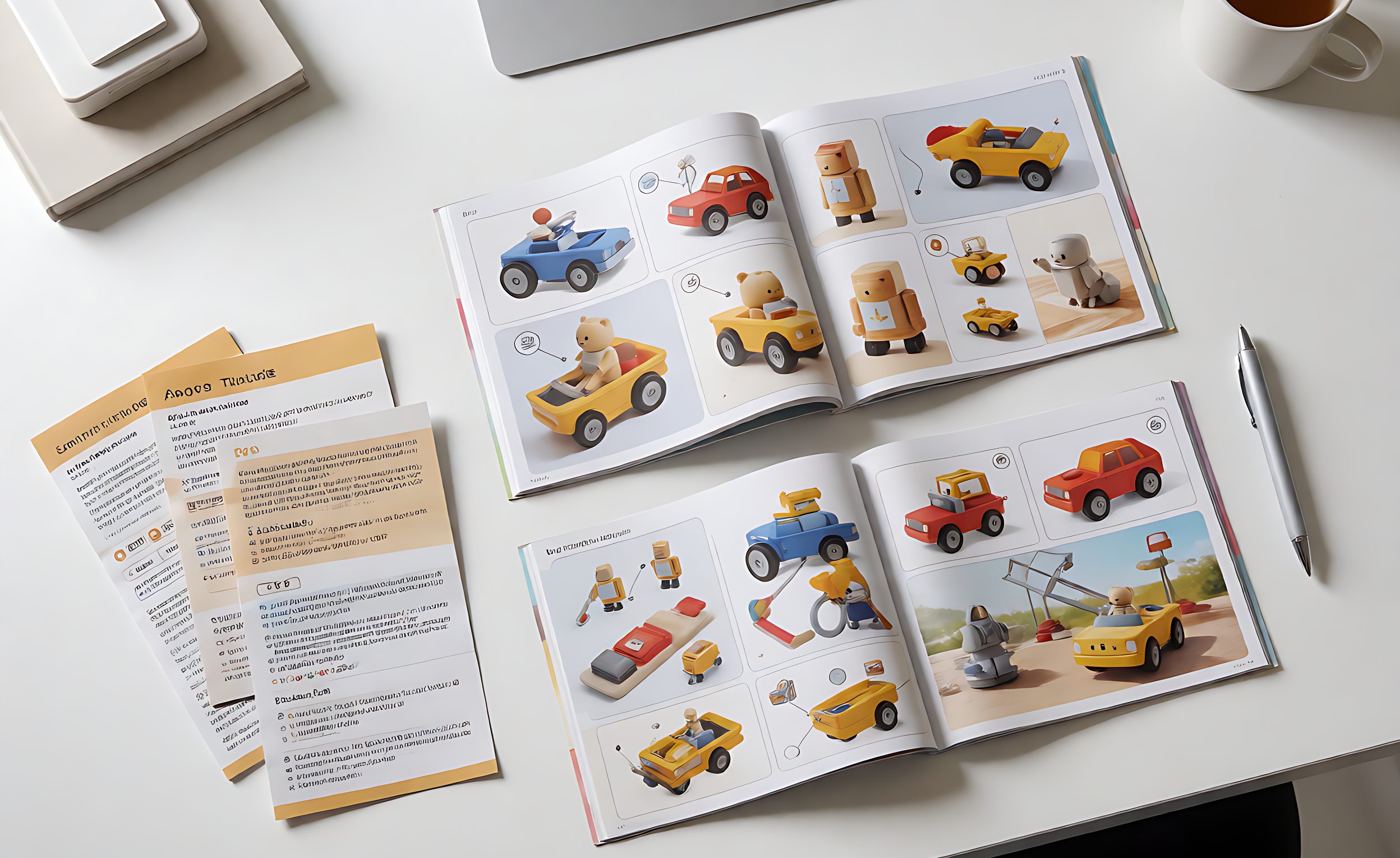
The instruction manual is the most underestimated document in a toy order. Buyers negotiate the unit price, the packaging and the certification file in detail, and then the manual surfaces at the packing stage as a folded sheet nobody costed properly, in a language set nobody confirmed, carrying warnings whose exact wording is legally fixed.
The manual is three things at once: a compliance artefact that regulators and retail programmes can demand to see, a printed component with a real cost per unit, and the first structured contact a customer has with the brand after the box is open. Treating it as an afterthought shows in all three, and for a bulk buyer it also shows up as chargebacks, stranded stock and rushed reprints.

The Manual as a Compliance Document
Safety warnings are the load-bearing content. In the United States, the small parts rules require a specific choking hazard statement on products intended for children between three and six, and the wording and format are prescribed, not optional. In the European Union, the toy safety framework requires safety information in the language or languages of the destination market; a manual that paraphrases a required warning, or delivers it in the wrong language, is treated the same way as a missing warning.
Beyond warnings, the manual typically carries the assembly and usage instructions that support safe play, care and cleaning guidance, and the traceability information tying the product to its manufacturer and importer. Retail vendor manuals increasingly request the instruction sheet by name, because receiving teams check that the box matches the artwork and the test file.
Deciding the Language Set
The language decision follows the markets where the product will actually be sold, and it is far cheaper to settle it at order stage than to retrofit:
- Single-market programmes need one language, fully checked, with the legally required warning phrasing taken from the official text rather than retranslated.
- European programmes need a deliberate choice between country-specific manuals and a combined multilingual booklet, the same structural decision the packaging faces.
- North American programmes commonly need English plus French for Canada, and Spanish where the retail programme or the category demands it.
- Gulf and Middle East programmes often pair Arabic with English on the same sheet.
- Marketplace and global programmes frequently move usage content online and print only the safety-critical core in the destination languages.
Whatever the set, the legally required strings should be copied from the official sources. Everything else is translatable content, but it deserves a professional translator who knows the destination market, because a manual that reads like machine output repeats on every unit sold.
What Drives the Cost
Manual cost has four drivers, and translation is only one of them:
- Languages: more languages mean more translation spend and more panel space, which can push a folded sheet into a stapled booklet.
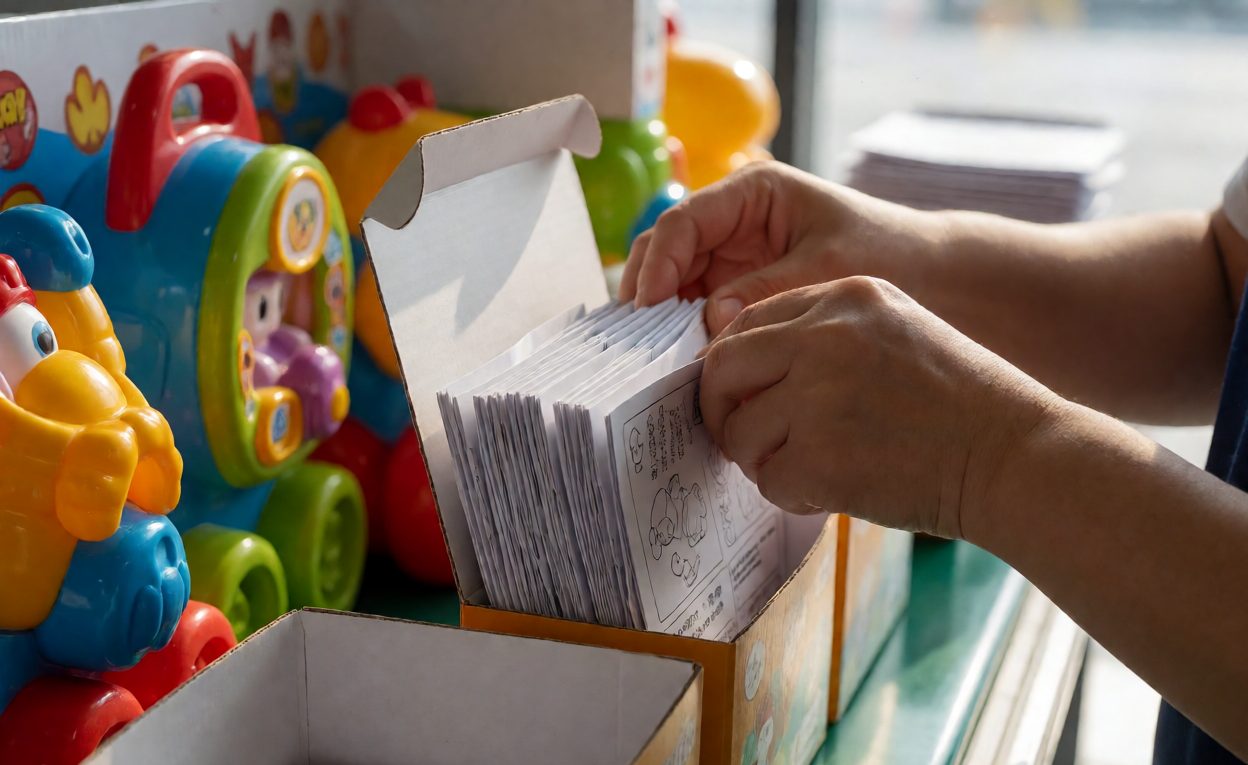
- Pages and format: page count drives paper, folding and insertion labour, and a booklet glued inside a box costs more per unit than one laid loose on top.
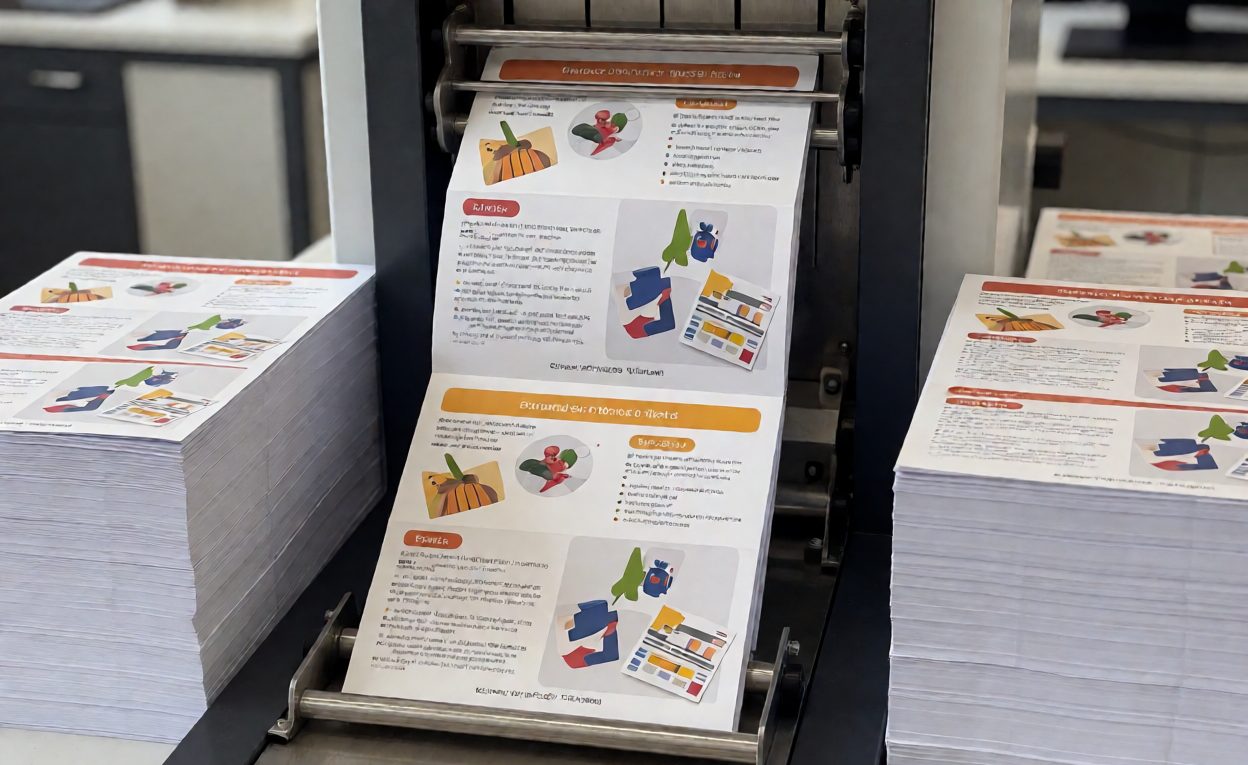
- Print runs: manuals printed as separate items in small runs lose the price break that comes with printing alongside the packaging.
- Updates: every artwork or warning change after print strands finished stock, and manuals printed before the artwork was final are a classic source of rework.
Two levers control the total. The first is deciding the language map before artwork, so the panel space and page count are designed for the language set rather than adjusted for it. The second is printing the manual within the packaging run, on the same press schedule, so the unit cost reflects one production event instead of two.
Costing the manual per unit the same way the box is costed shifts the conversation from “can you include a manual” to “what is the cheapest format that still meets every market’s requirements”, which is where the real options live.
Технический контекст
The craft behind a usable manual is technical writing, whose conventions exist so a reader can act on the text without further explanation. Adapting a document for a market rather than merely converting its words is described under internationalization and localization, and the artefact itself is a form of user guide, with its own expectations of structure, sequence and plain language.
Спецификация, которую стоит отправить
Put these lines on the order: the language set and which strings come from official sources, the format and page count, whether the manual prints within the packaging run, the insertion method at packing, and who owns the artwork and translation files for reorders. Require a physical proof of every language variant, approved before print, and keep one sealed copy with the product’s compliance file.
The manual’s warning content is planned together with the pack in путеводителе по классификации по возрасту и предупреждающим меткам, and the certification evidence behind those warnings is set out in the certification guide for toy imports. The language map should be settled at the same time as the rest of the artwork, and the approval discipline that governs printed artwork from first draft to bulk is covered in реализацией OEM-проекта от макета до образца и серийного производства, while the brand context the manual serves is covered in руководстве по OEM для частной марки.
Частые вопросы
Сколько языков необходимо для инструкций к игрушке?
Exactly the languages of the markets where it will be sold. EU markets require their own languages for safety information, Canada needs English and French, and single-market programmes need one well-checked language.
Может ли QR-код заменить печатное руководство?
It can carry usage content, but mandatory warnings still need to be present where a purchaser sees them, and some markets expect paper instructions.
Who should translate the manual?
A professional translator working from the official warning strings supplied verbatim. Factories can arrange translation, but the buyer should approve a physical proof of every language variant.
What does localization add to unit cost?
Usually a few cents per unit, driven by page count, format and language number. Costing the manual as its own line on the quotation makes the trade-offs visible.
Should warnings appear in the manual or on the packaging?
The mandatory warnings belong on the product and its packaging where regulation requires them; the manual adds usage-level safety information and assembly detail.
When should the manual be approved?
With the artwork, before print, on physical proofs per language variant. Approving it after packaging print is how contradictions between pack and manual happen.
Who owns the manual artwork?
Whoever paid for it, stated in writing, so reorders reuse the file instead of rebuilding and re-approving it from scratch.