


Inspection arguments are rarely about facts. Two people look at the same loose thread on a plush seam and reach different conclusions, not because they disagree about the thread but because nothing established in advance whether that thread is a major defect or a cosmetic nuisance. The inspector applies whatever standard was written down, and if none was written down, the inspector applies their own.
Classification therefore is specification work. It belongs in the same document as the material spec and the artwork approval, reviewed by the factory before production rather than discovered at the inspection table.

The Three Buckets, Defined by Consequence
Severity should follow what the defect does to the product, not how obvious it is:
- Critical defects create a safety or regulatory hazard: a detachable small part on a toy graded above three years of age, a sharp point or edge, failed attachment force on eyes or noses, missing mandatory warnings, or any failure of the required age labelling.
- Major defects make the product unsaleable or functionally unusable: a mechanism that does not work, a seam opened along its length, printing misregistered past tolerance, components missing from a set, or a retail pack damaged enough to be refused by the retailer.
- Minor defects are cosmetic imperfections within tolerance that most buyers would accept without comment: light marks outside the principal viewing area, a slightly skewed label, minor variation in assembly hang.
- Workmanship and packaging defects are usually counted separately, since retail pack damage often carries different limits from product defects.
The same physical defect can move buckets depending on placement. A mark on the front panel of a printed box is a major defect; the identical mark on the underside is minor, and saying so explicitly in the specification removes most disputes.

Setting Acceptance Limits
Classification only becomes a decision once it is paired with numbers. Standard practice sets a zero tolerance for critical defects, so any single occurrence fails the lot regardless of sample size, while major defects carry a tighter acceptance number than minor ones. Sample size follows the shipment quantity and the inspection level selected, and there is little value in inspecting twenty units of a twenty thousand unit order and drawing conclusions from it. Severity is judged per unit too: an item carrying both a minor and a major defect counts once, as the major, which stops one fault inflating two different totals.
Pick the inspection level deliberately rather than accepting the default. General inspection suits routine repeat orders from a stable line; tightened inspection belongs after a failure or with a new factory; reduced inspection is a reward for a proven record and should be earned rather than assumed. Whichever level is used, the sampling plan, the acceptance numbers and the classification definitions must all appear in one document signed before production.
Writing Defects So They Can Be Measured
Substitute measurement for adjectives wherever possible. “Poor printing” invites argument; “registration offset greater than one millimetre, or any visible doubling of the primary logo” does not. Define viewing conditions too: distance, duration and lighting, because defects found under a lamp at arm’s length differ from those visible on a shelf.
Agree who decides borderline cases in advance, naming one person on each side, because unresolved escalation during inspection costs days of production time.
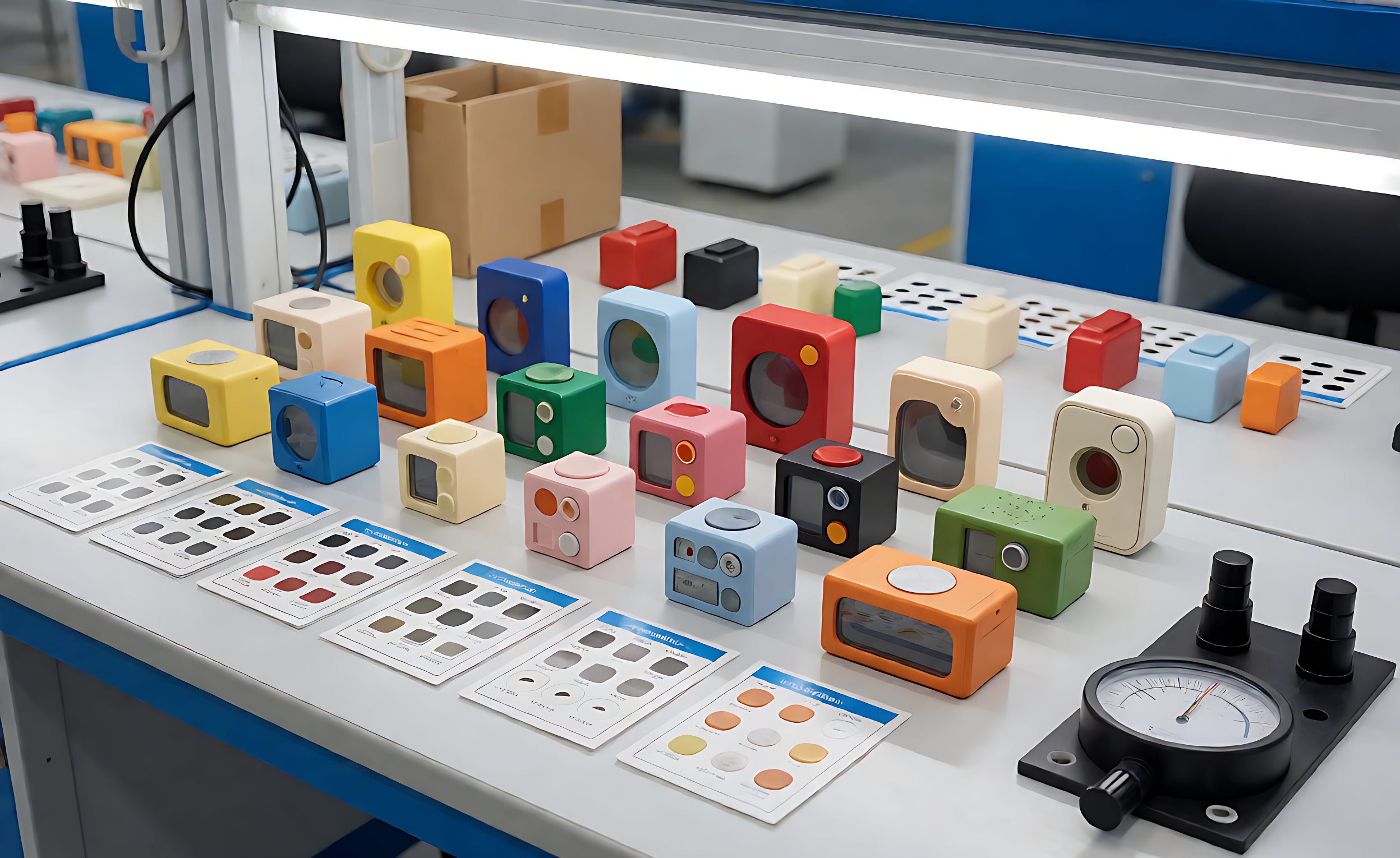
Boundary samples remove the remaining ambiguity. A sealed golden sample shows the finish, a defect reference board displays photographed examples grouped by severity, and reject units are kept physically at the quality station. Three assets, prepared once, settle most inspection-day conversations before they start.

Antecedentes técnicos
Inspection on this basis is acceptance sampling, where a lot is judged from a statistical sample. The numeric thresholds come from the acceptable quality limit model, and on-line measurements feed back into statistical process control to prevent recurrence rather than merely filter output.
Handling a Failed Lot
Decide the escalation path before it is needed. Sorting at the factory, paid by the factory, is the standard remedy for a marginal failure, followed by re-inspection of the sorted lot. Concessions with repair are acceptable for some cosmetic issues and never for a safety classification. Where defects indicate a process rather than an isolated error, the honest answer is to stop the line and re-tool.
Record keeping matters as much as the decision. Photographs, sample quantities, defect counts by class and the agreed remedy belong in the order file, because a defect that later appears in the market reads very differently with a documented inspection history than without one.
Classification supports the supplier verification work in the factory audit checklist, and agreed finish expectations rely on the golden sample approval workflow. Appearance tolerances are handled in the colour consistency guide, carton and pack damage in the ISTA transit testing guide, and the consequences of escaped defects in the recall readiness guide.
Preguntas Frecuentes
¿Qué se considera un defecto crítico?
Anything creating a safety or regulatory hazard: detachable small parts outside the declared age grade, sharp points, failed attachment force or missing mandatory warnings.
¿Puede haber alguna tolerancia para defectos críticos?
No. Standard practice sets zero acceptance for critical findings, so a single occurrence fails the lot regardless of sample size.
¿Cuántas unidades deben inspeccionarse?
Follow the sampling plan matching shipment quantity and chosen inspection level; twenty units cannot represent a twenty thousand unit order.
¿Cuándo debería apretarse la inspección?
After a failed lot, with a new supplier, or whenever a change in material or process raises risk above the routine level.
How do I stop arguments about cosmetic faults?
Write measurable criteria with viewing distance and lighting, then back them with a sealed golden sample and a photographed severity reference board.
Who pays for sorting a failed lot?
Normally the factory, since the defects are its output, provided the classification criteria were agreed and documented before production.
Should I keep inspection records?
Yes. Photographs, sample sizes, defect counts by class and agreed remedies protect the importer if the same defect later appears in the market.